Supply Chain Vulnerabilities in Battery Critical Minerals: What C&I Energy Planners Should Be Watching
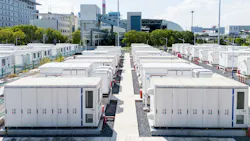
When a commercial or industrial facility signs a long term battery energy storage contract the people in charge usually plan the system based on the load profile, dispatch strategy, utility rate structure and degradation curves of the battery energy storage system.
But there are questions that people are starting to think about more and more: What is the battery energy storage system made of? Where do the materials for the battery energy storage system come from? Is supply chain for battery energy storage system materials really stable?
Those questions used to be something that commodity traders and ESG officers thought about. Now they are something that commercial and industrial energy planners think about. Here is why this happened and what commercial and industrial energy planners can do about it.
The three important minerals we are talking about are lithium, cobalt and sodium. Each of these minerals tell us a part of the story about energy planning, for C&I energy planners.
Lithium is the standard for batteries. It is used in every big battery system for businesses and industries today. This is true whether the system uses a mix of chemicals or lithium iron phosphate (LFP).
The price of lithium changed a lot from 2020 to 2024. It went from around $7,000 per ton in 2020 to over $80,000 in 2022. Then it dropped back down to around $15,000 in 2023 and 2024.
When the price of lithium changes much it affects more, than just the price of the commodity. It also affects the companies that make battery cells the companies that put the cells together and the final price of the project. For companies that plan their battery storage needs 10 to 15 years in advance they have to assume that the price of lithium will stay stable. This is an assumption whether they realize it or not and it is part of their decision to buy battery storage systems that use lithium.
Cobalt's story focuses on its structure. The Democratic Republic of Congo produces about 70% of the world's cobalt mining output. A large portion of global refining is under the control of operations linked to China.
The industry has worked hard to cut down on cobalt use, and lithium iron phosphate chemistry has largely succeeded in removing cobalt from the cathode entirely.
For C&I planners, this is an important procurement signal. LFP-based systems have lower cobalt exposure, leading to a more predictable cost profile over a long asset life. The historical tradeoff has been energy density. However, for stationary commercial storage applications where space is manageable, LFP is often the better choice due to supply chain concerns alone.
Sodium is the thing that is going to change things in the future. Sodium-ion batteries have gone from being something that people were just playing with in labs to actually being used in some things really fast.
CATL started putting sodium-ion cells in some commercial vehicles in China in 2023. Now some other companies are saying that sodium-ion is an option for storing energy when it is not being used. This is because sodium is easy to find in places which are not sensitive politically.
We also know a lot about how sodium works. However sodium-ion is not yet something that can be used at scale for most commercial and industrial uses. Sodium-ion batteries still need to get better at lasting a longer time and storing a lot of energy. The people who make commercial and industry energy plans should be paying close attention to sodium-ion batteries.
For the next year or two, however, people are still going to be making decisions based on lithium. Sodium-ion batteries are still developing, especially when it comes to the materials used to make them and how they are supplied. Sodium is a part of this and people should be watching to see how sodium-ion batteries change in the future.
So what does this mean for people who plan energy for C&I spaces when it comes to buying storage systems?
First you should ask about what the battery's made of and you should ask this question at the beginning. The type of battery is important because it affects the supply chain. When we talk about battery storage systems we have to consider what they are made of like LFP or nickel manganese cobalt (NMC). This is not just about how the battery works it is also, about the cost of the minerals used to make it and how that will affect the cost of the system over time. Any company that is seriously buying these systems should be asking about the type of battery used in Commercial and Industrial energy storage systems.
Second, pay attention to how long it takes to get things as a sign of whats happening in the supply chain. When it takes months to over a year to get battery storage systems like what happened from 2021 to 2023 for projects in the US and Europe it often means the supply chain is having trouble. The people planning to store energy for when its needed to have backup power or to save money on electricity bills need to include the time it takes to get things in their plans. This is more important now than it was five years ago.
If a system needs to be working for the summer when people use a lot of energy it can't afford to be delayed for six months because of a problem with getting a material at a factory.
Facilities planning storage deployments for peak demand management, backup resilience or demand charge reduction need to build supply chain lead time into their project schedules in ways that were not necessary five years ago. They have to think about lead times for battery storage systems. A system that needs to be online, for a summer demand response season does not have the flexibility to absorb a six-month delay that began as a lithium carbonate allocation issue at a cell plant.
Third you need to read the contract terms about the price of commodities. Some contracts have rules that let them change prices based on what batteries cost. You have to know if the price is really fixed or if it can change because of mineral prices. This is something that people who plan energy for industrial places should check very carefully when they look at a contract. The contract terms for commodity price pass-through are important to understand, for long-term service agreements and multi-phase storage deployments so that you know what you are getting into with your commercial and industrial energy plan.
The message is clear: mineral supply chain is now crucial for battery storage. It is not something that happens in the background. Instead it plays a role in how companies buy batteries plan projects and calculate long-term costs.
Energy planners for businesses and industries who understand this will make choices. On the hand those who ignore mineral supply chain will face problems when they least expect it. Mineral supply chain is key to making decisions in battery storage. It affects how long projects take and how much they cost. So mineral supply chain should be a priority, for energy planners.
The good news is that we have tools to manage this exposure. We can use chemistry selection, procurement timing, contract structure and project phasing to reduce supply chain risk.
These tools do not need a team to handle them. All they need is for us to ask the questions early, in the planning process so we can act on the answers. We can actually use these tools to manage supply chain risk with chemistry selection, procurement timing, contract structure and project phasing.
About the Author
Pradyumna Gupta
Dr. Pradyumna (Prady) Gupta is the Founder and Chief Scientist of Infinita Lab and Infinita Materials, where he leads pioneering work in materials characterization, reliability engineering, and advanced manufacturing. With more than two decades of experience spanning semiconductors, electric mobility, and aerospace systems, he focuses on bridging material science with practical reliability needs. Dr. Gupta’s work centers on enabling high-performance, safe, and sustainable material architectures for next-generation technologies