The Future of Battery Storage: From Technical Potential to Commercial Profitability
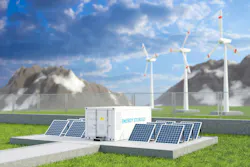
Battery energy storage systems are growing dramatically in scale throughout the U.S., used not only to balance out the intermittencies of renewables such as wind and solar, but also to aid gas-fired power is dealing with mind-blowing swings in transient load from AI factories and data centers.
U.S. developers installed a record 58 GWh in battery storage generation last year, according to the Solar Energy Industries Association and Benchmark Mineral Intelligence. By the end of 2026, the total installed capacity will exceed 150 GWH throughout the nation, elevating batteries to near parity with traditional power generation resources.
Battery energy storage systems are increasingly valued by developers, and yet not all BESS are commercially right for every application or being utilized in the most effective way. The technical aspects may be well known, but the value outcomes are a different matter and require customization.
Distributed energy optimization firm GridBeyond is using AI and other tools to enhance and inform the value proposition with battery storage and other DER tools. In this link GridBeyond CEO and co-founder Michael Phelan focused on getting the details right on commercial optimization and unlocking BESS capacity for all the right reasons.
The gap between technical and commercial viability is a real thing. Merging those qualities is critical to optimal success.
“It means that a battery system can look perfectly healthy on paper and still be leaving money on the table,” Phelan said in an interview on GridBeyond’s website. “Asset owners receive detailed technical data every day, state of health, state of charge, degradation curves, round-trip efficiency, and yet the question that really matters, is this asset generating the revenue it should, often goes unanswered.”
GridBeyond also works with customers on moving beyond reactive demand response services toward predictive, and continuously optimized energy strategies. GridBeyond’s Manik Lowe will be talking about those options and best practices June 4 in an EnergyTech webinar.
The free and hour-long webinar, “From Reactive to Predictive: Turning Energy into Profit with Digital Twins,” will be live 1 p.m. Central on Thursday, June 4. It also will be available on demand for about six months afterward.
Register here for the GridBeyond webinar on utilizing energy resources to create greater value proposition for battery storage and other DER assets.
About the Author
EnergyTech Staff
Rod Walton is head of content for EnergyTech.com. He has spent 17 years covering the energy industry as a newspaper and trade journalist.
Walton formerly was energy writer and business editor at the Tulsa World. Later, he spent six years covering the electricity power sector for Pennwell and Clarion Events. He joined Endeavor and EnergyTech in November 2021.
He can be reached at [email protected].
EnergyTech is focused on the mission critical and large-scale energy users and their sustainability and resiliency goals. These include the commercial and industrial sectors, as well as the military, universities, data centers and microgrids.
Many large-scale energy users such as Fortune 500 companies, and mission-critical users such as military bases, universities, healthcare facilities, public safety and data centers, shifting their energy priorities to reach net-zero carbon goals within the coming decades. These include plans for renewable energy power purchase agreements, but also on-site resiliency projects such as microgrids, combined heat and power, rooftop solar, energy storage, digitalization and building efficiency upgrades.