ESS & Alsym Energy Partner to Expand Sodium-Ion Energy Storage Solutions
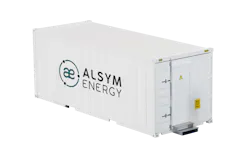
Energy storage systems manufacturer ESS Tech, Inc., has announced a new partnership with sodium-ion battery technology company Alsym Energy to add alternatives to lithium-ion battery energy storage systems (BESS) to its portfolio.
Alsym Energy, a startup which is focusing on non-flammable, longer duration sodium-ion batteries, has agreed to sign a letter of intent with ESS to help the company advance 8.5 GWh of sodium-ion cells and modules to the utility-scale and distributed energy markets.
The partnership aims to tackle next‑generation battery solutions amid inherent thermal runaway risks associated with lithium chemistries. Although lithium-ion batteries dominate a large percentage of the market, studies have highlighted that they have higher fire risks and shorter duration cycles.
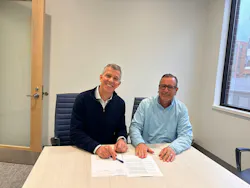
“As demand grows, it is increasingly clear that the industry needs solutions beyond lithium-ion to meet the speed and scale projections,” Alsym Energy CEO Mukesh Chatter said in a statement. “Together, we are enabling a better path forward for energy storage.”
Other traditional lithium-ion issues have related to the supply chain, where abundance may have been in NA-ion’s favor.
Alsym says its Na-Series batteries are thermally stable and non‑combustible, which helps reduce potential safety hazards in energy storage systems. This could essentially reduce the costs of extensive fire suppression HVAC infrastructures that would otherwise need to be put in place.
Part of Alsym’s development uses a proprietary physics-informed AI platform that it claims shortens the timeline of bringing these sodium-ion batteries to market. But a key focus of this partnership is that these U.S.-made batteries will utilize non-foreign-sourced materials. It’s a direct solution to try to address supply chain dependence and controlled geopolitical dynamics away from China.
Chinese companies reportedly have made significant investments in multiple mining and extraction projects in Argentina, which contains 50% of the world’s known lithium. This has given China access to areas like Bolivia, Chile, and Argentina, which are considered part of the so-called “lithium triangle.”
Texas A&M University and Alsym previously highlighted a significant breakthrough with non-lithium technologies, revealing long-duration, weather-resistant, and safety viability. The project utilized a polymer-based battery prototype, which showed the capability of functioning and maintaining 85% charge at 0 degrees Celsius (32 Fahrenheit) and 55% at minus 40*C.
“We are giving customers a clear pathway beyond lithium‑ion — without compromising performance or economics,” ESS Chief Commercial Officer Randall Selesky said.
About the Author
 Eric Moody