Where Rust Never Sleeps: $750M Series G Strengthens Iron-Air Battery Startup for U.S. Manufacturing Charge
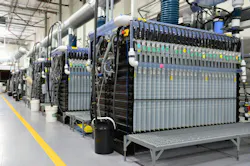
Iron-air battery manufacturer Form Energy has completed a $750 million Series G financing round this week led by global investment firm T. Rowe Price.
The financing raises Form Energy’s equity value to over $2 billion, according to reports. New investors joining the Series G round include venture firm Sequoia Capital, financial services firm PEAK6 Investments and global asset managers Janus Henderson and Franklin Templeton.
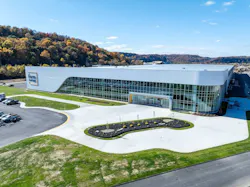
The Massachusetts-based manufacturer operates multiple U.S. facilities, including a 550,000-square-foot iron-air battery manufacturing plant in Weirton, West Virginia and a research and development office in Berkeley, California. Form Energy is accelerating its commercial development of next-gen iron-air energy storage systems (ESS) to drive electricity for up to 100 hours.
Form Energy notes that proceeds from the current round will be utilized to accelerate manufacturing at its Weirton Form Factory 1 site to scale deployment of its multi-day iron-air battery systems. Iron-air battery technology, which operates under the principles of reversible rusting, is gaining momentum as an LDES alternative to lithium-ion battery storage.
Iron-air batteries utilize only iron, water and air—free of heavy metals and risks of thermal runaway—via a nonflammable, aqueous electrolyte solution. During discharge, the battery absorbs oxygen and converts iron metal to rust. During charging, an electrical current is applied to convert the rust back to iron, causing the battery to emit oxygen.
Form Energy says these batteries cost one-tenth of the price of traditional lithium-ion technologies. Each battery module is grouped in a protected enclosure to form megawatt-scale power blocks that can connect directly to the electricity grid.
This year, the company reportedly increased its backlog from roughly 20 GWh to 80 GWh after establishing several new commercial agreements to address the surging energy demands of hyperscalers and data center developers.
“Powering the AI economy requires reliable, scalable and cost-effective energy solutions,” said Mateo Jaramillo, co-founder and CEO of Form Energy, in a previous statement.
Some of these major Form Energy partnerships include planned projects with Crusoe, the AI factory company. Crusoe entered into a strategic capacity agreement with Form Energy in March to deliver 12 GWh of iron-air to support rapidly growing AI power needs starting in 2027.
Another involves Xcel Energy, which signed an agreement in February to supply power for tech giant Google’s data center in Pine Island, Minnesota.
Xcel received a grant from the U.S. Department of Energy for up to $70 million to partially fund two (LDES) long-duration energy storage systems, including in Pine Island, where Form Energy is supplying its proprietary hardware.
Energy storage companies such as Fluence and LG Energy Solution previously committed as much as $100 billion to building more battery manufacturing capacity in the U.S., exceeding 26 GW in 2024 and approaching 52 GW by mid-2026, according to the U.S. Energy Information Association.
About the Author
 Eric Moody