New Partnership Joining Fuel Cells with Gas Turbines to Satisfy Future AI Energy Demand
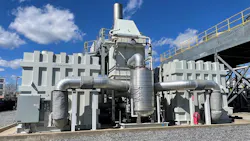
Manufacturer and power producer FuelCell Energy, Inc., is working to advance its clean energy solutions for computing infrastructure and artificial intelligence systems.
In a strategic agreement with infrastructure developer Fit Energy USA LP (Fit Energy), FuelCell Energy will help deliver up to 380 MW of baseload on-site power for Fit Energy’s data center projects for computing firms.
According to a release, the agreement includes an immediate deposit for an initial 30 MW of power, with delivery scheduled to begin later this year to Fit Energy's AI and data center campuses. Fit Energy acts as the customer in this arrangement, purchasing FuelCell’s hardware to provide Energy-as-a-Service (EaaS) directly to end-user AI data centers.
Under this EaaS approach, data center operators can access FuelCell’s power solution tech via a recurring or pay-per-use fee, while Fit Energy assumes the upfront capital investment to purchase and deploy the generation assets.
“We’ve engaged with a diverse range of prospective customers across the digital infrastructure landscape, and Fit Energy has distinguished itself through its commitment to ‘energy as a service’ power solutions that support both communities and the environment,” said President and CEO Jason Few of FuelCell Energy in a statement. “This agreement further validates our decision to scale our operations to 500 MW, preserving our ability to serve a broad and growing pipeline of customers.”
Fit Energy claims its platform design is built to serve large power requirements—integrating with FuelCell Energy's utility-scale systems in a hybrid-model approach. This strategy combines electrochemical carbonate fuel cells (which provide carbon-free baseload power) with natural gas turbines to support behind-the-meter, microgrid and grid-connected structures.
Through this deployment, the companies aim to balance the 24/7 background power needs of AI servers with Fit Energy’s natural gas turbines, creating a hybrid bridge to handle rapid spikes in energy demand. Fit Energy aims to alleviate grid bottlenecks in digital infrastructure demand while focusing on the ownership of long-term generation assets.
Joel Leonoff, CEO of Fit Energy, states that this partnership will help enable the power foundation required for the “next generation of AI infrastructure.”
“FuelCell Energy’s technology aligns with our growth objectives and our goal of delivering behind-the-meter power solutions to data centers at gigawatt scale,” Leonoff added.
The shift to fuel cells is expected to help address growing concerns of potential water consumption and impacts on local air quality by residents nationwide, including environmentalists. Fuel cells generate electricity through an electrochemical process, not by fuel combustion, helping reduce a site’s nitrogen oxide (NOx) emissions in some cases by roughly 92%.
Developers of Project Jupiter, a massive AI data center campus under construction in southern New Mexico, announced they are ditching gas turbines and diesel generators in favor of fuel cells to lower the site’s emissions and water consumption.
Mastering Requirements, Standards and Risk
in a Digitally Transformer Energy Sector
Join us for July 21 EnergyTech Webinar with Siemens
About the Author
 Eric Moody