New Flyer to Acquire 500 Hydrogen Fuel Cell Engines from Ballard Power Systems
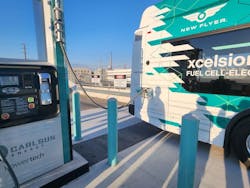
Bus manufacturer NFI Group's New Flyer division is committing to acquire 500 hydrogen fuel cell engines from Ballard Power Systems.
New Flyer and Ballard Power Systems signed the commercial deal with deliveries starting this year. The 500 FCmove-HD+ fuel engines, totaling 50 MW in output capacity, will power New Flyer’s Xcelsior CHARGE FC hydrogen fuel cell buses across North America.
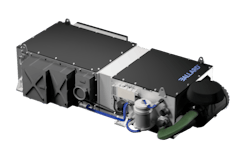
Hydrogen (known by chemical symbol H2) is an energy-dense, light gas which produces no carbon emissions at the point of use. Fuel cell engines convert fuel into electricity via an electrochemical process and also produce no tailpipe emissions.
"Over the last decade we've delivered buses powered by Ballard in multiple jurisdictions from coast to coast showing their capability to operate in different environments and routes as a 1-for-1 diesel replacement,” David White, New Flyer’s executive vice president, supply management, said in a statement. “With growing demand for fuel cell buses, we are excited to continue this partnership as we support the transition to zero-emission transportation."
Ballard’s H2 fuel cell engines have been delivered to power more than 2,200 buses worldwide. Those H2 fuel cell buses have logged more than 250 million kilometers of routes.
"Our fuel cell engines, backed by additional fleet services, deliver the range, rapid refueling, and reliable performance New Flyer's fleets require,” said Oben Uluc, Ballard's Sales & Marketing Vice President. “With Ballard technology at the core of these vehicles, New Flyer is well positioned to accelerate zero‑emission deployments across North America."
Hydrogen fuel cell bus utilization in Europe is outpacing fleet adoption in the U.S., although the latter market has grown. Earlier this month, it was announced that Paris-based transport service provider Île-De-France Mobilités and transport operator RATP Dev are rolling out a 17-unit fuel cell bus fleet powered by Ballard engines and technology.
Of New Flyer’s 35,000 heavy-duty bus fleet currently in service in North America, nearly 2,000 are zero emission (often H2 fuel cell) and nearly 9,000 are powered by electric motors, according to reports.
Hydrogen does not contain carbon in its molecular chain, but commercially is often generated by carbon-intensive steam reforming of methane gas. To be classified as green hydrogen, it is separated from water through electrolyzers powered by carbon-free electricity resources such as solar, wind or nuclear.
A New Era of Energy Efficiency: Innovations for Today and Tomorrow
EnergyTech White Paper from Ameresco
About the Author
EnergyTech Staff
Rod Walton is head of content for EnergyTech.com. He has spent 17 years covering the energy industry as a newspaper and trade journalist.
Walton formerly was energy writer and business editor at the Tulsa World. Later, he spent six years covering the electricity power sector for Pennwell and Clarion Events. He joined Endeavor and EnergyTech in November 2021.
He can be reached at [email protected].
EnergyTech is focused on the mission critical and large-scale energy users and their sustainability and resiliency goals. These include the commercial and industrial sectors, as well as the military, universities, data centers and microgrids.
Many large-scale energy users such as Fortune 500 companies, and mission-critical users such as military bases, universities, healthcare facilities, public safety and data centers, shifting their energy priorities to reach net-zero carbon goals within the coming decades. These include plans for renewable energy power purchase agreements, but also on-site resiliency projects such as microgrids, combined heat and power, rooftop solar, energy storage, digitalization and building efficiency upgrades.