Bayer and Neste Unite to Encourage Farmers in Planting Oilseeds for Sustainable Aviation Fuel
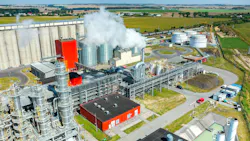
Healthcare and agricultural firm Bayer will work with renewable diesel and sustainable aviation fuel (SAF) producer Neste to scale winter oilseed crop planting for biofuel commercial production in the U.S.
Under this joint agreement, Bayer aims to expand its acres of winter canola feedstocks, bred to produce low-carbon intensity oil used in the transportation sector as an alternative fuel blend. Neste will assist these efforts by scaling global biofuel supply chain avenues for Bayer’s oilseed feedstock.
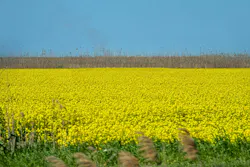
The U.S. Canola Association reported that canola seed yields about 45% oil when crushed, compared to soybeans, one of the most common biodiesel feedstocks, at just 18%. Bayer’s winter canola hybrid “newgold” seed brand, developed for higher oil content and low-carbon intensity markets, will be at the center of this partnership in the Southern Great Plains region.
Bayer aims to launch its newgold crop line, which is designed for winter-hardiness. Newgold should debut in the fall of 2027 to meet the growing global demand for renewable biofuels.
“In times of geopolitical tensions, the need for more energy security and resilience while decarbonizing the transportation sector leads to growing demand for renewable fuel,” said Frank Terhorst, head of strategy and sustainability for Bayer’s crop science division, in a statement.
SAF, which is made from biomass and waste resources, currently accounts for less than 1% of total jet fuel use worldwide. While it is not intended to immediately replace fossil jet fuel, SAF acts as a decarbonizing influence across high-emission transportation sectors. Global aviation consumes nearly 100 billion gallons of jet fuel annually.
According to a company release, newgold aims to help farmers participate directly in the evolving biofuels market by growing cash crops during "off-season" or fallow periods. The seed is designed to be planted between seasons and existing crop rotations, including on underutilized acres, providing additional farmer revenue opportunities from the supplementary canola grain feed sources.
Terhorst added that Bayer sees the southern Great Plains as an untapped region for scaling winter canola. Although Bayer is widely known in the healthcare space, the company is also heavily focused on its global agriculture footprint and sustainability goals.
Data Bayer cited in company notes from the U.S. Energy Information Administration (EIA) and its internal figures that global biofuel demand is estimated to increase almost threefold, reaching roughly 40 billion gallons by 2040. Biofuels can be produced from renewable organic materials, such as winter canola, playing a key role in the transportation sector’s clean energy transition.
“Maximizing the contribution of novel types of raw materials to support growth in renewables requires open supply chain collaboration,” said Artturi Mikkola, senior vice president of renewable products feedstock sourcing and trading at Neste. “By building robust value chains, we can turn agricultural innovations into scalable realities for growers and energy markets.”
Neste’s renewable diesel and SAF production expands across three continents. The company expects its renewables production capacity to reach 6.8 million tons annually in 2027.
About the Author
 Eric Moody