Colorado Taps Gradient Geothermal to Test Abandoned Drilling Sites for Clean Energy Potential
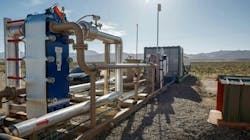
Denver-based geothermal company Gradient Geothermal will participate in a Colorado statewide study on the potential of repurposing orphaned oil and gas wells into geothermal energy production sites.
The technical study will be conducted by the Colorado Energy and Carbon Management Commission (ECMC) and the Colorado Energy Office. As an expert in geothermal analysis, Gradient Geothermal will conduct engineering evaluations of wells within ECMC's Orphaned Well Program to determine their suitability for electricity generation or direct-use geothermal applications.
"This study represents an important step in turning orphaned wells from environmental liabilities into community assets," said Benjamin Burke, CEO of Gradient Geothermal, in a statement. "Repurposing existing infrastructure for geothermal energy can reduce methane emissions, create local jobs, and deliver reliable, low-emission power to Colorado communities."
Orphaned oil and gas wells are defined as drilling sites abandoned by the previous operator. Gradient already creates combined heat and power (CHP) by pumping produced water from old wells and creating energy through heat.
The state of Colorado project will culminate in a publicly available dataset of orphaned wells and a final report outlining technical findings, pilot project recommendations, and policy guidance. Through this collaboration, the state leaders hope to demonstrate pragmatic, science-based energy transition strategies which can reduce emissions, strengthen energy resilience, and accelerate energy-positive and economic innovation.
"We are excited to collaborate with Gradient Geothermal on this evaluation of repurposing potential across existing orphaned wells in Colorado," said Julie Murphy, Director of Colorado's Energy and Carbon Management Commission. "This work will help inform related regulatory process development and help to better understand how existing wells may be safely and effectively repurposed for other beneficial uses."
Gradient Geothermal CEO Burke, chatting with EnergyTech.com last year, said this type of geothermal has a potential energy capacity comparable to rooftop solar and ultimately might deliver a 13-GW power generation opportunity.
“Of the about 2.9 million wells currently and ever drilled, we estimate there are 500,000 wells which have enough flow (of produced water) and enough temperature to be relevant for this,” Burke noted in the earlier interview. “These would be anything with more than 160 degrees Fahrenheit and can flow hundreds of barrels per day.”
Oil and gas reservoirs contain untold volumes of deep ground water which also are pushed up with production operations. The water radiates with the heat emanating from the earth’s molten core and offers power potential within that heat.
“Temperature is the critical item,” Burke added.
Gradient Geothermal’s work has been tested through its initial pilot project at a U.S. Department of Energy-supported site in Blackburn, Nevada, three years ago. Since then, the company is starting to commercialize its on-site CHP technology through a partnership with oil and gas exploration and production firm Chord Energy on a project in North Dakota.
Taming Digital Transformation to Improve Energy Management
Next Week's Free Webinar with Siemens Digital Industries
Live on Tuesday and On Demand Afterward
About the Author
EnergyTech Staff
Rod Walton is head of content for EnergyTech.com. He has spent 17 years covering the energy industry as a newspaper and trade journalist.
Walton formerly was energy writer and business editor at the Tulsa World. Later, he spent six years covering the electricity power sector for Pennwell and Clarion Events. He joined Endeavor and EnergyTech in November 2021.
He can be reached at [email protected].
EnergyTech is focused on the mission critical and large-scale energy users and their sustainability and resiliency goals. These include the commercial and industrial sectors, as well as the military, universities, data centers and microgrids.
Many large-scale energy users such as Fortune 500 companies, and mission-critical users such as military bases, universities, healthcare facilities, public safety and data centers, shifting their energy priorities to reach net-zero carbon goals within the coming decades. These include plans for renewable energy power purchase agreements, but also on-site resiliency projects such as microgrids, combined heat and power, rooftop solar, energy storage, digitalization and building efficiency upgrades.