Chill Out at Own Peril: How Cooling Demand-Not AI- May Create Biggest Future Energy Crisis
Key Highlights
- Cooling energy demand is projected to triple by 2050, significantly increasing global electricity consumption and greenhouse gas emissions.
- Energy efficiency technologies, such as building design, LED lighting and HVAC innovations, have historically saved billions of kWh and are crucial in decarbonization efforts.
- Programs like EnergyStar play a vital role in reducing electricity use; threats to such initiatives could undermine progress in energy savings.

Much of the power generation sector is feeling the heat to build out new capacity to meet future artificial intelligence and cloud-based computing demand. That’s what utilities and developers are seeing and saying.
Take a deeper look: The biggest energy heat may be coming from cooling, not computing.
This is according to a new report by researchers at RMI (Rocky Mountain Institute) and separate concerns raised by energy efficiency leaders at the U.S. Green Building Council.
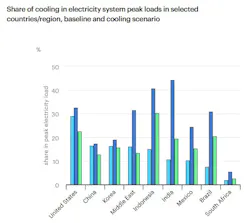
Rising global temperatures are creating new stress on cooling, whether it’s for comfort, industrial operations or even data centers. Forecasts by the United Nations Environment Programme (UNEP) Global Cooling Watch Report indicates that electricity consumption by cooling equipment worldwide could triple to 18,000 terawatt hours (TWh) by 2050.
Four years ago, cooling equipment consumed an estimated 5,000 TWh globally, which is nearly equivalent to total U.S. electricity consumption this year, according to the RMI report.
Cooling and refrigerants, meanwhile, already account for about 7% of global greenhouse gas emissions.
“As increasing cooling drives energy and peak power demand and need for refrigerants, it will create more emissions and warming, feeding a dangerous cycle,” the RMI release reads.
Energy efficiency: well documented “first fuel” in decarbonization
In the U.S. and throughout the world, energy efficiency technologies are often called the “first fuel” in decarbonization, meaning fossil fuel consumption avoided is a highly effective strategy both for cost reduction and positive environmental impacts.
The RMI strategies for dealing with this cooling energy crisis include nature-based solutions such as urban greening, building design strategies and reduced carbon emissions overall.
Energy efficient LED lighting, HVAC and other electric appliance innovations have helped avoid billions of kWh in consumption and billions of dollars in avoided utility billing in the U.S. annually.
Those estimates are from the non-profit U.S. Green Building Council (USGBC), which oversees a certification program for energy-efficiency building design and advocates as well as advocacy for emissions reducing technologies. The USGBC is also a strong supporter of the federal Environmental Protection Agency’s (EPA) Energy Star efficient electrical household and commercial appliance program.
Last year, the Trump Administration announced plans to eliminate the EnergyStar program, which had been active since the first Bush Administration. That course was reversed somewhat when manufacturers, home builders and others banded together to request keeping the program be kept alive.
Earlier this year, however, the Trump Administration said it wanted to move jurisdiction of Energy Star from the EPA to the U.S. Department of Energy (DOE). This announcement drew an instant backlash from environmental advocates and the USGBC.
“Disruptions or reductions in Energy Star operations could have significant economic consequences because the program is so embedded in so many sectors of the U.S. economy, including new home construction, commercial real estate, manufacturing facilities and consumer products,” Ben Evans, federal legislative director of the USGBC, wrote in a USGBC statement this March following in response to the DOE and EPA memorandum on the potential move.
Energy Star carbon and cost savings over the years
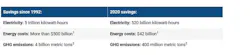
In a broader op-ed piece for Utility Dive this month, Evans lamented the current policy reversals against a program which has saved about 520 billion kWh of electricity consumption annually, nearly the equivalent of generation from the nation’s entire coal-fired power fleet. The program’s costs also have paid for themselves in savings multiple times over, he noted.
Without Energy Star’s verifiable impact on reduced consumption, Evans pointed out, the U.S. might require a 50% increase in both coal and solar generation to compensate for building electricity demand.
“Yet there’s a weird dynamic playing out in energy politics right now. Many elected officials are at best ignoring energy efficiency — and sometimes outright attacking it — at the very time we need it most, as rising energy bills squeeze our pocketbooks and surging demand from data centers threatens the ability of the grid to keep up,” Evans wrote for Utility Dive.
Cutting energy efficiency strategies might prove long-term disastrous in the long-term, if the International Energy Agency and RMI projections about cooling demand hold relatively true.
Cooling calculations rising along with temperatures
The UNEP’s Global Cooling Watch 2025 also finds that cooling energy demand could triple by 2050 due to increases in population, wealth and more extreme heat events. Cooling emissions, without mitigation, could top 7.2 billion metric tons of carbon dioxide by 2050, according to the UNEP report.
The World Economic Forum also predicts that power generation capacity might need to increase to 3,350 GW installed and 18,000 TWh of annual consumption by 2050.
The AI and data center boom may require only about one-third of that, or close to 3,700 TWh, according to Bloomberg NEF and other industry players.
About the Author
 Rod Walton, EnergyTech Managing Editor
Rod Walton, EnergyTech Managing Editor
Managing Editor
For EnergyTech editorial inquiries, please contact Managing Editor Rod Walton at [email protected].
Rod Walton has spent 17 years covering the energy industry as a newspaper and trade journalist. He formerly was energy writer and business editor at the Tulsa World. Later, he spent six years covering the electricity power sector for Pennwell and Clarion Events. He joined Endeavor and EnergyTech in November 2021.
Walton earned his Bachelors degree in journalism from the University of Oklahoma. His career stops include the Moore American, Bartlesville Examiner-Enterprise, Wagoner Tribune and Tulsa World.
EnergyTech is focused on the mission critical and large-scale energy users and their sustainability and resiliency goals. These include the commercial and industrial sectors, as well as the military, universities, data centers and microgrids. The C&I sectors together account for close to 30 percent of greenhouse gas emissions in the U.S.
He was named Managing Editor for Microgrid Knowledge and EnergyTech starting July 1, 2023
Many large-scale energy users such as Fortune 500 companies, and mission-critical users such as military bases, universities, healthcare facilities, public safety and data centers, shifting their energy priorities to reach net-zero carbon goals within the coming decades. These include plans for renewable energy power purchase agreements, but also on-site resiliency projects such as microgrids, combined heat and power, rooftop solar, energy storage, digitalization and building efficiency upgrades.