Why Energy Resilience Is Becoming a Competitive Advantage for Commercial Facilities
Key Highlights
- Distributed energy resources are now valued not just for sustainability but for their ability to reduce grid dependency and support operational flexibility.
- Planning resilience into long-term capital investments prevents costly reactive measures during outages and supports future expansion needs.
- Early stakeholder collaboration in energy projects minimizes redesigns, reduces implementation challenges, and aligns infrastructure with business goals.
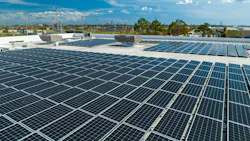
For years, commercial energy strategy has revolved around a simple objective: lowering utility costs.
Organizations invested in energy efficiency, upgraded lighting systems, optimized HVAC equipment, and explored renewable energy primarily to reduce operating expenses. Those efforts remain important, but the business conversation is changing.
Today, the question isn't just, "How can we reduce our energy bill?" It's increasingly, "How can we keep our business operating when the grid can't?"
Across the United States, organizations are facing a new energy reality. Electricity demand is rising, weather-related disruptions are becoming more frequent, and businesses are placing greater reliance on technology, automation, and electrification. In this environment, resilience is emerging as one of the most valuable outcomes an energy strategy can deliver.
Reliability Is becoming a business issue
Power interruptions have always been inconvenient, but for many organizations they are now operationally significant.
Manufacturing lines can stop production. Healthcare facilities depend on uninterrupted power for critical services. Distribution centers rely on automated systems to maintain productivity. Data centers, cold storage facilities, and commercial buildings increasingly operate around the clock.
Even short outages can result in lost revenue, disrupted operations, damaged inventory, or reduced customer confidence.
As a result, energy resilience is no longer solely the responsibility of facilities managers. It has become a strategic discussion involving executive leadership, finance teams, operations and risk management.
Distributed energy resources Are changing the conversation
Solar generation, battery energy storage systems, and advanced energy management software are often discussed in terms of sustainability goals or utility savings.
While those benefits remain compelling, their strategic value extends much further.
Distributed energy resources can help organizations reduce exposure to grid disruptions, improve operational continuity, and provide greater flexibility during periods of peak demand or fluctuating electricity prices.
Rather than viewing on-site generation simply as a cost-saving measure, many organizations are beginning to see it as part of their broader business continuity strategy.
This shift represents an important evolution in how commercial energy investments are evaluated.
Resilience should be planned, not purchased, during a crisis
One of the most common mistakes organizations make is waiting until after a significant outage to evaluate backup power or distributed energy solutions.
By that point, equipment availability, engineering resources, permitting timelines, and utility coordination can all become more challenging.
Resilience is most effective when it is incorporated into long-term capital planning.
That doesn't necessarily mean implementing every solution immediately.
It means understanding future energy needs, evaluating facility risks, and designing infrastructure that can support future expansion as operational requirements evolve.
Planning ahead gives organizations flexibility. Reacting after a disruption often limits options.
Strongest energy srategies balance multiple objectives
Successful energy planning is rarely driven by a single objective.
Organizations today are often balancing several priorities simultaneously:
- Managing operating costs
- Improving energy reliability
- Meeting sustainability commitments
- Supporting future electrification
- Reducing operational risk
- Enhancing long-term asset value
Rather than viewing these goals as competing priorities, organizations are increasingly recognizing that well-planned distributed energy systems can contribute to each of them.
When projects are evaluated through a long-term operational lens instead of a simple payback calculation, their overall business value becomes much clearer.
Collaboration produces better outcomes
Energy projects have become increasingly multidisciplinary.
Electrical engineers, facility managers, architects, contractors, utility representatives, financial decision-makers, and sustainability teams all contribute to project success.
Organizations that bring these stakeholders together early in the planning process often identify opportunities that would otherwise be overlooked.
Future electrical capacity, equipment locations, operational priorities, and expansion plans can all be considered before major investments are made.
Early coordination reduces redesigns, minimizes implementation challenges, and helps ensure that energy infrastructure supports broader business objectives.
Looking ahead
The energy transition is no longer defined solely by renewable generation or carbon reduction.
It is increasingly about building organizations that are prepared for a more dynamic energy landscape.
Businesses will continue pursuing efficiency improvements and lower operating costs. Those objectives remain important.
But the organizations that gain the greatest competitive advantage may be those that also invest in resilience.
Reliable energy supports reliable operations.
Reliable operations strengthen customer confidence.
And in an economy where downtime carries growing financial consequences, resilience is becoming more than an engineering objective—it is becoming a business strategy.
The future of commercial energy will not be measured solely by how much electricity organizations consume or how much they save.
It will also be measured by how effectively they continue operating when energy becomes uncertain.
About the Author
Taylor Crouse
Taylor Crouse is the Founder of Helios Energy Global, a Southern California-based energy company specializing in commercial and residential solar, battery storage, and distributed energy solutions. He works with businesses, property owners, and contractors to develop practical energy strategies that improve resilience, operational performance, and long-term value.