Intelligent Motor Management Targets Energy Waste and Downtime in Industrial Facilities
Industrial facilities are looking to modernize aging electrical infrastructure and improve energy efficiency as equipment failures, maintenance costs and electricity consumption put pressure on operations.
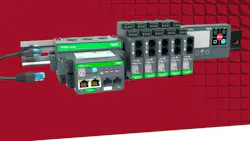
Schneider Electric has introduced TeSys Tera, an intelligent motor management system designed to add digital monitoring and predictive maintenance capabilities to existing motor control systems. The technology is intended for industrial applications involving pumps, fans and other motor-driven equipment.
The system monitors operating conditions, including voltage, current, power factor and thermal capacity, while providing protection against electrical and mechanical problems such as ground faults, phase loss and locked rotors.
Its predictive monitoring capabilities are designed to identify potential equipment problems before they lead to failures, allowing maintenance teams to address issues during planned service windows rather than responding to unexpected downtime.
The system also is designed to help industrial operators improve visibility into motor performance and energy consumption. Schneider Electric says its technology can help reduce unplanned downtime by 30% to 50% and cut power consumption by as much as 20%. These potential savings will depend on facility conditions, equipment and implementation.
TeSys Tera is designed for both new installations and retrofits of existing intelligent motor control centers. Its modular architecture allows facilities to add monitoring and control capabilities without replacing entire motor control systems.
The platform supports several industrial communication protocols, including EtherNet/IP, Modbus TCP/IP, Modbus Serial, PROFIBUS and PROFINET, allowing integration with existing automation and control systems.
Applications include oil and gas, mining, chemical processing, pharmaceutical manufacturing, water and wastewater treatment, packaging and other industrial operations that rely on motor-driven equipment.
The introduction reflects a broader push to bring digital monitoring and predictive maintenance capabilities to industrial electrical infrastructure, where improved equipment visibility can help operators manage energy use, reduce maintenance demands and maintain operational continuity.