Editor's Take: Rise and Fall of Battery Storage Startups Doesn't Mean BESS Won't Fly High
Key Highlights
- North Carolina has seen both successful investments, like Toyota's battery plant, and failed projects, such as VinFast's abandoned promises, illustrating market volatility.
- Historical examples like Alevo and recent failures like Big Ass Battery demonstrate that even promising companies can falter, emphasizing the importance of resilience.
- Despite setbacks, the industry continues to evolve with new opportunities in microgrids, AI, and renewable integration, promising a bright future for energy storage technology.
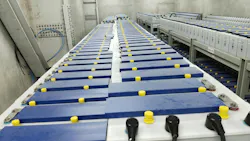
The speed of grid-scale energy storage market growth is both spectacular and full of monumental risk.
That’s the breakneck pace of most new technologies. It’s thrillingly fast, but some necks get dangerously exposed in the race.
Consider the automobile industry: For every Chevrolet, Toyota or even Tesla, there were Tuckers and AMCs and Canoos that once hugged the road and now lay in the dustbin of bankruptcy history and along the boulevard of broken dreams.
This hit-or-miss trajectory is clearly no less true of battery storage startups, some of which are beginning to flourish as record installation scales up.
Toyota, GM and Ford are embracing stationary battery storage even above EVs, and battery-focused companies such as Fluence, sonnen and CATL are staying float and even flourishing. But the cathode landscape is littered with corroded prospects.
VinFast's North Carolina promises fail
Some of those proverbial lost terminals are scattered alongside the historic but small community of Liberty, North Carolina, where just a few years ago the Vietnamese-based global battery technology firm VinFast secured state support and private investment with plans to build a giant battery manufacturing plant expected to employ up to 7,500 workers.
VinFast received many millions of dollars to pay for land permitting and preparation work, and then did nothing else. By 2024, the Vietnamese company had basically abandoned Liberty and was focused on big battery storage projects in other parts of the world.
To be expected, the state of North Carolina did not appreciate that its funds were spent without results. The state is now suing VinFast to reacquire nearly 2,000 acres for no additional cost.
“VinFast agreed to build a factory and create jobs for North Carolinians—it didn’t do either,” state Attorney General Jeff Jackson said in a statement. “When North Carolina makes a deal, we build in protections for taxpayers. VinFast broke the deal, so we’re using that protection to find a project for this site that will create jobs.”
It’s not like North Carolina hasn’t seen its share of busted deals in the energy storage sector, including last year when sodium-ion technology developer Natron Energy backed out of its plan for a battery storage manufacturing facility in the state.
But North Carolinians also have chosen right multiple times when it comes to energy transition innovations. Toyota also chose Liberty and has started production at battery manufacturing facility there.
We like big batteries and we cannot lie but. . .
VinFast is its own story, and the company is enduring the type of growing pains that can be endemic or even fatal to many startups: Growth comes too fast and the ship sinks, as it was unguarded for the choppy waters. No energy storage startup was more aptly named than Big Ass Battery, based in the Netherlands, which went bankrupt last year after promising to share future gains with enthusiastic investors.
For various reasons, Big Ass Battery couldn’t walk the walk. This problem is not specific to it, as the landscape of energy storage startups includes fallen names such as Natron Energy, Li-Cycle, Proterra, Northvolt, Moxion and Alelion. It’s not just an American thing, either, as Shenzhen Waterma Battery Co. went down in China and VinFast struggles in Vietnam.
“For investors deploying capital into battery energy storage, the question is not whether the market opportunity is real. It is whether the returns they have modeled will survive contact with the physical environment the battery will actually operate in,” reads a risk report on Repath.energy’s website.
This longtime energy editor has seen it up close and personal. About a decade ago I attended the buzzy Energy Storage Association Conference in Charlotte, meeting with several companies that were tuned into the rise of batteries working in tandem with renewable energy and microgrids.
Those were the salad days, and many entrepreneurs dined on the enthusiasm. Among those was a big-talking group of executives from Alevo. They were based out of Switzerland and coming into the U.S., gaining headlines because Alevo was going to build a 3.5-million-square-foot manufacturing site within an old Philip Morris cigarette factory in nearby Concord, North Carolina.
“It’s all about the BESS,” one of their leaders assured me with what seemed like supreme confidence, while making a pun on battery energy storage systems, using a line from the recently hit record “It’s All about the Bass,” by Meghan Trainor. He was being topical and optimistic at the same time. I was impressed and hummed along with the happy tune.
And then there was the day the music died. Within a year, Alevo went bankrupt and was out the door entirely. It turned out to be all about bankruptcy.
Winners and losers happen but the future of BESS is bright
This is not to mock the excited and confident leaders behind Alevo at the time. They were smart, competent movers and shakers. If they had been able to hang on another decade, they might be reaping tremendous profits in a sector which installed about 30 GW of new capacity in the U.S. for the past couple of years.
All of that to say that the history of any transformational technology breeds winners and losers. Today in North Carolina it might be VinFast or Natron falling victim to bubble-bursting.
Tomorrow, somewhere out there, the next Tesla or battery storage version of NVIDIA might be laying its foundation for incredible growth that will make it a household name. I’m banking on that being the case somewhere down the road.
No doubt the battery storage is growing and gaining versatility in its accelerating use cases. Microgrid and AI factory energy park developers need large-scale batteries to handle the crazy-swinging transient load of AI super computations, regardless of whether the primary generation is gas-fired or renewable or nuclear.
In the meantime, manias and bubbles attract winners and losers, few of whom knew which is which at the time. Setbacks happen, disasters happen and yet success emerges out of the tumult.
Battery storage is clearly a wave of the future energy transition, particularly in the Industrial Compute Age. Once lithium-ion alternatives are perfected, the sky may be the limit.
Until then, the gravity of business reality will break some and burnish others. And they all keep charging forward. I’m glad for their courage but wary of the boastful.
From Reactive to Predictive:
Turning Energy into Profit with Digital Twins
New June 4 EnergyTech Webinar featuring GridBeyond
About the Author
 Rod Walton, EnergyTech Managing Editor
Rod Walton, EnergyTech Managing Editor
Managing Editor
For EnergyTech editorial inquiries, please contact Managing Editor Rod Walton at [email protected].
Rod Walton has spent 17 years covering the energy industry as a newspaper and trade journalist. He formerly was energy writer and business editor at the Tulsa World. Later, he spent six years covering the electricity power sector for Pennwell and Clarion Events. He joined Endeavor and EnergyTech in November 2021.
Walton earned his Bachelors degree in journalism from the University of Oklahoma. His career stops include the Moore American, Bartlesville Examiner-Enterprise, Wagoner Tribune and Tulsa World.
EnergyTech is focused on the mission critical and large-scale energy users and their sustainability and resiliency goals. These include the commercial and industrial sectors, as well as the military, universities, data centers and microgrids. The C&I sectors together account for close to 30 percent of greenhouse gas emissions in the U.S.
He was named Managing Editor for Microgrid Knowledge and EnergyTech starting July 1, 2023
Many large-scale energy users such as Fortune 500 companies, and mission-critical users such as military bases, universities, healthcare facilities, public safety and data centers, shifting their energy priorities to reach net-zero carbon goals within the coming decades. These include plans for renewable energy power purchase agreements, but also on-site resiliency projects such as microgrids, combined heat and power, rooftop solar, energy storage, digitalization and building efficiency upgrades.