Beyond Standalone Solar: Why Hybridization Is Becoming Essential
Key Highlights
- Solar capacity has grown faster than expected, with the industry surpassing 294 GW in 2016, well ahead of 2030 projections.
- Grid constraints, including interconnection queues and negative pricing, are driving the adoption of paired storage solutions to mitigate curtailment and improve project economics.
- Policy incentives like tax credits and capacity payments are increasingly favoring hybrid assets, making storage a core component rather than an optional add-on.
- Integrating solar and storage through advanced energy management software enhances dispatchability, market participation, and overall project performance.
- Retrofitting existing solar assets with storage is a strategic opportunity, especially in markets with limited greenfield development and long interconnection queues.
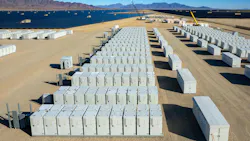
The pace of clean-tech deployment has repeatedly blown past expert forecasts, largely due to solar costs falling faster than analysts expected.
In 2010, The International Energy Agency projected that global solar capacity would reach 294 GW by 2030; the industry passed that mark in 2016, fourteen years early. That momentum isn't confined to the U.S., as solar became the European Union's largest single source of electricity for the first time in June 2026, while India added nearly 50 GW of new solar in 2025, and Saudi Arabia's installations quadrupled.
The grid Is the new constraint
Clean energy’s success is now colliding with grids that haven’t kept pace. More than 2,000 GW of generation and storage capacity are stuck in U.S. interconnection queues and Europe's backlog, estimated at 1,700 GW, is keeping more than €100 billion in investment on hold. What was once a procedural step now shapes project economics before construction even begins.
But that’s only the first part of the story.
Projects that clear interconnection face a second constraint once they're online. Across CAISO, ERCOT, PJM, and SPP, negative prices during sunny, low-demand hours have become routine, and curtailment has climbed sharply in regions once considered low-risk. The severity varies by market design (grids with strong regional interconnection or demand flexibility see smaller effects), but the pattern is consistent: a resource that only generates when the sun is up is increasingly disadvantaged against one that can shift when it delivers power.
This is where battery storage earns its keep. The fix for curtailment isn't to slow solar down. It's to pair solar with storage, at the design stage or through retrofit, and run both as one coordinated system.
Policy Is reinforcing the same conclusion
In the U.S., solar and wind projects that began construction by July 4, 2026, locked in the 30% investment tax credit (ITC) under the One Big Beautiful Bill Act (OBBBA) without facing an accelerated placed-in-service deadline; but those who missed the window must now be operating by the end of 2027 to qualify at all. Standalone battery storage faces no such cliff, as it retains tax credit eligibility for projects beginning construction through 2033. Both technologies are also now subject to Foreign Entity of Concern (FEOC) sourcing rules that can trigger credit recapture up to a decade after commissioning.
The same pressure exists internationally, though through different mechanisms. In Great Britain, co-located solar-plus-storage projects can access the Capacity Market and participate in the Balancing Mechanism, but connection queue timelines through DNOs and NGET are similarly constrained. Australia is approaching the same problem from a different angle, as its Capacity Investment Scheme is structured to deliver roughly 23 gigawatts of new wind and solar alongside 9 gigawatts of clean, dispatchable battery storage, tying government support for renewables directly to firming capacity.
The policy structures differ – tax credits in the U.S., capacity payments in Britain, competitive tenders in Australia – but the underlying logic is the same: battery storage extends the earning life and grid value of a solar asset.
Storage is no longer the optional add-on to a solar project, and in many markets, it has become a primary value driver in the pair. But "value-driving" cuts both ways. From a revenue and policy-eligibility standpoint, battery storage's longer runway means it may keep earning full value after the solar side's tax treatment has changed.
But, from a physical standpoint, the opposite is typically true: solar panels last 25 to 30 years with slow, predictable degradation, while lithium-ion batteries generally need replacement or major augmentation after 10 to 15 years. Solar remains the more durable physical asset, while battery storage is increasingly the more durable revenue driver.
Paired together, that's not a tradeoff, it's complementary. A hybrid asset can lean on solar's physical longevity for the bulk of its life while battery storage carries the revenue case through the years when policy and market conditions shift. That combination is what makes designing, or retrofitting, the two as one asset worth the effort.
Integration matters more than timing
None of this is an argument against solar. It’s an argument against siloed operation, like when solar and battery storage assets share a site but run on completely separate controls, dispatch logic and market strategies, regardless of when the storage was added.
Either path requires the same discipline: sizing battery storage against a site's actual curtailment and pricing patterns rather than a generic rule of thumb, and software that coordinates both assets as one resource by co-optimizing charge and discharge against price signals, ancillary services, and curtailment risk. Without that layer, a hybrid project still functions as two assets that happen to share a fence line, underperforming its own potential.
In some markets, utilities and grid operators are increasingly favoring projects that can demonstrate dispatchability when allocating scarce interconnection capacity, which gives day-one hybrid designs a real head start. But that head start doesn't make retrofitting the wrong path.
Projects that already hold an interconnection agreement can often add battery storage at that same point of interconnection rather than joining a new queue, and this is a route some independent power producers now pursue by acquiring existing solar assets specifically to retrofit. In markets like the UK, where the installed base is large and greenfield development is constrained, retrofit isn't a fallback; it's the primary opportunity.
Hybridization Is the next phase
Developers once treated battery storage as a second-phase decision, added once a solar project was financed and moving toward construction. Grid congestion, curtailment economics, and diverging policy timelines are making that delay costly.
Where these issues are already in play, a hybrid asset designed as one, dispatchable resource tends to earn more over its life than a comparable solar-only project; though, not universally: battery storage adds capital cost and complexity, and a solar asset with a long-term, fixed-price PPA in a low-curtailment market can still be the safer bet.
The solar-plus-storage projects that perform best over the next decade will be the ones operating as a single, hybrid asset, whether that pairing was built in from day-one or achieved through a well-executed retrofit, and is enabled by the energy management software to act like one.
About the Author
Samuel Kuhlwein
Samuel Kuhlwein is Director of Product, Stem, Inc.