BYD Delivers 250-MWh Battery System to Power Fortescue's Iron Ore Mining Down Under
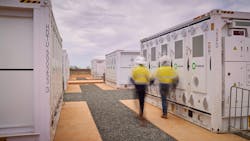
Global metals mining firm Fortescue is installing its first-ever large-scale battery energy storage system (BESS) to help decarbonize iron ore operations in western Australia.
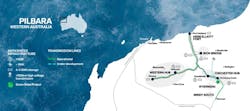
Fortescue delivered the 250-MWh BYD BESS system into Fortescue’s North Star Junction (NSJ) facility. The company plans to use renewable energy to charge the BESS during daytime and then discharge that capacity into Fortescue’s Pilbara Energy Connect at night.
“This is a big moment for Fortescue – we’re fundamentally changing the way we power our mines,” Fortescue Metals and Operations CEO Dino Otranto said in a statement. “These systems let us store solar power and use it when we need it most, helping us cut diesel and gas and run our sites on renewable energy.”
The Chinese-made BYD Blade Battery technology is capable of 50 MW of discharge per hour for up to five hours. Fortescue eventually hopes to install up to 5 GW of battery storage into decarbonizing its energy supply over coming years.
“Fortescue is leading one of the most ambitious mining decarbonization programs in the world, and BYD is proud to support this transformation,” Yin Xueqin, general manager of BYD’s Energy Storage and New Battery Application unit, said. “The NSJ BESS is an important milestone for our partnership, and we will continue working closely with Fortescue to deliver the large-scale storage needed to power a green Pilbara.”
BYD’s Blade battery is composed of lithium iron phosphate chemistry originally designed for electric vehicles. The BESS includes a liquid cooling system and was designed to operate within Pilbara’s hot and dry weather conditions.
Fortescue is considered among the top five iron ore producers in the world. The miner’s Pilbara hubs produce more than 100 million metric tons of iron ore per year.
Other mining giants which are working in the Pilbara region include BHP, Nippon Steel and Rio Tinto.
About the Author
EnergyTech Staff
Rod Walton is head of content for EnergyTech.com. He has spent 17 years covering the energy industry as a newspaper and trade journalist.
Walton formerly was energy writer and business editor at the Tulsa World. Later, he spent six years covering the electricity power sector for Pennwell and Clarion Events. He joined Endeavor and EnergyTech in November 2021.
He can be reached at [email protected].
EnergyTech is focused on the mission critical and large-scale energy users and their sustainability and resiliency goals. These include the commercial and industrial sectors, as well as the military, universities, data centers and microgrids.
Many large-scale energy users such as Fortune 500 companies, and mission-critical users such as military bases, universities, healthcare facilities, public safety and data centers, shifting their energy priorities to reach net-zero carbon goals within the coming decades. These include plans for renewable energy power purchase agreements, but also on-site resiliency projects such as microgrids, combined heat and power, rooftop solar, energy storage, digitalization and building efficiency upgrades.