On-Site Solar Cutting Energy Costs at ABB Electrification Plant in South Carolina
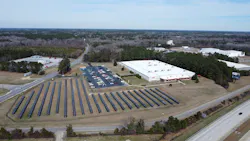
Global electrification technology firm ABB has decarbonized its manufacturing operations in Florence, South Carolina, with a new three-acre solar array located on-site.
The 47-year-old Electrification Service facility in Florence now will source 80% of electricity needs with the solar array. The solar project can generate about 1.5 million kWh annual and aid ABB in its "Mission to Zero" program by both cutting emissions and reducing grid reliance.
The 142,000-square-foot manufacturing facility mainly provides aftermarket support and service for power and distribution equipment including switchgear, breakers and other infrastructure components. Since these are highly specialized manufacturing processes, ABB sought to complete the solar project without disrupting facility operations.
“These initiatives often enhance profitability while decoupling our growth from grid constraints,” Mateusz Zajac, sustainability leader for ABB Electrification Service, said in a statement.
Zajac says ABB viewed the opportunity not only as a way to reduce environmental impact, but also to improve the company’s overall bottom line and resilience.
The Florence plant qualified for the ABB Mission to Zero program because the solar upgrades helped increase energy productivity by 74%. The solar output also could reduce other costs by $70,000 annually.
This helped the company add and enable 10 new product lines amid the sudden business growth.
ABB also seeks to improve its environmental footprint at Florence by reducing landfill waste as the S.C. facility reportedly diverts more than 90% of its non-recyclable material.
To stay the course, the Florence facility deployed ABB’s energy monitoring platform, which utilizes over 20 real-time monitors and key data tracking metrics to precisely identify wasted energy.
“Our operations in Florence are a clear example of how older, hardworking industrial facilities can modernize in a practical and commercially smart way,” added Zajac. “This approach shows how a facility built for a different era can evolve into one that supports cleaner energy, stronger resilience, and better long-term performance.”
Next-Gen Digital Infrastructure Needs Diverse Energy Playbook
New and Free E-Book from EnergyTech
Follow ET on LinkedIn
About the Author
 Eric Moody