New Battery Storage in Virginia Promises to Save $100 Million and Alleviate Transmission Constraints
Key Highlights
- The projects include five battery storage sites connected to three Virginia utilities, currently under construction and set to be operational later this year.
- These systems will discharge during high demand periods, helping to reduce transmission and capacity costs significantly.
- Virginia leads the nation in data center energy demand, contributing to increased pressure on the grid and the need for storage solutions.
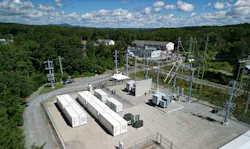
Battery storage project developer Lightshift Energy will install about 25 MW of new battery capacity across Virginia in partnership with local cooperative and municipal utilities.
Non-profit transmission and wholesale electric provider Blue Ridge Power Agency is guiding the partnership with Lightshift Energy to install five energy storage projects connected to three member cooperatives and utilities. Those include Central Virginia Electric Cooperative (CVEC), Craig-Botetourt Electric Cooperative and the City of Salem Electric Department.
The five energy storage sites are currently under construction and due to be completed and interconnected later this year. Three of them are being installed within CVEC territory, one with Craig-Botetourt and one with Salem.
Growing Need for Battery Storage to Battle Grid Constraints
New Microgrid Knowledge QuickChat with ELM
Each of the battery storage systems will be connected to the distribution grid, discharging during periods of high demand and help reducing electric transmission and capacity generation costs. The planners expect that the battery storage alleviating those costs could save approximately $100 million over the lifetime of the projects.
“We are excited to see these facilities come online and produce savings for the members and customers of CBEC, CVEC, and Salem,” said Alice Wolfe, General Manager of BRPA, in a statement. “Rising transmission and capacity costs have been a source of concern for some time, and these new battery projects will begin to control these costs. The staff, boards, and council of CBEC, CVEC, and Salem deserve credit for their thoughtful and committed leadership.”
Virginia leads the nation in demand from data centers, typically located in the northern part of the state. The state is located within the PJM Interconnection grid system, and transmission costs have risen nearly 200% within that grid in the past decade, according to PJM and others.
Grid capacity constraints, partially accelerated by the rise in cloud-based computing and artificial intelligence data centers, are creating a sense of alarm among system operators. The North American Electric Reliability Council has warned that electricity demand could outpace supply in many parts of the country by 2028.
Electric cooperatives often are not allowed to build new generation, so many are adopting utility-scale and distributed energy storage capacity to deal with supply constraints.
“As Virginia continues to increase its appetite for energy storage, electric cooperatives and municipal utilities are uniquely positioned to lead on innovative applications that directly benefit their members,” said Mike Herbert, co-founder and managing partner at Lightshift Energy. “By working together with BRPA, CVEC, CBEC, and Salem, this coordinated effort exemplifies how portfolios of distribution-connected storage can offer not only significant savings to the participating utilities, but also fast and cost-effective capacity during a time that the PJM market is scrambling to bring on new resources and keep electricity prices low.”
The U.S. added nearly 58 GWh of new battery storage discharge capacity last year, a new record for the resource. This includes about 19 GW of new installations, according to the Solar Energy Industries Association and research partner Benchmark Mineral Intelligence.
Nearly all this battery storage capacity consists of lithium-ion technologies, although many entities are developing potential longer duration chemistries such as sodium-ion and flow batteries.
EnergyTech 2050: What Will Power the Future?
Take the Poll, Please