Japan’s Yanmar to Power New Dining Cruise Ship with Hydrogen Fuel Cells
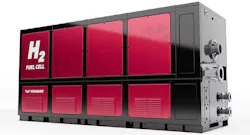
Yanmar Power Solutions and Japanese energy company ENEOS Corp. will install a maritime hydrogen fuel cell system for a dining cruise ship under their agreement with global maritime carrier Nippon Yusen Kabushiki Kaisha (NYK).
The planned vessel, scheduled to enter service in 2027, will succeed Lady Crystal, currently operated by NYK in Tokyo, along the Tennoz Isle area, according to the companies. Yanmar’s hydrogen fuel cell system will be integrated into the new vessel using hydrogen storage modules provided by Toyota Motor Corp. as part of the fuel supply system.
Yanmar states this project marks its fifth implementation of the hydrogen fuel cell system designed to target zero-emission objectives for passenger dining cruise ships. It further advances the adoption of clean energy alternatives for the marine sector with the integration of hydrogen-related equipment.
The next-gen marine power source GH320FC application design by Yanmar claims to facilitate more efficient installation of various vessel types. Yanmar adds that the system also allows for multiple fuel cell engine unit connections, offering flexibility in the number of hydrogen fuel cell modules available.
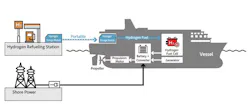
Linking multiple units together through parallel-wired connections allows them to combine like building blocks to scale a ship's total power generated, instead of relying on one single engine unit with a maximum output of 320 KW.
ENEOS, an energy infrastructure provider, will reportedly be responsible for hydrogen production at refueling stations, primarily in Tokyo, and supplying it to the storage modules.
“Drawing on our experience with previous installations such as the hydrogen fuel cell system being used on a coastal passenger ferry (the Hanaria) currently in commercial operation in Japan, we believe our solutions can help the customers to achieve their decarbonization goals,” said Masaru Hirose, director and general manager of large power products business at Yanmar, in a previous statement.
The three companies aim to incorporate this hydrogen fuel cell system for the planned vessel to demonstrate the practical use of hydrogen in the maritime sector and contribute to the overall decarbonization of the shipping industry worldwide.
The U.S. Department of Energy (DOE) has gotten behind hydrogen infrastructure development as one of the energy-dense paths to net zero emissions goals. In Oct. 2024, DOE released a notice of funding opportunity for up to $46 million to accelerate the research, development and demonstration (RD&D) of more affordable clean-hydrogen and fuel cell technologies.
Hydrogen does not contain carbon in its molecular chain so it does not emit carbon dioxide at the point of use. However, to be considered truly green hydrogen the H2 must be split from water by electrolyzers powered by carbon-free resources such as wind, solar or nuclear.
About the Author
 Eric Moody