Taking H2 to the Edge of Computing: ECL, PowerCell Teaming on Hydrogen Infrastructure for Data Centers
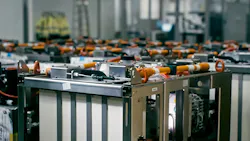
Data center energy developer Edge Cloud Link (ECL) and hydrogen technology firm PowerCell Group AB are initiating work together which could lead to future hydrogen fuel cell power across ECL's fledgling AI data center platform.
Under a Memorandum of Understanding (MOU), the two companies aim to establish a firm purchase order for PowerCell’s PS190 fuel cell systems. PowerCell, a previous spinoff of the Volvo Group, will integrate its distributed master controller (DMC) platform with ECL’s real-time management system.
This combined setup will manage load across fuel cells, batteries, the grid and natural gas in ECL's FlexGrid data center infrastructure designed for AI model training expansion. By licensing PowerCell's DMC software, ECL can treat the hydrogen fuel cells potentially powering its infrastructure as a continuous primary energy supply rather than an emergency backup power solution.
ECL reported it intends to expand its data center footprint through a separate non-binding MOU with PowerCell for roughly 300 MW of additional hydrogen fuel cell capacity. PowerCell states that this MOU is supported by its manufacturing partnership with German multinational engineering and tech company Bosch, which is its largest shareholder and provides delivery of its products at industrial scale.
The partners are accepting tenant inquiries for AI infrastructure deployments as early as 2027. Initial deployment centers on ECL's 35 MW Al-focused CSC-1 campus in Santa Clara, California.
PowerCell fuel cell systems will integrate into ECL's FlexGrid microgrid architecture alongside grid power, natural gas and battery storage. This project expands on the existing next-gen deployment at ECL's MV-1 facility in Mountain View, California, where hydrogen has served as a primary power source for more than two years.
“We evaluated multiple fuel cell technologies under real operating conditions over two years at our MV-1 facility before selecting PowerCell and Bosch,” ECL Founder and CEO Yuval Bachar said in a statement. “We are signing an MOU for an additional 300 MW because the demand from AI operators for power in constrained markets far exceeds what any single grid connection can deliver.”
Traditional data center infrastructure consumes millions of gallons of water daily using evaporative cooling towers. They also rely on local electrical grids for power, requiring massive grid interconnection agreements that can often take years to reach state approval.
ECL is advancing its AI data center infrastructure through the promise of off-grid systems powered entirely by local hydrogen fuel cells. This architecture bypasses traditional grid bottlenecks while utilizing a proprietary closed-loop system to deliver water-free cooling, generating usable water as a natural byproduct of hydrogen power.
“Our firm order for PowerCell PS190 systems, alongside our broader non-binding MOU, sends a clear signal that hydrogen-powered AI data centers are moving from first-of-kind toward industrial scale,” said Richard Berkling, CEO of PowerCell Group.