H2 Ambitions Take Hit as Plug Power Cancels Belgium Port Electrolyzer Project
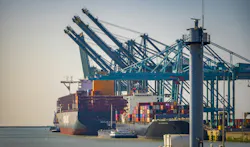
Plug Power Inc.’s 100-MW green hydrogen (H2) plant project in Belgium, which had yet to break ground despite four years of announcements, has been abandoned amid mounting financial uncertainties for the company, according to multiple media and company reports.
This news comes as the New York-based hydrogen tech developer continues to battle negative cash flows from operations and steep net losses, according to a recent U.S. Securities and Exchange Commission (SEC) filing. Plug Power first introduced its European plans in 2022 for a hydrogen fuel cell systems project titled “CHYMIA” at the Antwerp-Bruges Port Authority.
The financial impact on Plug Power abandoning this project increases the uncertainty surrounding its future profitability in the green hydrogen market. This exit adds to the company's asset impairments (an accounting write-down of real capital spent) of roughly $15.8 million in losses on assets planned in Antwerp.
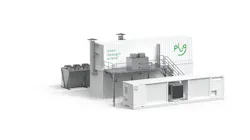
For more than a decade, Plug Power has been present across Europe, partnering with industrial manufacturers, including a joint venture with Renault called HYVIA for green development efforts in deploying H2 applications. This included work towards the Cluster Hydrogen for Mobility and Industry in Antwerp (CHYMIA) project at the Port of Antwerp.
To support this, Plug secured a combination of green hydrogen power purchase agreements (PPAs) and market electricity sourcing, aiming to work alongside local wind and solar infrastructure to provide grid flexibility. The European companies involved in these PPA agreements include the Green Hydrogen Energy Company (GHECO) and a joint venture between Schroders Greencoat and Carlton Power.
Plug Power signed a 30-year concession agreement to build a green hydrogen production facility at the Port of Antwerp. The plant was being designed to utilize Plug's own electrolyzer system, which uses electricity to split water into H2 and oxygen, on 28 leased acres of land under the agreement.
This clean "green" process is powered by carbon-free power generation such as solar or wind energy, differing from traditional grey hydrogen produced by steam reforming of methane gas.
Plug had anticipated producing up to 12,500 tons of liquid and gaseous green hydrogen annually for the European market by 2025. Instead, Plug’s tightening finances have fueled growing uncertainty, pointing toward the cancellation of the ambitious plans.
“The Company incurred net losses of approximately $190.1 million and $228.7 million during the three months ended June 30, 2026 and 2025, respectively," read page 42 of Plug's SEC filing. “The Company incurred net losses of approximately $436.1 million and $425.6 million during the six months ended June 30, 2026 and 2025, respectively."
This filing also highlights that the U.S. Department of Energy (DOE) withdrew its $1.66 billion loan guarantee for Plug Power in August, which was presented in 2025 to help advance up to six projects. That decision cut off a crucial funding source for Plug’s various green hydrogen plant ambitions that had previous U.S. backing. The move follows actions by the newly established office of Energy Dominance Financing to de-obligate over billions of dollars in Biden-era loan obligations.
Beyond federal policy shifts, the cost of green H2 is another challenge for Plug to push through this massive hurdle. A 2026 report by Energy Solutions Intelligence highlights that high production costs ($2.50–$7.00 per kilogram) have led to only 4% to 7% of announced green hydrogen projects reaching a final investment decision. Researchers add that these physical bottlenecks of liquefaction energy requirements and rigid regulatory compliance rules limit competitiveness until at least after 2035.
These overall challenges have made the development and advancement of big electrolyzers difficult to gain a foothold in the clean energy transition. For Plug Power, its Port of Antwerp project aims to be a major attraction for displaying how decarbonization can work on an industrial scale.
Although green H2 is carbon free, it generally costs two to four times more to deliver than direct electricity from solar, wind or traditional fossil fuels, according to a Harvard University study. In late 2025, Plug Power announced plans to scrap roughly $275 million of existing assets, including the gateway site land space for its New York Green Hydrogen Project, which was sold to hyperscale developer Streams Data Centers.
About the Author
 Eric Moody