Oil Sands Carbon Capture: Mantel, Wood Exploring Molten Salt Technology to Scrub Industrial Emissions
British-based engineering and energy project consultant Wood has tentatively agreed to partner with carbon capture technology startup Mantel to decarbonize heavy industrial operations across North America.
The memorandum of understanding (MoU) with Mantel designates Wood Group as the preferred technology provider for fired equipment integration across commercial project deployments. The two companies have collaborated for several years on initially integrating carbon capture technology into power systems including boilers, gas turbines and steam generators.
Capture carbon in the oil sands
Wood is currently supporting Massachusetts-based Mantel with front-end engineering design for an unspecified steam-assisted gravity drainage (SAGD) facility in western Canada, which is reportedly Mantel’s first commercial project. SAGF is a method which producers used to heat oil bitumen and make it more movable from regions such as the oil sands in Alberta, Canada.
“In SAGD operations, steam generation is the largest source of CO₂ emissions. By integrating carbon capture directly into the heat source, we are changing the equation entirely,” Richard Spires, global director at Wood, said in a statement. “It reduces complexity and opens the door to more efficient system design. Our work with Mantel shows how strong engineering and innovative technology can come together to make decarbonization practical at scale.”
Mantel launched its carbon capture technology in 2022 after spinning out from a venture at Massachusetts Institute of Technology (MIT). The company utilizes a carbon capture methodology based around molten salt designed to operate at the high temperatures found inside boilers, kilns, furnaces and other heavy industrial heat and power equipment.
The western Canada oil sands SAGD work is aimed at capturing about 60,000 metric tons of carbon dioxide (CO₂) annually while producing 150,000 tons of high-pressure steam for project operations.
“Successfully deploying carbon capture in heavy industry requires more than innovative chemistry; it has to work within the realities of how these systems run day in and day out,” said Cameron Halliday, co-founder and CEO of Mantel, in the MoU announcement. “We’ve spent years working through these complex challenges with Wood, and we trust their team to help bring this into real-world projects as we scale.”
The players and the field: Plenty to capture
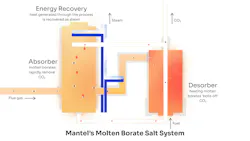
Mantel’s molten salt borates act as high-temperature liquid-phase materials to capture the carbon emissions through a supercritical CO₂ cycle. The company contends that its technology is right for decarbonizing operations in industrial equipment sectors such as boilers, once through steam generators, combined heat and power operations, natural gas and bioenergy production.
Wood, commonly known as John Wood Group, started as an energy services business with a focus in drilling well support and moved into environmental consultancy more than a decade ago. The company also has contributed to design and construction in numerous nuclear energy power stations across the United Kingdom, although that division was sold to U.S.-based Jacobs for nearly $300 million six years ago.
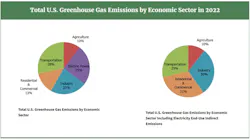
Oil and gas extraction and refining accounts for more than 25% of overall global industrial emissions, while the chemical, iron and steel industries emit approximately 35% of heavy sector greenhouse gas emissions around the world, according to environmental studies and the MIT Climate Portal.
A U.S. Congressional Budget Office report five years ago calculated that the domestic manufacturing sector, including chemical and refining, contributed to 12% of total greenhouse gas emissions nationwide. That amounted to nearly 2 billion metric tons of CO2 equivalent in 2020, according to the U.S. Environmental Protection Agency’s 2022 report.