Bypassing the Grid: Mesa Power Solutions Scaling Gas-Powered Microgrids at San Antonio Hub to Bridge the AI Power Gap
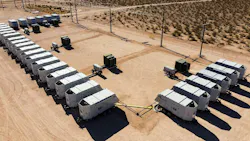
Microgrid manufacturer and power provider Mesa Power Solutions is reindustrializing the domestic power supply chain with a new approach to serve soaring electricity needs from AI data centers and heavy industrial users. The company is using natural gas in its generators instead of relying on diesel as backup.
This transition differs a bit from the traditional power generation landscape, as traditional diesel generators require large on-site storage tanks and continuous refuel deliveries. Instead, Mesa Power Solutions connects its generators directly into existing natural gas pipelines to create an uninterrupted fuel supply without relying on fleet deliveries during severe weather.
Because natural gas burns cleaner than diesel, the company's microgrids can run 24/7 as a primary power source rather than sitting idle for emergencies, all while meeting strict emissions standards.

Microgrids, which are islandable and can operate off-grid during a power emergency, have become a growing behind-the-meter (BTM) generation source. They’re often paired with battery storage for hyperscalers and other large-scale computing infrastructure that depend on uninterrupted power.
The company’s 200,000-square-foot San Antonio facility, brought online in December 2025, focuses on advancing BTM natural gas for data centers. While scaling production for large-scale energy users, Mesa is also focused on providing resilient power during storms, outages or other grid disruptions.
Pivoting from oil fields to hyperscalers
Mesa Power Solutions first began in the oil and gas sector in 2014, supporting fracking and associated gas from oil production under the name "Mesa Natural Gas Solutions." During a San Antonio plant tour EnergyTech was invited to, the company explained that founder T. Boone Pickens Jr. “hated” the waste of flared natural gas and challenged the company to build a generator that could run off of it instead.
In 2020, stemming from that oil-and-gas expertise, the company transitioned to serving broader commercial and industrial spaces. They began deploying advanced natural gas microgrids and generator systems designed to beef up and support utility grids, providing reliable, continuous power alongside fluctuating renewable sources.
Mesa’s chief commercial officer, Mark Widener, and his team are actively working with the utility sector to let utilities own and control the systems, or lease control to another operator, delivering resilient energy to strengthen the U.S. domestic power supply chain. Mesa CEO Scott Gromer informed EnergyTech that the company’s goal is for its two flagship hubs to anchor that output, scaling the San Antonio plant to 1.2 GW of annual production capacity and the Evansville location to reach 1.8 GW.
Boosting manufacturing to meet energy demand
Mesa began producing about 1 GW of manufacturing capacity earlier this year out of its new $70 million manufacturing and administrative campus in Evansville, Wyoming, which consolidated its former campus in Casper, Wyoming. When combined with the San Antonio plant (which originally opened in Q4 of 2024 before its full December 2025 expansion), the company's total annual manufacturing capacity has expanded to 3 to 4 GW nationwide.
Leading this effort is Mesa’s PowerCore generator platform. Gromer shared that the design focuses on packing as much power as possible into the smallest footprint, noting that “real estate has become really valuable.”
Mesa claims its generation systems are engineered to lower emissions from its gensets (generator sets), allowing projects to stay under a state-administered EPA Title V operating permit. This prevents facilities from triggering a federal Prevention of Significant Deterioration permit, which is reportedly far slower and involves more complex regulatory hoops.
To ensure equipment stays properly maintained, Mesa assigns one technician for every 15 to 20 MW of deployed power. These teams monitor the gensets 24/7 to catch issues early and maximize uptime.
When breaking down its deployments between backup and primary generation, the company notes that data centers rely on its systems continuously while utilities use them more intermittently.
Notable deployments include a 14.5-MW islanded microgrid in the Permian Basin, which is linked to 42 natural gas generators to provide uninterrupted off-grid power for 36 oil wells, 14 oil batteries and two saltwater disposal systems using on-site field gas.
Leveraging deployment momentum to tackle supply chain bottlenecks
Hyperscalers are beginning to invest heavily in gas-powered BTM solutions delivered directly to massive data center campuses. Powering these large-scale facilities is no easy task, as environmental targets are still critical.
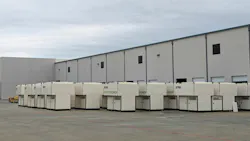
In many cases, natural gas-fired generators have emerged as a near-term solution for addressing grid bottlenecks. These internal combustion engines, increasingly deployed in modular microgrids, convert fuel into mechanical energy to drive electrical generation.
Operating BTM allows these large-scale facilities to bypass local utility bottlenecks and generate power on-site, supplying hyperscalers' massive electrical loads continuously.
Although more than 25% of planned data centers in the U.S. intend to build their own BTM power, critics argue that widespread deployment of natural-gas-fueled systems could complicate state decarbonization goals. It also raises questions about how grid infrastructure costs are allocated among remaining utility customers.
Mesa adds that data centers account for 50% to 60% of its business, with utilities and oil and gas making up the rest. In San Antonio, interest is also reportedly growing among utilities for microgrids.
In June this year, the nation’s largest community-owned and municipally owned natural gas and electric utility, CPS Energy, issued a request for proposals. CPS Energy's RFP sought up to 20 MW of distribution-scale battery energy storage systems (BESS) alongside a new microgrid to strengthen critical San Antonio-area infrastructure. The initiative was supported by the U.S. Department of Energy and is projected to come online by Q2 2028.
However, one of the biggest challenges customers face when deploying large-scale on-site generation is securing completed gensets, which Gromer noted “has become a massive supply chain bottleneck.”
While aiming for six-month lead times for delivery, the company detailed that it cannot guarantee that turnaround due to surging demand for BTM off-grid solutions. As electricity demand grows, Mesa views natural gas generation as an essential solution because it is cleaner, more abundant and cheaper than diesel, offering a continuous source of energy—especially in emergencies.
About the Author
 Eric Moody
Staff Writer
Related
 speed_to_power_dreamstime
 natural_gas_dreamstime