Data-Nuclear Trifecta: Meta Partnering with Oklo, TerraPower and Vistra
Facebook parent company Meta is going mega for with a triplet of future nuclear projects to power its artificial intelligence and cloud-based computing load.
In short order Meta announced agreements with next-gen nuclear design and development firms Oklo and TerraPower while also committing a future long-term supply agreement with independent utility-scale generator Vistra. The trio of deals, if and when fully commissioned, would allocate more than 6 GW of carbon-free small, advanced and conventional nuclear capacity to the digital technology and online giant.
Oklo is located in Ohio and aiming to deliver its next-gen Aurora Powerhouse sometime by the coming decade.
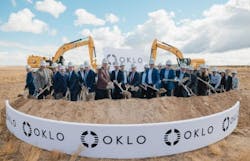
“Our agreement with Oklo enables the development of 1.2 gigawatts of nuclear energy in southern Ohio, supporting Meta’s operations in the region—including our AI supercluster in New Albany,” Urvi Parekh, head of global energy at Meta, said in a statement. “This project will create jobs, spur local innovation, and advance American leadership in energy technology. By investing in baseload nuclear energy, we’re helping build a resilient and sustainable future for our communities.”
Oklo’s pre-construction work could begin this year with a first phase coming online by 2030. The full capacity target could be reached by 2034, with Meta pre-paying for power and helping fund upcoming project costs.
“Two years ago, Oklo shared its vision to build a new generation of advanced reactors in Ohio. Today, that vision is becoming a reality,” Oklo CEO and co-founder Jacob DeWitte said. “We have finalized the purchase of over 200 acres in Pike County and are excited to announce this agreement in support of a multi-year effort with Meta to deliver clean energy and create long-term, high-quality jobs in Ohio.”
The rise of AI energy demand will require multiple baseload and sustainable solutions for the so-called Industrial Compute Age, so Meta and other Big Tech firms are seeking multiple resources.
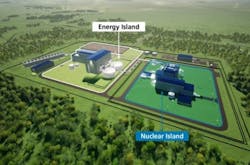
The second piece of Meta’s nuclear strategy is a deal with Bellevue, Washington-based TerraPower to develop up to eight of its Natrium reactors and energy storage system plants in the U.S.
Once fully realized, it could provide Meta with up to 2.8 GW of baseload nuclear-generated electricity. Under this commercial agreement, Meta will provide funding to support the deployment of the Natrium plants, with delivery of initial units as early as 2032. This is Meta's largest support of advanced nuclear technologies to date.
"To successfully address growing energy demand, we must deploy gigawatts of advanced nuclear energy in the 2030s. This agreement with Meta is designed to support the rapid deployment of our Natrium technology that provides the reliable, flexible, and carbon-free power our country needs," said Chris Levesque, TerraPower president and CEO. "With our first Natrium plant under development, we have completed our design, established our supply chain, and cleared key regulatory milestones.”
The Natrium reactor is a sodium-cooled, “fast reactor” design. Among the TerraPower primary investors is Microsoft founder and former CEO Bill Gates, who heads up the nuclear designer’s board of directors.
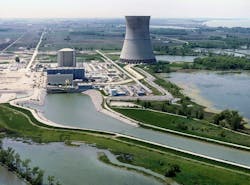
Texas-based utility generation holding company Vistra has agreed with Meta on 20-year power purchase agreements to provide more than 2.6 GW of nuclear power from three different reactor plants to support Meta’s computing and AI load.
The PPAs will source 2,176 MW of nuclear power from Vistra’s Davis-Besse and Perry single-unit plants in Ohio. The deal also will invest in capacity uprates to add 433 MW from those facilities and the two-unit Beaver Valley plant in Pennsylvania.
"At Meta, we are investing in nuclear energy because it provides clean, reliable power that is essential for advancing our AI ambitions and strengthening American leadership in energy innovation, Parekh said. “By supporting nuclear power, we ensure that our operations – and the communities we serve – benefit from energy solutions that drive both technological progress and economic growth.”
Meta is not alone among tech giants seeking nuclear—both existing, new and even once retired plants—to combine future AI, cloud-based and industrial electrification demands with energy sustainability goals. Microsoft, Amazon, Oracle and Google are all seeking long-term nuclear PPAs.
About the Author
 Rod Walton, EnergyTech Managing Editor
Rod Walton, EnergyTech Managing Editor
Managing Editor
For EnergyTech editorial inquiries, please contact Managing Editor Rod Walton at [email protected].
Rod Walton has spent 17 years covering the energy industry as a newspaper and trade journalist. He formerly was energy writer and business editor at the Tulsa World. Later, he spent six years covering the electricity power sector for Pennwell and Clarion Events. He joined Endeavor and EnergyTech in November 2021.
Walton earned his Bachelors degree in journalism from the University of Oklahoma. His career stops include the Moore American, Bartlesville Examiner-Enterprise, Wagoner Tribune and Tulsa World.
EnergyTech is focused on the mission critical and large-scale energy users and their sustainability and resiliency goals. These include the commercial and industrial sectors, as well as the military, universities, data centers and microgrids. The C&I sectors together account for close to 30 percent of greenhouse gas emissions in the U.S.
He was named Managing Editor for Microgrid Knowledge and EnergyTech starting July 1, 2023
Many large-scale energy users such as Fortune 500 companies, and mission-critical users such as military bases, universities, healthcare facilities, public safety and data centers, shifting their energy priorities to reach net-zero carbon goals within the coming decades. These include plans for renewable energy power purchase agreements, but also on-site resiliency projects such as microgrids, combined heat and power, rooftop solar, energy storage, digitalization and building efficiency upgrades.