Automation: Critical Enabler for SMRs in an Expanded Energy Ecosystem
Key Highlights
- SMRs are designed to be factory-built, modular, and repeatable, enabling faster deployment and reduced costs compared to traditional nuclear plants.
- Automation and digital solutions are critical for operational efficiency, remote management, predictive maintenance, and enhanced safety of SMRs.
- Industry collaborations, like those between ABB, Blykalla, and Oklo, demonstrate the importance of partnerships in developing standardized control systems and digital infrastructure.
Across Europe, North America and beyond, small modular reactors (SMRs) are increasingly being viewed as an important part of the answer to some of the most urgent questions facing the future energy system: how to deliver secure and reliable baseload power, support industrial electrification, meet growing electricity demand from data centers, and provide heat and power in places where large-scale infrastructure is difficult to build.
But for SMRs to move to large-scale deployment, the industry needs to focus not only on the nuclear island, but on the conventional island – the systems and technology that will allow SMRs to be delivered, operated and maintained efficiently.
Automation will be central to that.
The real opportunity around SMRs is not simply that they are smaller than conventional nuclear plants – it is that they are designed around a different deployment model. Rather than treating every project as a bespoke, one-off engineering exercise, SMRs create the possibility of standardized, modular solutions that can be replicated across multiple sites.
This is an important differentiator because nuclear power has historically been a site-specific industry. Conventional nuclear plants are large, complex and typically tailored to their location, regulatory environment and operating model.
SMRs change that logic. They are intended to be factory-built, modular and repeatable. In the simplest terms, the ambition is to move closer to a replicable deployment model where a proven design can be deployed again and again with fewer changes each time. Automation needs to be part of that model from inception – an approach that brings more than just an engineering advantage.
Connect Formulation, Manufacturing and Quality
Across the Digital Enterprise
New Executive Brief from Siemens
Rather than committing to a single large-scale project upfront, a modular approach provides a more flexible investment model that enables capacity to be added on a phased basis as demand grows. This reduces upfront capital expenditure and financial risk, and better aligns new power generation with industrial or grid needs.
If the industry wants to deploy SMRs at the pace and scale now being discussed, it will need automation systems that are standardized to support repeatability, but also flexible to meet different industrial, regulatory and regional requirements.
Technology pathways
The first wave of SMRs is likely to be based on technologies the nuclear industry already understands. Generation 3+ SMRs are essentially scaled-down versions of existing reactor types, such as pressurized or boiling water reactors.
The technology is familiar, which means these projects are likely to be the first to move forward at scale. Their innovation is less about the physics of the reactor and more about the way they are built and deployed.
Generation 4 reactors use more innovative coolants, such as liquid metals, salts or gases, and could eventually unlock smaller designs better suited to industrial heat, maritime applications and more distributed forms of energy supply.
In both cases, automation will play a major role. For Generation 3+ SMRs, it can help make modular deployment more efficient and support repeatable operating models. For Generation 4 technologies, it could become even more important as the industry looks at new use cases, more advanced operating concepts and smaller units located closer to industrial demand.
One of the most important questions is how SMRs will be operated. In the long term, the most effective model may be closer to what we already see in parts of the oil and gas industry: remote operations supported by centralized control rooms.
That does not mean removing manpower from the equation. Nuclear operations are expected to continue to require people on site for maintenance, inspection and intervention if needed. But there is a difference between having people on site and requiring every unit to be operated through a fully staffed, site-specific control room.
With appropriately designed and validated automation systems, it becomes possible to monitor and manage multiple units safely and more efficiently while supporting faster decision-making.
For some SMR projects that could mean multiple units on one site connected to a control room. For others, it could eventually mean multiple smaller sites linked into a central operating model. The exact approach will depend on the technology, the owner, the regulator and the use case. But the direction of travel is clear: deploying SMRs in greater numbers requires a scalable operating model.
Operational resilience
This is where automation and digital solutions can provide a crucial bridge between industry ambition and commercial reality. It can reduce complexity, improve operational visibility and help operators make better decisions faster.
Predictive maintenance is one area where this is already being demonstrated. By monitoring the condition of equipment, operators can identify when maintenance is needed before issues become failures. That kind of capability will become increasingly valuable as the nuclear power sector complements a small number of large assets with larger fleets of smaller units.
Cyber security will also be fundamental. As nuclear systems digitalize and remote operations become a bigger part of the conversation, the industry will need to ensure that automation and digital systems are designed with resilience and security built in from the start.
AI safeguards
Artificial intelligence (AI) is already being explored in the nuclear industry. The most likely near-term applications are around supporting core operations – particularly in areas such as digital twins, simulation, optimization and maintenance planning. These AI-enabled solutions can help operators understand system behavior, test scenarios and improve performance without compromising the integrity of safety-critical control systems.
Pilot projects will be important here. Unfueled demonstration units and test environments provide opportunities to trial technology and enable the industry to learn what works or adds value and what can eventually be taken forward into licensed environments.
By working toward common concepts, common standards and supply chains, the industry will support repeatable deployment. There will still be regional differences, with the pace of development and deployment different in different geographies. Another influence will be policy stability, which enables confident planning and investment (both financial and technological) over the timescales needed to develop SMR facilities.
It is also important to understand that the more consistent the automation architecture can be across a fleet of SMRs, the easier it becomes to operate, maintain, regulate and scale. That does not mean ignoring local requirements – it means designing systems that can meet those requirements without turning every project into a new engineering exercise.
A real-world example
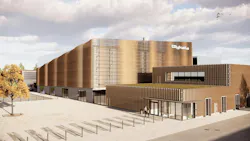
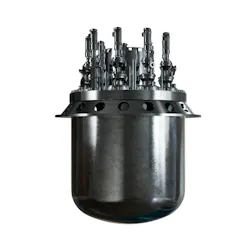
Our work with the Swedish company Blykalla is focused on how ABB’s automation, electrification and digital technologies can support the development of an electric lead-cooled SMR.
The first stage of the collaboration is based around a pilot facility near Oskarshamn in Sweden, designed to test proof of concept before moving towards future plants. And here we see the value of a supportive policy framework – the Swedish government has a roadmap to expand nuclear energy up to 10,000 MW by 2045, as part of a goal to reach a completely fossil-free electricity system.
Because this pilot does not use nuclear fuel, it creates a valuable environment for testing systems and approaches that would be much harder to trial directly in a licensed nuclear power plant.
The partnership has now moved into a more formal phase. In April 2026, ABB and Blykalla signed a joint development agreement, building on the original 2024 memorandum of understanding. This has shifted the relationship from exploratory alignment into structured joint development, with defined project plans, a joint steering committee and formal principles around ownership of developed technologies. Under the agreement, we will jointly develop conventional island technologies for the electrical prototype SMR, including automation, digital and electrification systems, while also creating a framework for future work on the demonstration and commercial units.
For me, this is where the Blykalla project becomes especially relevant to the wider SMR market. It is not only about supporting one reactor developer – it is a practical example of the kind of industrial partnerships the sector will need if SMRs are to move from designs and announcements into repeatable projects.
The same can be seen in ABB’s recent collaboration with Oklo in the United States. Oklo commissioned a digital monitoring room at its California headquarters, equipped with ABB technology, to support operator training and simulation as it progresses towards fleet-wide deployment of its Aurora powerhouses. Unlike traditional nuclear control rooms that require real-time operator actions, the powerhouses are designed to rely on automation and inherent safety features so that personnel can behave more like monitors than operators.
Another agreement with SimGenics is focused on engineering, training and DCS simulators for the nuclear industry, and points to the same need for robust digital environments that can help operators prepare for both existing and next generation nuclear assets. While with Paragon Energy Solutions, ABB is supporting efforts to develop integrated Instrumentation, Control and Electrification solutions for the nuclear power industry in the United States.
Together, these individual projects show how automation, digital infrastructure and industrial partnerships support repeatable operating models that advanced nuclear solutions will need.
The Blykalla agreement also identifies ABB as a key partner for automation, control systems and control room equipment within the defined scope. Those are the areas that will determine whether future SMRs can be operated safely, efficiently and in a way that supports the SMR business model.
Modularity matters
While the SMR sector continues to develop in terms of licensing, financing, supply chains and project delivery, automation is a key enabling technology that will determine whether SMRs can become a scalable part of the energy system rather than a series of isolated projects.
The promise of modularity is that nuclear power can become more flexible, repeatable and better aligned with the needs of the modern world. To realize that promise, the industry needs to focus on the full operating model around SMRs.
That means designing for safety, standardization, remote operation, predictive maintenance and digital resilience from the start. It also means creating regulatory pathways that enable proven technologies from other sectors to be applied.
If deployed at scale, SMRs can play a significant role in the expansion of global energy supply – providing consistent, reliable and low-carbon baseload power to the grid and directly to energy-intensive sites such as data centers. Automation is not a side issue in that journey – it is one of the foundations that will help to make it possible.
About the Author
Elova Ryegård
Elova Ryegård is Nuclear Competence Cluster Lead, ABB’s Energy Industries division.