Schumer Pushes Army to Select New York Army Base as Future Reactor Site
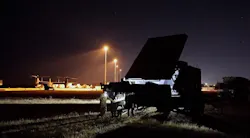
Many tactical steps await in bringing it to victory, but U.S. Sen. Chuck Schumer is urging the U.S. Army to select the New York-based home of the 10th Mountain Division as the site for a future commercial nuclear microreactor.
Schumer, D-New York, wrote U.S. Secretary of the Army Dan Driscoll last week asking that Fort Drum be prioritized as a site for the Army’s “Janus Program” for next-generation nuclear energy projects at domestic bases. The Janus directive was developed in response to President Trump’s “Deploying Advanced Nuclear Reactor Technologies for National Security” executive order.
Janus aims at 2028 for next-gen nuclear powering domestic military
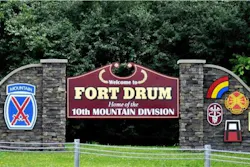
Fort Drum is a large base located in Jefferson County, New York, adjacent to Lake Ontario near the northern New York border with Canada. Nearly 13,000 military, family and other personnel live at the Army base. Units which are based at Fort Drum include the 10th Mountain Division, 20th Air Support Operations Squadron of the Air Force and parts of the Army’s 174th Infantry Brigade.
The Department of the Army announced plans for the Janus Program in October 2025. The Trump executive order directs the Department of War (previously known as the Department of Defense) to develop an Army-regular nuclear reactor at a domestic base by no later than September 30, 2028.
Emerging Microgrid Technology for Speed to Power for Data Centers
Wednesday EnergyTech Webinar with PowerSecure
Schumer contended that Fort Drum is uniquely positioned to serve that role in accelerating domestic nuclear energy for national security. A biomass energy plant supplied some of the fort’s power until it was shut down a few years ago.
“Fort Drum is top-of-class to lead in advanced nuclear development. Bringing a safe and secure nuclear energy source to Fort Drum is a win-win for strengthening the base’s energy security and protecting our Army from vulnerabilities like grid failures,” the senator said in a statement. “As one of the most advanced and strategic military installations in the country, Fort Drum is ready, and the critical missions it carries out to protect our nation demand reliable, resilient, and independent onsite power generation.”
Other bases which the Army shortlisted for Janus selection include Fort Benning, Fort Bragg, Fort Campbell, Fort Hood, Fort Wainwright, Holston Army Ammunition Plant, Joint Base Lewis-McCord and Redstone Arsenal.
“These early site selections align with the Department of War’s goal of accelerating the pace of deploying on-site nuclear generation at our installations,” Jordan Gillis, Assistant Secretary of the Army for Installations, Energy and Environment, said in the official release last October. “Through the use of the Army’s unique nuclear regulatory authorities, we are deploying a resilient, secure, and reliable energy supply for critical defense operations and in support of the most lethal land-based fighting force in the world.”
Enthusiasm high for SMRs, but reality is slower
The Trump Administration has been championing the development of microreactors, small modular reactors and other advanced next-gen small nuclear startups. The Trump Department of Energy selected 10 next-gen reactor companies to participate in a pilot project aimed at reaching criticality by July 4.
Four startups achieved that goal in time for the nation’s 250th birthday celebration. They were Antares Nuclear, Valar Atomics, Deployable Energy and Aalo Atomics, in that order.
The commercial U.S. fleet of conventional nuclear reactors generates nearly 20% of the nation’s utility-scale electricity and close to half of its carbon-free power. Those larger reactor units can reach capacity at 1 GW or more, but the projects are enormously expensive and time-consuming to build.
SMRs and other microreactors are being designed with passive safety features and at small capacities such as 30 MW per unit. It is not clear that this next-gen nuclear will be any less expensive per MWh, but proponents believe those small units can be built and commissioned quicker and in more locations.
Neither the U.S. nor Europe are operating any commercial SMRs yet, and most industry analysts don’t think they will be in use until the early 2030s.
Russia and China are the only nations utilizing SMRs at commercial scale so far, according to the International Atomic Energy Agency. More than 80 SMR designs and concepts are being developed globally.
In the U.S. private sector, chemical manufacturer Dow is working on advanced reactor startup X-energy on developing a dedicated SMR to power Dow’s industrial plant along the Texas coastline with the Gulf of Mexico.
The Dow-X design is still under review with the federal Nuclear Regulatory Commission.
State of the Market:
Power Quality Fluctuations
New white paper by Ubicquia
About the Author
 Rod Walton, EnergyTech Managing Editor
Rod Walton, EnergyTech Managing Editor
Managing Editor
For EnergyTech editorial inquiries, please contact Managing Editor Rod Walton at [email protected].
Rod Walton has spent 17 years covering the energy industry as a newspaper and trade journalist. He formerly was energy writer and business editor at the Tulsa World. Later, he spent six years covering the electricity power sector for Pennwell and Clarion Events. He joined Endeavor and EnergyTech in November 2021.
Walton earned his Bachelors degree in journalism from the University of Oklahoma. His career stops include the Moore American, Bartlesville Examiner-Enterprise, Wagoner Tribune and Tulsa World.
EnergyTech is focused on the mission critical and large-scale energy users and their sustainability and resiliency goals. These include the commercial and industrial sectors, as well as the military, universities, data centers and microgrids. The C&I sectors together account for close to 30 percent of greenhouse gas emissions in the U.S.
He was named Managing Editor for Microgrid Knowledge and EnergyTech starting July 1, 2023
Many large-scale energy users such as Fortune 500 companies, and mission-critical users such as military bases, universities, healthcare facilities, public safety and data centers, shifting their energy priorities to reach net-zero carbon goals within the coming decades. These include plans for renewable energy power purchase agreements, but also on-site resiliency projects such as microgrids, combined heat and power, rooftop solar, energy storage, digitalization and building efficiency upgrades.