Offshore Wind Projects Under Construction Stopped Cold by Latest Trump Opposition
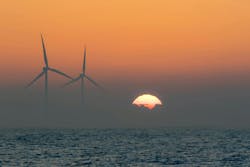
The Trump Administration is mobilizing a new front in its opposition to offshore wind energy by immediately pausing previously approved leases for projects under construction along the east coast of the U.S.
The federal Department of the Interior, in announcing the pause to projects under construction, said the move was due to national security motivations identified in “recently completed classified reports,” the DOI announced in its statement about the lease pauses.
This latest strategy against offshore wind comes a federal district judge rejected president Trump’s early order trying to kill projects already invested and being built.
“The prime duty of the United States government is to protect the American people,” said Secretary of the Interior Doug Burgum, in a statement. “Today’s action addresses emerging national security risks, including the rapid evolution of the relevant adversary technologies, and the vulnerabilities created by large-scale offshore wind projects with proximity near our east coast population centers. The Trump administration will always prioritize the security of the American people.”
The impacted leases include Vineyard Wind 1, Revolution Wind, Coastal Virginia Offshore Wind, Sunrise Wind and Empire Wind 1. Several, including Vineyard and Revolution, are being developed by foreign companies such as Orsted, Iberdrola, Equinor and Copenhagen Infrastructure Partnerships, while Coastal Virginia is being developed by U.S. utility giant Dominion Energy. Together, all of the projects are well into development and represent multiple gigawatts of potential electricity capacity.
“Revolution Wind and Sunrise Wind are both in advanced stages of construction and will be ready to deliver reliable, affordable power to American homes in 2026, with Revolution Wind expected to begin generating power in January,” reads the statement responding to the DOI lease suspensions by Danish-based project developer Orsted. “Revolution Wind and Sunrise Wind are fully permitted, having secured all required federal and state permits following comprehensive, years-long reviews.
“As a requirement of the permitting process for these projects, Revolution Wind LLC and Sunrise Wind LLC consulted closely and directly with the U.S Department of Defense Military Aviation and Installation Assurance Siting Clearinghouse to evaluate and address potential impacts to national security and defense capabilities from construction and operation of the Revolution Wind and Sunrise Wind projects,” the Orsted statement added.
The Interior Department statement cites previous federal investigatory declassified reports determining that the movement of large turbine blades and the “highly reflective towers” create radar interference called “clutter” which could confuse radar accuracy.
Interior Secretary Burgum posted on his official X social media account that the security concerns are causing the pause for “five expensive, unreliable, heavily subsidized offshore wind farms.
“One natural gas pipeline supplies as much energy as these five projects combined,” Burgum posted on X. “@POTUS (President Trump) is bringing common sense back to energy policy & putting security FIRST!”
Meanwhile, the Trump Administration has expressed federal support, including extending non-free trade agreement permits, for liquified natural gas (LNG) liquefaction and export terminals along the nation’s coastline
Revolution, Vineyard and Coastal Virginia offshore wind farms are long into their construction phases with plans to come online next year. Sunrise Wind and Empire are scheduled for commissioning in 2027.
The latest federal pause on offshore wind comes two weeks after a federal judge struck down President Trump’s earlier executive order calling for a cessation of offshore wind projects.
The presidential order was “arbitrary and capricious,” according to Judge Patti B. Saris of the Federal District Court in Massachusetts. She ruled that the DOI failed to provide a “reasoned explanation for reversing decades of offshore wind permits.
“Whatever level of explanation is required when deviating from longstanding agency practice, this is not it,” the judge wrote.
Virginia-based Dominion Energy, which is working on multiple power generation resource technologies to meet dramatically rising data center demand in its home state, said its Coastal Virginia wind project was vital to meeting U.S. national security in a state which produces many of the nation’s warships and is home to the largest per capita installation of data infrastructure.
“The project has been more than 10 years in the works, involved close coordination with the military, and is located 27 to 44 miles offshore, so far offshore it does not raise visual impact concerns,” reads the Dominion Energy response to the DOI project pause. “The project’s two pilot turbines have been operating for five years without causing any impacts to national security.”
Creating a Stable Digital Footprint in Dynamic Field Environments
New MGK Webinar Featuring Fulcrum
2 p.m. (ET) Thursday, Jan. 29
About the Author

Rod Walton, EnergyTech Managing Editor
Managing Editor
For EnergyTech editorial inquiries, please contact Managing Editor Rod Walton at [email protected].
Rod Walton has spent 17 years covering the energy industry as a newspaper and trade journalist. He formerly was energy writer and business editor at the Tulsa World. Later, he spent six years covering the electricity power sector for Pennwell and Clarion Events. He joined Endeavor and EnergyTech in November 2021.
Walton earned his Bachelors degree in journalism from the University of Oklahoma. His career stops include the Moore American, Bartlesville Examiner-Enterprise, Wagoner Tribune and Tulsa World.
EnergyTech is focused on the mission critical and large-scale energy users and their sustainability and resiliency goals. These include the commercial and industrial sectors, as well as the military, universities, data centers and microgrids. The C&I sectors together account for close to 30 percent of greenhouse gas emissions in the U.S.
He was named Managing Editor for Microgrid Knowledge and EnergyTech starting July 1, 2023
Many large-scale energy users such as Fortune 500 companies, and mission-critical users such as military bases, universities, healthcare facilities, public safety and data centers, shifting their energy priorities to reach net-zero carbon goals within the coming decades. These include plans for renewable energy power purchase agreements, but also on-site resiliency projects such as microgrids, combined heat and power, rooftop solar, energy storage, digitalization and building efficiency upgrades.