Ground Support for AI: Google Inks Nevada Geothermal PPA with Ormat, NV Energy
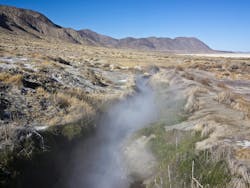
Nevada utility NV Energy is partnering with geothermal producer Ormat Technologies which will provide up to 150 NW of power capacity for Google’s growing data operations in the state.
Ormat Technologies and NV Energy entered into the geothermal power purchase agreement (PPA) centered around a multi-project portfolio to support Google’s data centers and artificial intelligence (AI) training loads. The deal allows Ormat to develop geothermal projects across Nevada from 2028 to 2030.
Google parent Alphabet Inc. has announced close to $1 billion in building and upgrading multiple data centers in Nevada, including facilities in Henderson, Storey and Clark counties. Last year, the search engine giant announced plans to spend about $400 million on added data computing capacity, including cloud-based and AI services for the Las Vegas region.
“AI is fundamentally increasing electricity demand across the technology sector, and geothermal power is uniquely positioned to deliver the reliable, carbon-free power required to support that growth,” Ormat Technologies CEO Doron Blachar said in a statement. “The combination of this PPA and its favorable terms, together with the extension of the geothermal tax credit provided through the OBBBA (One Big Beautiful Bill Act) framework strengthens our ability to execute our long-term growth strategy and create substantial shareholder value.”
The length of PPA begins with the first geothermal project achieving commercial operations and extends 15 years after the final project’s commercial operations date.
In addition to the OBBBA incentives, the Ormat-NV Energy geothermal projects will benefit from the utility’s Clean Transition Tariff. The PPA is expecting Public Utilities Commission of Nevada approval sometime in the second half of this year.
“The momentum of the Clean Transition Tariff through this agreement with NV Energy, Google and Ormat demonstrates a proven, scalable model for large customers to partner with utilities and technology providers to bring new clean capacity to the grid,” said Briana Kobor, Head of Energy Market Innovation, Google. “By adding up to 150 MW of new clean-firm geothermal capacity in Nevada, we are utilizing a repeatable framework that fully covers all costs associated with our electric service, ensuring the CTT insulates other ratepayers while strengthening the reliability of the local power system.”
Ormat has been exploring its geothermal possibilities in Nevada for several years. In 2025, the company acquired the 20-MW Blue Mountain plant from Cyrq Energy in a deal estimated at $88 million. The Blue Mountain plan delivers heat and power under a PPA with NV Energy.
Geothermal energy, captured by drilling down to harness some of the heat generated by the earth’s subterranean friction, offers potentially enormous megajoules of capacity for heating, cooling and electricity. Tapping that resource, however, is problematic and historically limited in a range that includes Nevada, Utah and California in the U.S.
Facebook parent company Meta Platform is another AI-focused digital infrastructure firm exploring geothermal energy agreements.
About the Author
EnergyTech Staff
Rod Walton is head of content for EnergyTech.com. He has spent 17 years covering the energy industry as a newspaper and trade journalist.
Walton formerly was energy writer and business editor at the Tulsa World. Later, he spent six years covering the electricity power sector for Pennwell and Clarion Events. He joined Endeavor and EnergyTech in November 2021.
He can be reached at [email protected].
EnergyTech is focused on the mission critical and large-scale energy users and their sustainability and resiliency goals. These include the commercial and industrial sectors, as well as the military, universities, data centers and microgrids.
Many large-scale energy users such as Fortune 500 companies, and mission-critical users such as military bases, universities, healthcare facilities, public safety and data centers, shifting their energy priorities to reach net-zero carbon goals within the coming decades. These include plans for renewable energy power purchase agreements, but also on-site resiliency projects such as microgrids, combined heat and power, rooftop solar, energy storage, digitalization and building efficiency upgrades.