The Last 3%: Why Solar-Plus-Batteries Can't Finish the Job Alone
Key Highlights
- Solar PV and batteries can meet about 97% of power demand, but the remaining 3% requires additional solutions like grid backup or generators.
- The cost of closing the reliability gap is disproportionately high, making it a significant challenge for utilities and off-grid facilities alike.
- Overbuilding solar and storage capacity is economically inefficient; solar thermal systems with thermal storage offer a more cost-effective alternative.
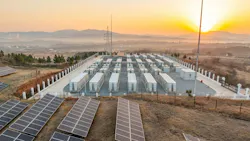
As solar PV costs have collapsed over the past decade and lithium-ion battery prices have followed, a seductive narrative has taken hold. Soon, PV and batteries alone can deliver firm, round-the-clock power.
A recent report from global energy think tank Ember lent credibility to this idea, finding that solar-plus-battery storage in the world's sunniest regions can meet power demand 97 percent of the time.
The renewable energy sector has achieved something genuinely remarkable. But in the rush to celebrate it, the industry glosses over what that remaining 3 percent actually requires, and how to pay for it.
11 days is a lifetime if power is a problem
Imagine a one-GW data center in the Middle East. An independent power producer can assemble a credible PV-plus-battery system that powers the load 97 percent of the time.
While impressive, a data center doesn't run on just 97 percent. Neither do military installations, hospitals, or other critical infrastructure. These facilities can’t tolerate even nominal outages, and their operators know it.
The moment you tell them you can get 97 percent of the way there, the first question will always be the same: What will get us that other 3 percent, and at what cost? Three percent of the year comes out to roughly 11 days.
Closing the gap from 97 to 100 percent is not a linear cost problem, but a step function.
The PV-plus-battery approach can only solve that issue via a grid connection or a backup generator(s). Which raises an obvious problem: Utility systems will have to be prepared to provide a one-GW load, but only for 11 days a year.
The economics of this approach are very challenging for the utility. Maintaining one GW of excess generation capacity and transmission capacity and spreading those costs over only 11 days of service is difficult at best.
The investment required to firm up the final 11 days is no smaller, proportionally, than what got you to 97 percent — in many configurations, the two cost roughly the same.
For off-grid facilities, you will need a backup system capable of carrying the entire load when the primary system cannot. That redundancy burden looms large, and the facility operator must bear it entirely.
Can resource adaptability solve the intermittency challenge?
PV and batteries are genuinely cheaper than they have ever been. And yet the fundamental reliability problem has not changed. The intermittency challenge — cloudy days, no wind, seasonal variation — does not get solved by cost reductions alone.
The typical approach to intermittency is overbuilding the solar and energy storage capacity. That approach eliminates much of the intermittency problem, but the challenge of multiple days of overcast skies simply requires too much overbuilding to make economic sense.
This makes solar thermal uniquely suited to the firm-power problem. A standard solar thermal system — using concentrated solar heat to spin a turbine during the day, storing excess heat in a thermal battery to run the turbine the rest of the time — can be a great start. Yet it still suffers from the same challenges as PV and lithium-ion batteries.
But what if the turbine can also burn a variety of liquid and gaseous fuels?
If that same system can burn natural gas, diesel, green hydrogen, or other fuels without additional capital investment, suddenly the 3 percent gap is covered in a capital-efficient and highly flexible way. In fact, this hybrid approach can fill the gap with on-site fuel storage as the only added cost.
The low marginal cost of adding storage duration provides another benefit to a solar thermal system. With heat stored in ceramic pellets rather than complex batteries, adding storage capacity is relatively inexpensive.
For thermal storage, unlike batteries, doubling the storage duration does not double the cost. Storage capacity can be economically right-sized for each application.
Data centers, remote industrial facilities, islands, and developing regions that cannot depend on grid infrastructure all face the same problem: 97 percent falls short, and the cost of closing that final 3 percent is disproportionately high.
Solar thermal won’t totally replace PV. It should not and will not. But its ability to provide genuinely firm power around the clock deserves serious consideration by large loads, developers, and utilities.
About the Author
Bruce Anderson
Bruce Anderson is the CEO of 247Solar.