Texas Solar Capacity Surges as Google and Sunraycer Drive Renewable Energy Development
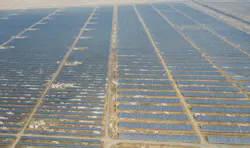
Search engine and AI-enablement giant Google has committed to two long-term power purchase agreements (PPAs) for upcoming utility-scale solar projects in Texas.
Sunraycer Renewables is developing the 400-MW Lupinus and Lupinus 2 solar farms in Franklin County. Both projects are expected to achieve commercial operation by late 2027.
Under renewable PPAs, the corporate customer doesn’t often connect to the electricity generation directly, but its investment helps finance construction and interconnection to decarbonize the overall grid. U.S. corporations contracted for nearly 30 GW of new renewable energy through PPAs last year, according to Bloomberg NEF.
Google owns and operates two data centers in Texas and has committed $40 billion to developing artificial intelligence (AI) factories and cloud-based computing infrastructure in the Lone Star State. AI factories are particularly energy-intensive consumers of grid power.
"Google's data centers are long-term investments in the communities we call home," said Will Conkling, Director of Energy and Power, Google, in a statement. "This collaboration with Sunraycer will fuel local economic growth while helping to build a more robust and affordable energy future for Texas."
The transaction was facilitated through LevelTen Energy's Accelerated Process ("LEAP™"), which expedites PPA transactions by standardizing processes and enhancing execution certainty for both developers and buyers.
"These agreements with Google represent a significant milestone for Sunraycer and underscore the strength of our development platform," said David Lillefloren, CEO at Sunraycer. "We are proud to support Google's clean energy objectives while delivering high-quality renewable infrastructure in Texas."
Texas ranks second only to California in installed solar capacity nationally. It is pacing ahead of all states on new installations and could surpass California next year, according to AI-enabled summation of statewide solar capacities. The Solar Energy Industries Association also ranks Texas second to California.
The racing demand curve for AI, cloud-based and industrial computing facilities is outpacing new energy infrastructure in many markets, and thus many Big Tech companies are investing directly in new capacity development. Earlier this month, Google announced through its parent company, Alphabet, that it was spending more than $4 billion to acquire energy project developer Intersect Power.
Google also has ramped up investment partnerships with natural-gas power projects developers and next-gen nuclear firms while also continuing to commit to renewable PPAs.
In 2025, developers installed 27 GW of new solar capacity, the biggest year since 2002, according to the federal Energy Information Administration. Industry forecasters are predicting another 40 GW of new solar generation added this year.
Next-Gen Digital Infrastructure Needs Diverse Energy Playbook
AI and Hyperscalers are rewriting rules of energy demand
Check out new E-Book at EnergyTech.com