Blasts from the Past: Celebrating 200 Years of Electricity Innovation
Anniversaries offer us a chance to celebrate things worth remembering. Other than loved ones, only pivotal events make that grade.
We live in an age of amazing innovation so thick around us we often take incredible luxuries for granted. Drive on any busy, hair-raising thoroughfare and you know what I mean. I love my car, but other drivers be crazy.
New Innovations come faster than ever and in smaller packages so that perhaps we don’t always make note of the everyday magic which happens around us. And maybe’s it worth remembering some of those big historical moments now and then.
For instance, in your opinion what are the greatest inventions of the past 200 years? What has changed our life the most?
The elevator? The personal computer? The internet? The automobile? The airplane? Radio? The motion picture industry? Television? Batteries? The telephone? The cell phone? The Beatles? Basketball? Air conditioning? Washers and dryers? All of them? Hmm, these are all wonderful inventions which have brought color and comfort to modern life.
And yet none of these would exist, at least not in any scalable fashion, without electricity.
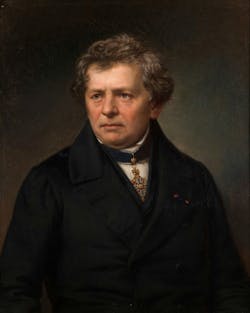
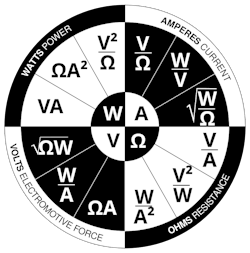
Michael Faraday is credited with much of the electric power innovation through his discovery of the laws of induction, which led to the electric motor and more. And it was 200 years ago this year that research by Georg Ohm defined how certain elements of the electrical process are interconnected: Voltage, current and resistance.
All of this, of course, was observed much earlier than Faraday’s and Ohm’s groundbreaking research in the early and mid-19th century. Surely, men and women from ancient time sobserved electric phenomena which must have seemed like magic.
Electricity as the economic driver and seed of further invention really came into public knowledge in the 19th century with work by Ohm, Faraday, Thomas Edison, Werner Von Siemens, Nikola Tesla, George Westinghouse and others whose inventions and insights enlightened our once medieval world.
Just as none of us can conceive of a world without medicines or machine tools, nor do most of us have personal experience of cleaning clothes on rocks or carrying buckets of water miles to our homes. The early 19th century surely had art and music and drama, amazing authors and leaders, but without a grid to transmit electrons only a portion of populations knew their names or enjoyed their works in person. “I heard about this Austrian fella named Mozart, I hear he’s pretty good.”
Well, he probably didn't hear it from Mozart directly; Only the rich had time for that. The less fortunate people of that pre-electric era often died relatively early deaths, exhausted by manual labor or from exposure to weather.
Of course, those tragedies still happen, but not nearly as often as centuries ago. The world is all the better because of washers and driers, HVAC units, pumps and motors and drives and generator sets.
Electricity is a phenomenon with its own sets of dangers, but the truth is that it has saved millions of lives through its 150 years of modern societal integration. To borrow a catchphrase, it has brought good things to life.
Experiments became engines. Theories turned into transmission. Invisible air waves eventually carried information around the world.
None of this possible without electricity.
My feeling is we should continually celebrate brilliant minds and never forget those such as Georg Ohm, whose story many of us do not know and who’s last name sounds like something the Beatles were chanting in India in 1968. (Editor’s Note: I can turn everything back around to the Beatles).
Our technical terms in electricity harken to names of inventors who are celebrated, even if somewhat anonymously, through their work. The study of electricity is built around the work of Ampere, Volta, and Joule. The names are more than measurements, serving as simple tributes to genius titans who tamed complicated phenomena.
So, 2026 is shaping up as a yet another monumental year in the history of technology. AI and cloud-based computing, machine learning and automation are ever advancing, creating a world unthinkable to the everyday humans of 200 years ago, even 50 years ago. It’s more than a little scary, but history so far has shown that technology has made the world a better place to live. Mostly.
What are the most important inventions still pulsating within the connective tissue of three centuries? What binds them together? All those aforementioned inventions proved to be critical advancements, and yet none of them were possible or truly functional without electricity voltage, current and induction.
Take a bow, esteemed electrical engineers of the early 19th century. Your work is still rocking the world.
About the Author

Rod Walton, EnergyTech Managing Editor
Managing Editor
For EnergyTech editorial inquiries, please contact Managing Editor Rod Walton at [email protected].
Rod Walton has spent 17 years covering the energy industry as a newspaper and trade journalist. He formerly was energy writer and business editor at the Tulsa World. Later, he spent six years covering the electricity power sector for Pennwell and Clarion Events. He joined Endeavor and EnergyTech in November 2021.
Walton earned his Bachelors degree in journalism from the University of Oklahoma. His career stops include the Moore American, Bartlesville Examiner-Enterprise, Wagoner Tribune and Tulsa World.
EnergyTech is focused on the mission critical and large-scale energy users and their sustainability and resiliency goals. These include the commercial and industrial sectors, as well as the military, universities, data centers and microgrids. The C&I sectors together account for close to 30 percent of greenhouse gas emissions in the U.S.
He was named Managing Editor for Microgrid Knowledge and EnergyTech starting July 1, 2023
Many large-scale energy users such as Fortune 500 companies, and mission-critical users such as military bases, universities, healthcare facilities, public safety and data centers, shifting their energy priorities to reach net-zero carbon goals within the coming decades. These include plans for renewable energy power purchase agreements, but also on-site resiliency projects such as microgrids, combined heat and power, rooftop solar, energy storage, digitalization and building efficiency upgrades.