Long-Duration Sodium-Ion Batteries Aimed at Transforming Mining Energy Consumption
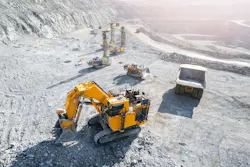
Mining sector engineering and consulting firm ERITY is making a long-term commitment to using alternative and long-duration battery storage technologies to reduce diesel-fueled carbon emissions in the industry.
Sodium-ion battery developer Alsym Energy has signed a 9-GWh strategic agreement with Australia-based ERITY focusing on finding multiple mining use cases for non-lithium-ion and advanced battery energy storage systems (BESS). On-site heavy equipment fueled by diesel accounts for much of the mining operation’s direct Scope 1 greenhouse gas emissions, according to reports.
U.S.-based Alsym Energy uses sodium-ion chemistry (symbol NA+) to create non-flammable and longer duration batteries compared to the currently predominant lithium-ion. The company recently announced an 8.5-GWh partnership with BESS manufacturer ESS Tech.
Reducing diesel consumption in the mines
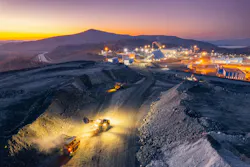
The newer and broader deal with ERITY will pair Alsym’s batteries with its partner’s operational mining expertise to decarbonize those use cases across mineral segments. Diesel currently accounts for as much as half of a given mine’s operational costs and contributes up to 3% in global greenhouse gas emissions, according to reports.
"This collaboration allows us to address the pressing energy challenges faced by the mining industry, where energy demands are significant and operations are often located in remote areas with limited access to traditional power infrastructure,” Manny Claassens, COO of ERITY, said in a statement. “By integrating Alsym Energy's thermally stable, high-performance storage solutions into mining operations, we have an opportunity to help reduce operational costs, enhance energy resilience, and support improved safety and sustainability outcomes across the energy transition landscape."
ERITY’s mining work spans six continents, including large projects in Australia, Africa and the Middle East. Volt Resources and Resource Mineral International are two mining operators which work with ERITY and are developing mines in Tanzania, Saudi Arabia, Finland and the United States.
Alsym Energy will deploy its sodium-ion batteries to at least some of those Volt and Resource Mineral projects.
“The mining sector is actively seeking energy solutions that improve reliability, enhance safety and support long-term operational sustainability,” said Asimwe Kabunga, chairman for both Volt Resources and Resource Minterals International. “Non-flammable sodium-ion battery technology presents a compelling opportunity, particularly for remote operations where energy resilience is critical. We see significant potential for this technology across a number of projects within our portfolio.”
Battery-powered microgrids and hauling EVs
The 9-GWh battery capacity agreement will be designed to help energize microgrids for mining, as well as provide carbon-free power for critical mineral extraction, processing and mobile data centers for operations. Some mining and hauling equipment normally running on diesel are being converted to battery-electric vehicle alternatives.
"ERITY’s extensive reach in critical sectors—from data centers to global mineral extraction in key regions like Australia, Africa and Middle East—provides the perfect platform to deploy our non-flammable sodium-ion technology across an energy-intensive industry and in high temperature regions who are eager to lead the energy transition,” Alsym CEO Mukesh Chatter said.
How NA+ offers more pluses than Li+
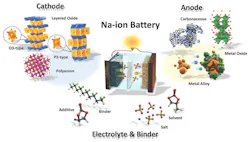
Lithium-ion (Li+) accounts for close to 90% of the battery chemistry market as it provides higher energy density in both transportation and stationary energy storage applications. The technology, however, does not hold charge for as long and can be prone to fire dangers such as thermal runaway.
Alsym’s sodium-ion combination utilizes a less dense, yet more stable, longer lasting and non-flammable polyanionic sodium iron pyrophosphate chemistry. This is designed to avoid toxic gas release within layered oxides and can rely on passive and air cooling rather than more expensive liquid cooling, the company says.
The metals sector, including steel and aluminum, account for a large portion of mining emissions worldwide. Overall, the mining and metals sector generates close to 10% of greenhouse gas emissions around the world.
Texas A&M University and Alsym previously highlighted a significant breakthrough with non-lithium technologies, revealing long-duration, weather-resistant, and safety viability. The project utilized a polymer-based battery prototype, which showed the capability of functioning and maintaining 85% charge at 0 degrees Celsius (32 Fahrenheit) and 55% at minus 40*C.
Other lithium-ion alternatives include iron air and zinc-based battery chemistry.
Mastering Requirements, Standards and Risk
in a Digitally Transformer Energy Sector
Join us for July 21 EnergyTech Webinar with Siemens
About the Author
 Rod Walton, EnergyTech Managing Editor
Rod Walton, EnergyTech Managing Editor
Managing Editor
For EnergyTech editorial inquiries, please contact Managing Editor Rod Walton at [email protected].
Rod Walton has spent 17 years covering the energy industry as a newspaper and trade journalist. He formerly was energy writer and business editor at the Tulsa World. Later, he spent six years covering the electricity power sector for Pennwell and Clarion Events. He joined Endeavor and EnergyTech in November 2021.
Walton earned his Bachelors degree in journalism from the University of Oklahoma. His career stops include the Moore American, Bartlesville Examiner-Enterprise, Wagoner Tribune and Tulsa World.
EnergyTech is focused on the mission critical and large-scale energy users and their sustainability and resiliency goals. These include the commercial and industrial sectors, as well as the military, universities, data centers and microgrids. The C&I sectors together account for close to 30 percent of greenhouse gas emissions in the U.S.
He was named Managing Editor for Microgrid Knowledge and EnergyTech starting July 1, 2023
Many large-scale energy users such as Fortune 500 companies, and mission-critical users such as military bases, universities, healthcare facilities, public safety and data centers, shifting their energy priorities to reach net-zero carbon goals within the coming decades. These include plans for renewable energy power purchase agreements, but also on-site resiliency projects such as microgrids, combined heat and power, rooftop solar, energy storage, digitalization and building efficiency upgrades.