The Battery Will Become a Political Institution
For more than a century, politics has been obsessed with oil.
Wars have been fought over it. Governments have collapsed because of its price. Elections have been influenced by fuel prices. Entire foreign policies have been constructed around access to energy.
But the next great political resource may be something much less glamorous.
The battery.
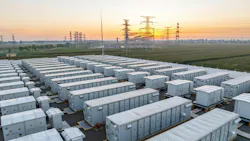
A battery is usually treated as a piece of technology. It powers a phone, stores electricity in a solar system or moves an electric vehicle.
That description is becoming inadequate.
As electricity increasingly becomes the foundation of transportation, industry, homes and digital infrastructure, the ability to store electricity will become a form of political power.
The central problem with renewable energy is not simply producing electricity.
It is controlling when that electricity is available.
The sun does not shine according to electricity demand. Wind does not necessarily blow when factories need power. A modern economy therefore needs an enormous ability to move electricity through time.
That is what batteries do.
They turn electricity into something that can be politically managed.
Imagine a village where solar panels generate more electricity during the afternoon than residents can consume. A battery stores the excess. At night, the stored electricity powers homes.
Now imagine thousands of villages doing the same thing. The electricity system begins to look fundamentally different. Instead of a small number of giant power stations supplying passive consumers, millions of homes, businesses and communities could become small energy-storage nodes.
This could change local politics. A municipality with substantial distributed storage could become less vulnerable to grid disruptions. Hospitals could maintain critical services. Water systems could continue operating. Small businesses could avoid expensive interruptions. Energy resilience would become local infrastructure.
The political importance becomes even clearer during disasters. Floods, cyclones and extreme weather events can disrupt electricity for hours or days. A conventional emergency response often depends on restoring a damaged central grid.
Distributed batteries create another possibility.
The community does not necessarily wait for the entire system to recover.
It temporarily operates around the damaged system. This could make energy storage part of disaster preparedness in the same way that governments currently think about emergency shelters, roads and communications.
There is also a major economic question: Who owns the batteries?
If storage is concentrated in large private companies, battery infrastructure could become another form of corporate power. If households own most of it, electricity systems could become more decentralised. If municipalities own community batteries, local governments could acquire a new economic role.
The ownership model will matter.
India has an opportunity to think about this before battery infrastructure becomes deeply embedded. A district could potentially operate community-scale storage connected to solar generation, public buildings, electric buses and critical infrastructure.
Schools could become energy-storage centres.
Hospitals could become energy islands.
Bus depots could become giant batteries on wheels.
Apartment buildings could collectively store electricity and reduce peak demand.
The battery therefore begins to look less like an appliance and more like infrastructure.
There is an additional geopolitical dimension.
Oil politics depended heavily on geography. Countries possessing large petroleum reserves gained enormous strategic importance.
Battery politics will depend on a different chain: minerals, refining, manufacturing, technology, recycling and electricity infrastructure.
The countries that control those systems could gain substantial influence.
India therefore needs to think beyond electric vehicles.
Battery policy is industrial policy.
It is energy policy.
It is transportation policy.
It is defence policy.
It is climate policy.
And increasingly, it is local governance policy.
The most interesting political question may eventually be surprisingly simple:
How much electricity can a community store?
That number could become as important as the number of roads it possesses or the amount of water it can supply.
A politically resilient India may not be the country that produces the most electricity.
It may be the country that can store, move and deploy electricity most intelligently.
The age of oil created political institutions around extraction.
The age of batteries may create political institutions around storage.
And the governments that understand that transition early will have an advantage that has little to do with oil wells.
About the Author
Kiran S. Pillai
Kiran S. Pillai is an independent researcher and policy writer associated with Vastuta, a think-tank initiative focused on technology, governance, energy and political economy.