Transforming Energy Exploration: bp’s Advanced AI-Driven Supercomputing Infrastructure

AI is A-OK by 80X with bp. The global energy producer is deploying next-gen graphic processing units to up its digital infrastructure game at bp’s Houston-based Center for High-Performance Computing (HPC).
Artificial intelligence (AI) factory platform designer Penguin Solutions and GPU giant NVIDIA are partnering with bp to deploy the new HPC infrastructure using NVIDIA’s Blackwell B200 GPUs. The new architecture is specially designed to handle energy workloads, including 80 times faster seismic imaging and analytics.
Revolutionizing seismic imaging to make drilling more efficient
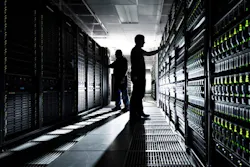
“For upstream oil and gas exploration teams, seismic imaging directly shapes high-value drilling decisions. When geoscientists can interpret seismic data faster, evaluate more reservoir scenarios, and generate higher-fidelity subsurface predictions, they can refine well placement decisions with greater confidence,” reads the Penguin Solutions case study on the collaboration with NVIDIA and bp.
The new system at the bp Center for HPC combines the liquid-cooled Blackwell GPUs with Penguin’s SMART Memory 3840 DIMMs, or “dual in-line memory modules.” Penguin also provides on-site deployment and integration support for the project with bp and NVIDIA.
“The result is a future-ready computing platform designed to help bp run sophisticated algorithms, process larger datasets, and unlock new opportunities across its operations,” the company noted in its case study about the bp project.
NVIDIA’s latest generation of Blackwell B200 GPUs reportedly can perform five times the AI processing function of the previous H100. They are considered highly energy-efficient processing units for the unprecedented amount of computing power now available, according to reports.
“Accelerated computing has reached a tipping point,” NVIDIA CEO and co-founder Jensen Huang said in 2024 at his company’s event spotlighting the Blackwell GPU advancement. “General purpose computing has run out of steam …
“The amount of energy we save, the amount of networking bandwidth we save, the amount of wasted time we save, will be tremendous,” Huang added. “The future is generative which is why this is a brand new industry. The way we compute is fundamentally different. We created a processor for the generative AI era.”
Exploring new energy at 21 quads a second

To blend this new technology in revolutionizing an older industry, bp touts its Center for HPC as having one of the world’s most powerful supercomputers for commercial research. This capability, according to the company, has helped it make “historic breakthroughs in rock physics and advanced seismic imaging.”
The Houston-based bp Center for HPC reportedly has supercomputing capacity to perform 21 quadrillion operations per second, according to bp. The facility has the storage capacity of 90,000 512-gigabyte iPhones, the HPC page says.
Supercomputing at the center aided bp geophysicist Joe Dellinger in achieving next-gen methodology for seismic imaging with low and super lower frequencies, according to the company. This milestone earned Dellinger the 2021 Virgil Kauffman Gold Medal from the Society of Exploration Geophysicists.
bp also utilizes its Center for partnerships with the U.S. Department of Energy national laboratories. The advanced seismic imaging also has boosted bp’s reserves in discovering an additional 400 million barrels of oil in place at the Atlantis field and 1 billion additional barrels in place at Thunder Horse, both in the offshore Gulf of Mexico drilling regions.
Daily oil and gas production for bp averages close to 2 million barrels equivalent, which fuels the company’s annual $10 billion capital budget. And although bp has reduced its renewable energy investment in an investor-pressured shift back to focus on fossil fuels, the firm still plans to spend close to $2 billion annually on alternative power resource development.
Mastering Requirements, Standards and Risk
in a Digitally Transformed Energy Sector
Join us for July 21 EnergyTech Webinar with Siemens
About the Author
 Rod Walton, EnergyTech Managing Editor
Rod Walton, EnergyTech Managing Editor
Managing Editor
For EnergyTech editorial inquiries, please contact Managing Editor Rod Walton at [email protected].
Rod Walton has spent 17 years covering the energy industry as a newspaper and trade journalist. He formerly was energy writer and business editor at the Tulsa World. Later, he spent six years covering the electricity power sector for Pennwell and Clarion Events. He joined Endeavor and EnergyTech in November 2021.
Walton earned his Bachelors degree in journalism from the University of Oklahoma. His career stops include the Moore American, Bartlesville Examiner-Enterprise, Wagoner Tribune and Tulsa World.
EnergyTech is focused on the mission critical and large-scale energy users and their sustainability and resiliency goals. These include the commercial and industrial sectors, as well as the military, universities, data centers and microgrids. The C&I sectors together account for close to 30 percent of greenhouse gas emissions in the U.S.
He was named Managing Editor for Microgrid Knowledge and EnergyTech starting July 1, 2023
Many large-scale energy users such as Fortune 500 companies, and mission-critical users such as military bases, universities, healthcare facilities, public safety and data centers, shifting their energy priorities to reach net-zero carbon goals within the coming decades. These include plans for renewable energy power purchase agreements, but also on-site resiliency projects such as microgrids, combined heat and power, rooftop solar, energy storage, digitalization and building efficiency upgrades.