Colorado Community Utility Platte River, EnergyHub Scaling VPP to Boost Customer DER Participation

The Platte River Power Authority, a community-owned power utility provider in Colorado, is expanding its plans for a virtual power plant (VPP) after entering into a strategic agreement with software company EnergyHub.
This initial VPP program, planned for late summer 2026, will focus on load management with smart thermostats, with an EV charge management program to follow later in the year, according to a release. Platte River states that the growing need for a VPP is part of efforts to provide dispatchable, on-demand power to support its increasingly renewable energy portfolio.
Currently, the not-for-profit wholesale generation and transmission provider services Estes Park, Fort Collins, Longmont and Loveland. Although they do not deliver directly to residential customers, Platte River supplies four municipal utility systems in these areas after generating and transmitting the bulk electricity.
Staff from these owner communities have reportedly been working together alongside Platte River since 2025 to develop its first VPP program. Platte River signed a formal agreement earlier this month with EnergyHub to help design and deploy the VPP.
A VPP isn’t a physical power plant, but rather a system that links many small, customer-owned devices to work together as a flexible energy resource. Software and control systems aggregate these distributed energy resources (DERs) through both generation and load adjustment, such as a thermostat reducing by a degree or two. Those DERs work in tandem with VPP aggregating technology to help feed excess energy back to the grid or reduce load where needed.
The industry is pushing to shift from conventional energy sources like coal and natural gas to variable renewable alternatives, changing decades of previous ways energy systems have been operated. The U.S. Department of Energy currently aims to expand national VPP capacity to 80-160 GW by 2030. As MIT Technology Review highlights, VPPs can encourage people to get more involved in the clean energy transition, since participants both consume and contribute power back to the grid.
But despite this dual role, hurdles remain in enrolling customers in a VPP amid the confusion around how they work and in simplifying the sign-up process. In this project's case, regional utility collaborator Efficiency Works, funded by Platte River, will act as a bridge. Through assessments and targeted program offerings, the organization aims to help residential and commercial customers navigate rebates and understand how to use energy effectively.
“A massive amount of work has been going on behind the scenes to develop effective programs for customers,” said Bryce Brady, manager of distributed energy solutions for Platte River, in a statement.
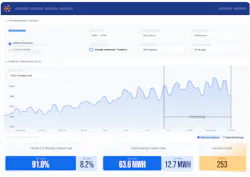
EnergyHub is also providing its "Edge" system—a DER management software system known as “DERMS”—that tracks energy demand across smart devices. EnergyHub claims this will enable customers’ devices to respond to utility signals and connect behind-the-meter DERs to the wider grid and energy markets.
“Their (EnergyHub) experience with developing accessible and impactful customer programs aligns well with the programs that have served our owner communities for over 20 years,” said Paul Davis, director of distributed energy resources for Platte River.
About the Author
 Eric Moody