NYC School Generator Becomes Wholesale Market Resource Under NYISO Program
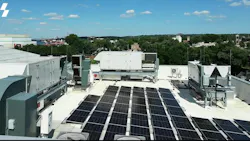
A generator at New World Preparatory Charter School in Staten Island, New York, is now operating as a market-participating power resource, selling electricity into the New York Independent System Operator's (NYISO) real-time wholesale market. The project marks the first time a behind-the-meter generator at a New York City building has sold power directly into the market under NYISO's Distributed Energy Resource (DER) Participation Model, according to Strobe Power, the company managing the school's generation asset.
The project demonstrates how commercial and industrial facilities can use on-site generation for more than emergency backup, potentially generating revenue by supplying electricity to the grid when needed.
New World Preparatory Charter School installed its generator to provide backup power during outages. Previously, the equipment would have remained idle except when needed for emergencies and required school personnel to start it manually.
Strobe Power provides the controls, monitoring and market operations that allow the school's generator to participate in wholesale electricity markets. The company manages dispatch of the equipment, coordinates its operation with grid requirements and executes market transactions on behalf of the facility. It also streams real-time telemetry from the site to Consolidated Edison (Con Edison) network operations systems.
Under NYISO's DER Participation Model, distributed energy resources such as generators and batteries can participate in wholesale markets alongside conventional power plants. To qualify, resources must meet operational and technical requirements, including real-time telemetry, equipment protections and the ability to respond to dispatch instructions.
According to Strobe, the school's generator follows NYISO real-time dispatch signals, which are updated every six seconds.
During the summer, the generator operated during all of its scheduled intervals on the day New York's grid experienced its highest level of stress, including the NYISO system peak hour. Real-time electricity prices reached $1,000 to $2,000/MWh during that period, according to the company.
The same generator also participates in Con Edison's demand response programs and NYISO's energy and ancillary services markets, including 10-minute non-synchronous reserves. This allows the school to maintain backup power capabilities while using the equipment to generate revenue and manage electricity costs.
Angelo Aponte, chairman of New World Preparatory Charter School, said the arrangement allows the school to use its generator for both resilience and energy cost management without requiring staff to manage its market participation. The school is also partnering with Strobe to add on-site battery storage.
Expanding the role of on-site generation
The project comes as rising electricity costs and growing demand are prompting commercial and industrial facilities to reconsider how they use on-site energy resources.
The U.S. Energy Information Administration reported that commercial and industrial electricity prices in New York increased approximately 19% between August 2024 and August 2026. On-site generation and storage can help facilities manage electricity costs, reduce peak demand and maintain operations during grid outages.
Wholesale market participation offers another potential revenue stream for facilities with qualifying equipment. However, participation requires more than installing a generator or battery. Resources must be able to communicate with grid operators, respond to dispatch instructions and meet applicable market and interconnection requirements.
Strobe provides a combination of on-site controls, interconnection equipment and cloud-based software to manage participating generators and batteries. Its operations include forecasting facility demand and market conditions, coordinating equipment operation and handling market participation through a 24-hour control room.
The company is enrolling commercial, light industrial, hospitality and office properties within Con Edison's service territory, including facilities with existing generation or storage and those considering new installations.
The New York project illustrates how distributed energy resources can serve multiple purposes: providing backup power to individual facilities, helping manage electricity costs and supplying electricity and grid services when market conditions warrant.