California Farm Testing Autonomous Electric Crop Duster in Decarbonization Demonstration
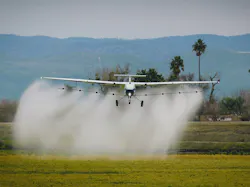
Autonomous electric aviation company Pyka announced its plans to partner on a large-scale commercial demonstration of all-electric aircraft centered on reducing agriculture-related emissions in California.
The company will focus its energy-related efforts to support the California Zero-Emission Aviation Demonstration Project, which is funded by several climate investment initiative groups.
This multi-year project aims to demonstrate zero-emission aviation by deploying Pyka's all-electric autonomous aircraft, Pelican 2. The electric plane, manufactured in the U.S., was approved by the Federal Aviation Administration (FAA) for agricultural operations at Victoria Island Farms in Sacramento–San Joaquin Delta in northern California.
The family-owned and operated farm spans more than 7,000 acres and rotates crops such as asparagus, almonds, corn, tomatoes and wheat. The farm also hosts a “u pick em” blueberry stand.
Pkya says that power generated will primarily be supplied from off-grid solar charging systems and other zero-emission ground vehicles. Together, the project aims to successfully reduce fossil fuel use closely associated with the agriculture grown on farms nationally.
"By operating autonomous electric aircraft at commercial scale in a real agricultural environment, we're proving that aviation can reduce emissions today — not decades from now,” said Chuma Ogunwole, chief operating officer of Pyka, in a released statement.
Growing Need for Battery Storage to Battle Grid Constraints
New Microgrid Knowledge QuickChat with ELM
Pyka will collect operational data throughout the project to help support decisions that will impact statewide future policy development, according to the company.
The statewide initiative aims to reduce more than 1,000 metric tons of carbon dioxide over the course of the project, along with other criteria pollutants such as nitrogen oxides (NOx). A major step in accomplishing this goal is focusing on replacing diesel agricultural equipment and fossil-fuel-powered crop dusters.
Crop dusters, also known as aerial applicators, reportedly treat 127 million acres of U.S. cropland annually, which has resulted in multiple terrain and obstruction hazards.
The National Agricultural Aviation Association (NAAA) reports that there were 13 fatal accidents involving agricultural operations in the fiscal year of 2024 due to the loading and dispensing of chemicals in low altitudes. Pilots having to log long hours in these conditions also reportedly contributed to these outcomes in previous years that the FAA has closely monitored.
It’s a key reason the California Air Resources Board's (CARB) SHIFT program funding efforts want to accelerate the next generation of emission controls, as well as increase safety.
“CARB investments in SHIFT projects like this one are taking zero-emissions technology to new heights and demonstrating that clean aviation is not only feasible, but already capable of doing many jobs better and cheaper than polluting alternatives,” stated CARB deputy executive officer of mobile sources & incentives Christopher Grundler.
Grundler added that California’s responsibility to protect against harmful air pollution should extend beyond the focus on motor vehicles.
California has been ambitious in its push for zero-emission technologies in on-road applications by the year 2035. The same ambition surrounds electric aviation, widely being positioned for regional adoption by 2030.
Videos have highlighted Pyka’s autonomous electric aircraft in models Pelican Spray and Pelican Cargo involving the agriculture industry.
EnergyTech 2050: What Will Power the Future?
Take the Poll, Please
About the Author
 Eric Moody