Waymo's 200 Million Miles and More: Key AI Lessons for Autonomous Driving
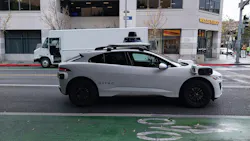
Waymo has driven 200 million-plus miles of fully autonomous driving in the robotaxi company’s move toward serving some of the biggest U.S. cities with driverless taxi rides.
What has it learned about the role of artificial intelligence (AI) in those 200 million and more miles of constant route travel? Multitudes.
Considering everything is new in autonomous driving, the Alphabet-owned startup has traveled galaxies, knowledge-wise, when it comes to AI.
“Our experience has led us to 10 fundamental truths that shape how we build AI,” reads a Waymo blog posted only a few days ago on the company’s website. It was written by Srikanth Thirumalai, vice president of onboard software at the company.
“As we look toward the billions of miles ahead, these 10 lessons remind us that safety is the direct result of rigorous, real-world experience,” Thirumalai concluded in the Waymo blog post.
Click here to read more. While Elon Musk and Tesla favor cameras for their end-to-end “neural network” for autonomous vehicles, Waymo’s AI discoveries so far have taught it that multi-modal sensors are indispensable.
More is not necessarily better, either, at least when it comes to AI modeling. Sticking to fewer, high-capacity models has proven agile at the robotaxi scale Waymo is striving for across those millions of journeys taken.
“In the early days of AV development, the industry relied on specialized modules,” reads the Waymo blog. “For example, one for pedestrian detection, another for car tracking, another to tell when a light turns green. While agile, this modular spaghetti becomes unmaintainable at scale.”
Simulation testing seems to deliver advantages over replaying recorded data. Utilizing closed-loop simulation to advance real-world learning creates essential feedback loops for AI learning, according to the blog.
Click here to read more about what Waymo has learned in 200 million-plus miles of routes.
The company has deployed robotaxis in cities such as Phoenix, San Francisco, Los Angeles, Nashville and Austin. It has more than 3,000 vehicles in service and has generated more than 500,000 paid rides, according to reports.
As for accident fears, a study by the Insurance Institute for Highway Safety showed that Waymo’s driverless vehicles were involved in 68% fewer crashes than human drivers in San Francisco, Phoenix, Austin and Los Angeles on a per vehicle per mile traveled basis.
State of Market Report: Power Quality Fluctuations
New White Paper by Ubicquia
About the Author
EnergyTech Staff
Rod Walton is head of content for EnergyTech.com. He has spent 17 years covering the energy industry as a newspaper and trade journalist.
Walton formerly was energy writer and business editor at the Tulsa World. Later, he spent six years covering the electricity power sector for Pennwell and Clarion Events. He joined Endeavor and EnergyTech in November 2021.
He can be reached at [email protected].
EnergyTech is focused on the mission critical and large-scale energy users and their sustainability and resiliency goals. These include the commercial and industrial sectors, as well as the military, universities, data centers and microgrids.
Many large-scale energy users such as Fortune 500 companies, and mission-critical users such as military bases, universities, healthcare facilities, public safety and data centers, shifting their energy priorities to reach net-zero carbon goals within the coming decades. These include plans for renewable energy power purchase agreements, but also on-site resiliency projects such as microgrids, combined heat and power, rooftop solar, energy storage, digitalization and building efficiency upgrades.