Energy Dome Installing 19-MW CO2 Battery Storage System to Bolster SRP’s Long-Duration Alternatives in Arizona
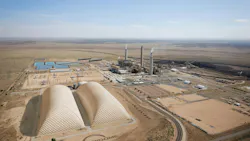
Energy Dome, an Italian energy storage company specializing in capacity solutions for utilities and AI infrastructure, is partnering with public utility Salt River Project (SRP) to add a 19-MW and 10-hour-duration CO2 battery system to the Arizona grid.
Through a 20-year tolling agreement allowing an energy company to rent and manage another firm's storage capacity, this project plans to accelerate the deployment of non-lithium-ion long-duration energy storage (LDES) technologies to bolster grid infrastructure amid rising energy demand.
According to a release, the LDES project will be co-located on the site of SRP’s Coronado Generating Station (CGS) in St. Johns, Arizona, currently undergoing a natural gas conversion from its original coal-fired generation technology. Expected to come online in 2029, it will store enough energy to power roughly 4,275 homes for 10 hours.
Energy Dome will own and operate the facility, while SRP will dispatch its output into the grid. The public power utility will look to increase efficiency to serve the greater Phoenix metropolitan area and states that energy storage is an important part of achieving that effort.
“Arizona’s sustained growth makes it one of the most compelling energy markets in the country,” said Energy Dome founder and CEO Claudio Spadacini in a statement. “At a time when AI growth and rising demand are reshaping America’s energy landscape, the CO2 battery offers the scalable, dispatchable capacity needed to strengthen U.S. energy dominance.”
SRP adds that it is working to at least double the number of generating resources on its power system by 2035. By utilizing Energy Dome’s CO2 Battery and proprietary thermomechanical LDES process, this tech draws power directly from the grid to compress and store CO2.
Once power is needed, Energy Dome explains that the CO2 expands through a turbine to generate energy at the CGS site, sending it back to the grid. The CO2 comes from independent commercial industrial suppliers and reportedly doesn’t require a refill due to a “zero leakage design.”
This pilot will be part of SRP’s collaboration with tech giant Google to improve understanding of the real-world performance of emerging LDES technologies at scale and achieve net-zero carbon emissions by 2050. SRP selected this project following a 2024 Request for Proposals designed to identify viable LDES pilots that support these goals.
In 2025, Google signed a long-term deal with Energy Dome to scale up CO2 battery storage for its international operations beyond intermittent solar and wind power purchase agreements. Google will fund a portion of this Arizona project through a cost-sharing agreement with SRP.
"As energy demand continues to grow, SRP is evaluating new energy storage technologies that could support SRP’s effort to diversify its battery energy storage portfolio as we work to meet the Valley’s growing energy needs with affordable, reliable and sustainable power,” stated Chico Hunter, SRP manager of innovation and development.
Energy Dome states this project is building up its investment strategy in U.S. supply chain development, supporting its broader mission for U.S. energy customers and American job creation.
The Electric Power Research Institute (EPRI), an independent, non-profit energy R&D organization, will monitor and analyze the project's performance once the facility officially goes online, according to the companies.