Arevon Energy Brings 300-MW Nighthawk BESS Project Online
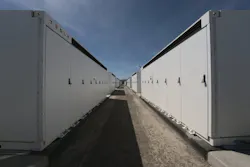
Independent power producer Arevon Energy's largest standalone battery storage project across its footprint is now operational.
Arevon commissioned the 300-MW Nighthawk Energy Storage Project in Poway, California. Arevon and state officials, including members from the California Public Utilities Commission, celebrated this week with an on-site ribbon-cutting ceremony for the project’s completion.
The 300-MW/1,200-MWh Nighthawk project is utilizing lithium iron phosphate (LFP) battery technology from Tesla Megapack. Arevon claims the system will safely store electricity during periods of lower demand and dispatch when demand is highest.
LFP is a type of lithium-ion battery chemistry that uses iron phosphate as its cathode material. Instead of the cobalt or nickel found in most laptop and phone batteries, each LFP cell can store up to 205 watt-hours of energy per kilogram, recognized for its safety record and long operating lifespan.
Tesla supplied all 329 Megapack integrated container units for Arevon's project, providing fully integrated LFP BESS designed for utility-scale grid stabilization.
According to a release, the project aims to enhance grid reliability in the San Diego region, providing enough energy to energize up to 385,000 homes for up to four hours. Arevon, the owner-operator and developer of the Nighthawk BESS project, is under a long-term agreement with Pacific Gas and Electric Company (PG&E) to help California achieve its state objectives for grid reliability and clean energy goals by 2035.
“Through the CPUC’s integrated resource planning and mid-term reliability procurement programs, we identified the need for new energy storage to maintain reliability as the grid evolves,” said Leuwam Tesfai, executive director at the California Public Utilities Commission.
This 300 MW project adds to the Arizona-based company’s total operating capacity of over 6.3 GW of solar and energy storage projects.
How to Talk to your CFO about Batteries and Microgrids
Without Losing the Room: Insights from ELM Microgrid
New Perspectives at Microgrid Knowledge
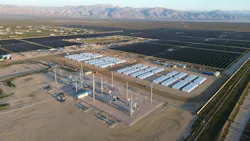
Arevon operates facilities that span across 18 U.S. states, including a $2 billion Eland Solar-Plus-Storage project in Kern County, California, that reportedly generates roughly 7% of Los Angeles's total energy needs. Eland 1, which reached commercial operation in 2024, and Eland 2 together comprise 1.36 million solar panels and 172 lithium iron phosphate batteries manufactured domestically in Lathrop, California.
“Energy storage is becoming increasingly important as electricity demand continues to rise across California and the United States,” said Arevon CEO Justin Johnson in a statement. “Projects like Nighthawk are critical to America’s growing energy needs because they strengthen grid reliability while delivering lasting economic benefits for local communities.”
Over Nighthawk’s lifetime, Arevon expects the BESS project to generate more than $30 million in property tax revenue, which will help support local community incentives such as schools, public safety, infrastructure improvements and other essential services.
This month, research firm Mercom Capital Group highlighted that energy storage funding climbed to $8.9 billion across 73 deals in the first half of the year. Within the last five years, battery storage has surged from covering less than 1% of hour-to-hour ramping needs to above 60% in California during the first quarter of 2026.