GE Vernova Advances Hydrogen-Fueled Gas Turbine Technology
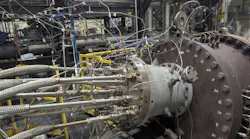
GE Vernova has validated its LM2500XPRESS aeroderivative gas turbine package for operation with fuel blends containing up to 50% hydrogen and completed testing to demonstrate the 100% hydrogen capability of its LM6000VELOX package.
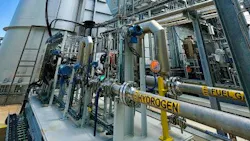
The milestones were achieved at the company's dedicated hydrogen testing facility at its Global Technology Center in Greenville, South Carolina. The testing advances the development of hydrogen-capable gas turbines for power generation, including applications serving industrial facilities, data centers and electric grids.
The LM2500XPRESS was validated for operation with hydrogen blends of up to 50% in a dry low-emissions (DLE) configuration. The modular aeroderivative package can reach full power in five minutes or less, providing flexible generation for applications requiring rapid response to changing power demands.
GE Vernova also completed testing of its LM6000 platform using a single annular combustor (SAC) configuration to validate its capability to operate on 100% hydrogen. The company has shipped nearly 1,350 LM6000 units, which operate in approximately 60 countries.
Hydrogen-capable gas turbines could provide power producers and industrial operators with additional fuel flexibility as they evaluate options for reducing emissions from existing natural gas infrastructure. Depending on the fuel blend and operating configuration, hydrogen can be used alongside natural gas or as the primary fuel for power generation.
GE Vernova reported more than 11 million operating hours on hydrogen and hydrogen-blended fuels across its global gas turbine fleet. More than 120 of the company's gas turbines have operated or continue to operate on fuels containing hydrogen.
Aeroderivative gas turbines are designed for fast starts and flexible operation, making them suitable for applications that require responsive power. These capabilities are increasingly relevant as electricity demand grows, particularly from data centers and other energy-intensive industrial operations. The turbines can also support grid stability by responding to peak demand and fluctuations in electricity supply.
The Greenville testing facility is part of a broader investment in the company's manufacturing and technology operations announced in 2025. The dedicated laboratory expands GE Vernova's ability to test and validate gas turbine technologies, including hydrogen-capable combustion systems.
The company's hydrogen capabilities also extend to its heavy-duty gas turbine portfolio. Its HA-class turbines, including the 7HA and 9HA platforms, can operate on fuel blends containing up to 50% hydrogen by volume when blended with natural gas and used with the standard DLN2.6e combustion system.
GE Vernova has also conducted hydrogen-blend deployments and testing at several facilities worldwide, including DeBary and NYPA Brentwood in the United States, Tallawarra B in Australia, and Guangdong Huizhou in China.
Hydrogen combustion technology can potentially allow existing gas turbine power plants to reduce carbon emissions through equipment modifications that enable operation with varying hydrogen concentrations. The extent of emissions reductions depends on the hydrogen blend, fuel production pathway and overall plant configuration.