EPC Power Boosts Inverter Production with New Manufacturing Plant in South Carolina
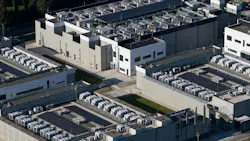
Inverter technology firm EPC Power has officially opened its newest manufacturing plant in South Carolina.
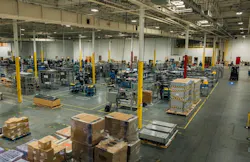
The 167,000-square-foot facility in Fountain Inn will nearly triple EPC Power’s production line focused on the company’s M and Mrack series power inverters. The M and Mrack models are built mainly for grid and energy storage applications, which are growing in direct response to rising AI and data center demand.
Fountain Inn is EPC Power’s second manufacturing plant in South Carolina and third overall. The new plant could increase power production capacity to 27 GW annually once it reaches full pacing later this month.
"Our expansion in South Carolina is a direct response to the AI infrastructure investment and power demands we're seeing worldwide," said Jim Fusaro, CEO at EPC Power, in a statement. "By tripling our capacity, we're giving data center and utility operators access to more critical components domestically, which de-risks their expansion plans and strengthens supply chain resilience."
Building inverters to deal with AI's transient load swings
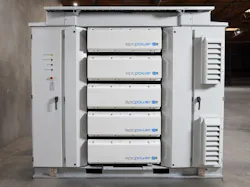
EPC Power’s M series inverters are designed to handle data center loads and provide grid forming technology that can protect generators and maintain grid stability. The 500-kW block can enable battery energy storage systems across multiple battery types, according to the company.
Forecasts of AI and supercomputing not only focus on the GW-level demand growth, but also the unpredictable and fluctuating AI workload demands, sometimes called transient load. Those can strain grid and distribution capabilities by shifting dramatically by many megawatts in milliseconds.
“AI data centers introduce highly dynamic load profiles that traditional power systems were never designed to handle,” Devin Dilley, who is a co-founder, president and chief innovation officer at EPC Power, said in an earlier event focused on digital infrastructure expansion. “Grid-forming inverters allow energy storage and renewable generation to behave like a stable power source maintaining reliability even as demand changes in real time.”
Research by JLL predicts that data center capacity could increase by close to 100 GW by 2030, the same generation capacity of about 100 new conventional nuclear reactors if they came online. However, grid capacity planning has not increased at pace with new demand, according to PJM interconnection and other reports.
Earlier this year, on-site generation producer Generac Power Systems and EPC Power announced a collaboration to produce integrated energy systems for the data center market. Those include Generac SBE Block battery systems, Generac controllers and EPC Power’s M-system inverters.
“This collaboration with EPC Power allows us to deliver end-to-end behind-the-meter solutions that meet evolving utility requirements while supporting the performance demands of AI workloads,” Erik Wilde, president of domestic C&I at Generac, said during the March announcement. “We’re excited by the opportunity to work alongside EPC Power to translate this technology into real world solutions for the data center market.”
EPC Power also has worked with ON.energy, UIG and ACE Engineering, among other partnerships.
Mastering Requirements, Standards and Risk
in a Digitally Transformed Energy Sector
Join us for July 21 EnergyTech Webinar with Siemens
About the Author
EnergyTech Staff
Rod Walton is head of content for EnergyTech.com. He has spent 17 years covering the energy industry as a newspaper and trade journalist.
Walton formerly was energy writer and business editor at the Tulsa World. Later, he spent six years covering the electricity power sector for Pennwell and Clarion Events. He joined Endeavor and EnergyTech in November 2021.
He can be reached at [email protected].
EnergyTech is focused on the mission critical and large-scale energy users and their sustainability and resiliency goals. These include the commercial and industrial sectors, as well as the military, universities, data centers and microgrids.
Many large-scale energy users such as Fortune 500 companies, and mission-critical users such as military bases, universities, healthcare facilities, public safety and data centers, shifting their energy priorities to reach net-zero carbon goals within the coming decades. These include plans for renewable energy power purchase agreements, but also on-site resiliency projects such as microgrids, combined heat and power, rooftop solar, energy storage, digitalization and building efficiency upgrades.