Frontieras Selects Yokogawa to Lead Automation for $850M Coal-to-Liquid Facility in West Virginia
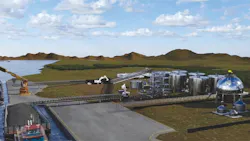
Yokogawa Corporation of America, a subsidiary of global industrial automation giant Yokogawa Electric Corp., has been selected by energy tech company Frontieras North America to serve as the main automation contractor (MAC) for its first commercial-scale facility in West Virginia.
The $850 million Mason County facility, which broke ground in April, is estimated by the West Virginia Department of Economic Development to contribute a roughly 3% incremental GDP impact in the state. This includes the approximately 2,000 construction-phase jobs and 200 permanent operational positions the project is expected to generate upon full commissioning.
“Frontieras has spent many years cultivating this relationship, knowing that Yokogawa had the perfect technology, built upon its 110-year history,” said Matthew McKean, CEO and co-founder of Frontieras North America, in a statement. “We needed a partner that could be the stand-by technology for what we expect to be a broad North American deployment. Yokogawa is that company.”
According to a release, the facility will process 2.7 million tons of coal annually using Frontieras' proprietary FASForm Solid Carbon Fractionation technology. Frontieras claims its closed-loop, non-combustion process operates in an oxygen-free atmosphere, preventing the coal from igniting while thermally disassembling hydrocarbons into multiple output streams.
This separation process, Frontieras states, is engineered to produce zero waste, converting coal completely into refined liquid (synthetic) fuels, FASCarbon solid fuel, hydrogen, ammonium sulfate fertilizer and industrial chemicals. Through this collaboration, the two entities aim to safely address high emissions, heavy waste and energy losses commonly associated with traditional coal-to-liquid (CTL) methods.
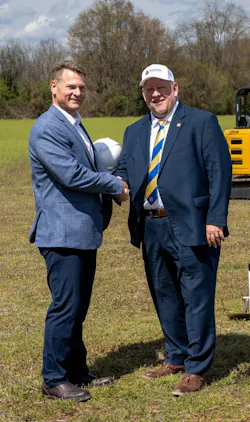
Joseph Witherspoon, P.E., CTO and co-founder of Frontieras North America, explains that Yokogawa’s fully integrated process control and safety systems, anchored by its CENTUM VP distributed control system, provide a robust fit for the Mason County facility.
“Yokogawa’s expertise in the process control, analyzer and cybersecurity space is exactly what Frontieras North America requires,” Witherspoon added.
As the MAC, Yokogawa's project team will assume full responsibility for the facility's automation and control infrastructure, advancing digital operations solutions across the plant’s lifecycle.
“This project represents an important step forward in bringing first-of-kind industrial technology to commercial scale,” said President and CEO Kevin McMillen of Yokogawa Corporation of America.
Frontieras’ patented technology reportedly spans nine of the world's largest coal-producing countries, covering roughly 85% of global coal production capacity. This North American project highlights the growing push to utilize next-gen CTL technology to decarbonize the energy, aviation, agricultural and fuel sectors.
According to scientific researchers, traditional coal-to-liquid systems can drive localized carbon emissions as high as 15.4 tons of CO2 for every ton of liquid fuel made, with an average baseline ranging from 3.49 to 5.26 metric tons. Next-gen tech companies like Frontieras are elevating the sector by enabling newer closed-loop configurations that can fundamentally change that footprint across these high-CO2-emitting industries.
Related examples of this coal-to-product evolution exist globally. In aviation, South Africa's Sasol Secunda Operations is a globally recognized application of indirect CTL technology, producing roughly 96,000 barrels of synthetic fuels daily.
Meanwhile, in the agricultural sector, the commercial-scale Dakota Gasification Great Plains facility is a synthetic gas/liquid plant that takes ammonia compounds from its coal gasification stream and converts them directly into ammonium sulfate fertilizer to mitigate industrial waste.
By deploying advanced automation, Yokogawa aims to aid Frontieras in enabling the safe operational environment needed to scale these decarbonization objectives across the North American energy sector.