Mantel Receives $18M Strategic Funding to Scale Carbon Capture Efforts Beyond North America
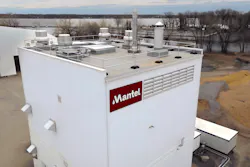
Carbon capture startup Mantel has received a new $18 million strategic investment, marking an important step in its path towards commercial deployment across energy sectors worldwide.
The $18 million investment announced this week from Constellation Technology Ventures and Azimut Investments, alongside participation from existing investors, brings the company’s total funding raised to $50 million, according to a release.
This funding will assist the Massachusetts-based company in deploying its first large-scale projects and expanding its pipeline to meet the growing demand from the industrial sector for its molten-borate carbon capture technology.
Designed to trap carbon dioxide (CO2), carbon capture systems target these emissions before they escape into the atmosphere. For heavy CO2-producing sectors such as manufacturing sites, aviation transport and energy footprints, these systems can help drive global decarbonization efforts.
As detailed by researchers, carbon capture systems isolate greenhouse gases (GHG) from industrial smokestacks or pull them directly from the air and compress them. These systems then bury CO2 deep underground or recycle it for industrial use.
However, unlike traditional carbon capture projects that have struggled to become cost-effective, scale and integrate with complex on-site infrastructure, Mantel states it’s taking a more “modular and systems-engineering-led” approach.
“This moment is about execution and how fast we can build,” said Cameron Halliday, CEO of Mantel, in a statement. “This round brings in partners who understand large-scale energy infrastructure as we move at the speed this transition demands.”
The company utilizes a carbon capture methodology based around molten salt designed to operate at high temperatures found inside heavy industrial heat and power equipment. Mantel’s first commercial project with British-based engineering and energy project consultant Wood is currently supporting a front-end engineering design for a facility in western Canada, aiming to capture 60,000 tons of CO2 annually.
In the U.S., Mantel is partnering with space-based solar power developer TerraSpark for its proposed 1.6 GW TerraSpark Energy Campus in West Virginia.
As Mantel looks to expand beyond North America, Azimut Investments is helping to bridge that gap by providing project finance expertise and access to global capital markets in Europe and beyond. Meanwhile, Constellation’s experience as one of the nation's leading clean energy investors will help the startup integrate into existing industrial facilities without compromising efficiency.
“Constellation remains committed to supporting new technologies that will help drive the U.S. transition to a clean energy future,” said Kate Norman, senior vice president of commercialization and market development at Constellation. “Our investment in Mantel’s technology exemplifies our interest in practical, clean-energy solutions, while balancing sustainability and reliability.”
About the Author
EnergyTech Staff
Rod Walton is head of content for EnergyTech.com. He has spent 17 years covering the energy industry as a newspaper and trade journalist.
Walton formerly was energy writer and business editor at the Tulsa World. Later, he spent six years covering the electricity power sector for Pennwell and Clarion Events. He joined Endeavor and EnergyTech in November 2021.
He can be reached at [email protected].
EnergyTech is focused on the mission critical and large-scale energy users and their sustainability and resiliency goals. These include the commercial and industrial sectors, as well as the military, universities, data centers and microgrids.
Many large-scale energy users such as Fortune 500 companies, and mission-critical users such as military bases, universities, healthcare facilities, public safety and data centers, shifting their energy priorities to reach net-zero carbon goals within the coming decades. These include plans for renewable energy power purchase agreements, but also on-site resiliency projects such as microgrids, combined heat and power, rooftop solar, energy storage, digitalization and building efficiency upgrades.