Molten Salt Reactor Nuclear May Help Solve Texas Produced Water Problem
Key Highlights
- - Natura Resources is developing a 100-MW molten-salt reactor, with potential operational start in 2029, to provide clean energy and support water recycling efforts.
- - The collaboration addresses Texas's long-term water and energy demands, promoting sustainable industrial practices and environmental benefits.
- - The project exemplifies how nuclear power can transform industrial water management and contribute to a sustainable energy future.
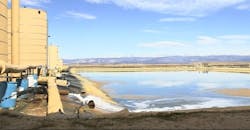
Developing next-generation nuclear technologies to generate carbon-free electricity in the heart of America’s deepest oil play is the focus of a new collaboration to treat produced water from drilling.
Molten-salt reactor developer Natura Resources LLC signed an agreement with NGL Water Solutions Permian to combine future advanced small nuclear with thermal desalination in the Permian Basin.
The Permian, which is a formation stretching across western Texas and eastern New Mexico, is the biggest producing oil play in the U.S. NGL currently transports, treats, recycles and disposes more than 3 million barrels per day of produced and flowback water pumped from oil and gas production.
The deal will take several years to realize, considering Natura Resources is still developing and testing its molten-salt reactor technology. Once realized, the collaboration will combine a 100-MW reactor with NGL’s produced water and desalination technologies.
Texas is the second most populated state in the U.S. and continues to grow at a top 5 pace. Hydraulic fracturing, which is a primary drilling technique for shale plays, requires millions of gallons of water used per drilling well, according to reports.
"Texas is facing a serious, long-term challenge of ensuring that there is enough energy and clean water to sustain the current economy and support growing demands for power and water," said Doug Robison, founder and CEO of Natura Resources, in a statement. "Our molten salt reactor combined with thermal desalination can provide a sustainable, competitive solution by generating clean, economic power; treating industrial water for beneficial use; and freeing up natural gas supplies for higher value applications. Collaborating with NGL allows us to advance the application of our breakthrough nuclear technology where it can make a measurable difference for industry, communities, and the environment."
Produced water returned from deep wells includes salt at a salinity level even higher than the ocean. The Permian Basin alone produced more than 20 million barrels of produced water daily, according to NGL.
"By working with Natura, we are evaluating how advanced molten-salt nuclear technology can provide a continuous energy source to support large-scale produced water treatment and transform produced water into a strategic asset that supports energy security, water resilience, and future critical mineral supply chains," said Doug White, NGL Water Solutions Permian LLC, which is a subsidiary of NGL Energy Partners LP.
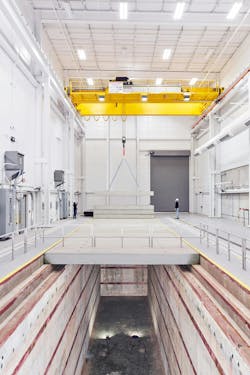
Natura Resources is among the companies working with the U.S. Department of Energy on accelerated small modular reactor development. The company hopes to deliver its MSR-1 as the nation’s first Gen IV reactor in operation, even at a pilot phase.
In 2024, the U.S. Nuclear Regulatory Commission issued a construction permit for Natura’s 1-MW test reactor at Abilene Christian University, which the company hopes to complete later this year. Natura selected Zachry to lead engineering, procurement and construction work on the test plant.
The 100-MW commercial-scale MSR could be operational by 2029, according to the companies.
The current U.S. conventional nuclear fleet generates about 18% of U.S. utility-scale electricity and about half of its carbon-free generation. No SMRs have been built, completed or commissioned in the U.S., yet, but the Trump Administration and multiple digital infrastructure companies are pushing for new nuclear capacity to intersect grid resource adequacy and emissions sustainability goals.
Natura Resources is also one of four advanced-reactor startups—including Kairos Power, Terrestrial Energy and Aalo Atomics—to locate some of their work on the 2,400-acre Texas A&M-RELLIS campus in Bryan, Texas.
SMRS are being designed to maintain power capacities as low as 30 MW per unit, which means they could serve limited loads such as data centers and industrial plants. Chemical manufacturer Dow is working with reactor developer X-energy on a nuclear plant to power its Texas Gulf Coast facility.
A New Era in Energy Efficiency-Innovations for Today & Tomorrow
New White Paper by Ameresco
About the Author

Rod Walton, EnergyTech Managing Editor
Managing Editor
For EnergyTech editorial inquiries, please contact Managing Editor Rod Walton at [email protected].
Rod Walton has spent 17 years covering the energy industry as a newspaper and trade journalist. He formerly was energy writer and business editor at the Tulsa World. Later, he spent six years covering the electricity power sector for Pennwell and Clarion Events. He joined Endeavor and EnergyTech in November 2021.
Walton earned his Bachelors degree in journalism from the University of Oklahoma. His career stops include the Moore American, Bartlesville Examiner-Enterprise, Wagoner Tribune and Tulsa World.
EnergyTech is focused on the mission critical and large-scale energy users and their sustainability and resiliency goals. These include the commercial and industrial sectors, as well as the military, universities, data centers and microgrids. The C&I sectors together account for close to 30 percent of greenhouse gas emissions in the U.S.
He was named Managing Editor for Microgrid Knowledge and EnergyTech starting July 1, 2023
Many large-scale energy users such as Fortune 500 companies, and mission-critical users such as military bases, universities, healthcare facilities, public safety and data centers, shifting their energy priorities to reach net-zero carbon goals within the coming decades. These include plans for renewable energy power purchase agreements, but also on-site resiliency projects such as microgrids, combined heat and power, rooftop solar, energy storage, digitalization and building efficiency upgrades.