Bringing Back New Generation of “Old” Nuclear: Brookfield Investing in Dream of Restarting Abandoned South Carolina Reactors
After a decade of flat load growth projections and premature reactor retirements, U.S. nuclear development is regaining momentum. The sudden rush of rising power demand from industrial and supercomputing loads has created a so-called next-gen nuclear renaissance.
The new dynamic is attracting global investors who want to partner with nuclear developers and supply the massive capital needed to build the next generation of reactor capacity. For some, this includes future small modular or advanced reactors, but the immediate demand is so strong that many are investing in restarting units once retired or previously destined for shutdown.
Global investment firm Brookfield is partnering with nuclear project developer The Nuclear Company (“TNC”) to form a new joint entity that will specialize in the deployment of Westinghouse nuclear reactor technology. This collaboration could help restart a South Carolina reactor unit construction project which shut down nearly 10 years ago amidst an era of bankruptcy and financial loss for the industry.
Brookfield and TNC's joint venture will focus exclusively on Westinghouse nuclear technology, including the AP300 and AP1000 reactors. The companies are making an ongoing effort to potentially develop two partially constructed AP1000 units near Jenkinsville, S.C., part of the ill-fated V.C. Summer nuclear unit expansions, which were abandoned nearly a decade ago.
Revival of controversial plant
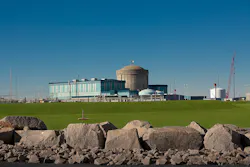
Brookfield has selected the new joint venture as project manager for reviving the Fairfield County nuclear project, previously known as V.C. Summer Nuclear Units 2 and 3. The project still requires some approvals and a final investment decision.
“By combining our global infrastructure development capabilities with nuclear project delivery expertise, we believe this platform has the potential to accelerate the American nuclear resurgence,” said Wyatt Hartley, managing partner of Brookfield, in a statement.
Hartley adds that Brookfield looks to build on the momentum already established with the Westinghouse Electric Company, as a current investor and partner in an $80 billion alliance with the U.S. government to accelerate nuclear power and AI deployment.
Chief Nuclear Officer Joe Klecha of TNC taps into inspiration from the Vogtle Electric Generating Plant units 3 and 4 in Burke County, Georgia. The Vogtle plant expansion, which added units 3 and 4 to the facility, went billions of dollars over budget and endured several years of delay and even termination consideration.
Even so, project leader Georgia Power persisted in completing the work and bringing the units online by 2023 and 2024.
“We know what it takes to deliver nuclear,” Brookfield’s Klecha said. “What’s been missing is a model that brings together the people, the capabilities, and the capital to do it at speed and scale; that’s what this partnership creates.”
What is the V.C. Summer project and how bad was it?
Both TNC and Brookfield view the Fairfield County nuclear project as a major opportunity for nuclear development in the U.S. South Carolina’s state-owned utility Santee Cooper was a longtime supporter in the work at V.C. Summer Nuclear Generation Station, until the losses and project challenges became unbearable.
Originally launched in 2008, the V.C. Summer plant expansion was anticipated to be a massive project increasing nuclear power within the state. South Carolina Electric & Gas Company (SCE&G) and Santee Cooper announced the $9.8 billion plan to build two AP1000 reactors at the plant under a 2007 state law known as the Base Load Review Act (BLRA). The law allowed utilities to raise customer rates in advance to fund new construction to add power capacity.
Instead, suspicious reports of internal mismanagement began to surface, causing original projected costs to spike past $20 billion. Contractor Westinghouse would eventually go bankrupt in 2017, leading Santee Cooper to withdraw its partnership.
Shareholder faith in SCANA, the parent company of SCE&G, collapsed and the company was later acquired by Dominion Energy in 2019. Ratepayers still footed the bill of $5.9 billion after the partly built reactors were abandoned, according to reports.
Sign of nuclear regrowth in the industry
The rise of the so-called “Industrial Compute Age” is led by forecasted load growth in AI factories, cloud-based computing, industrial electrification and reshoring of manufacturing. This anticipated new load, unthinkable a decade ago, is requiring power capacity leaders to rethink plans for retiring nuclear generation.
This is where Brookfield and TNC look to make an impact and shift the trajectory of the project critics have dubbed the “Nukegate” scandal surrounding the V.C. Summer debacle. And they are not alone in reembracing once negated nuclear capacity.
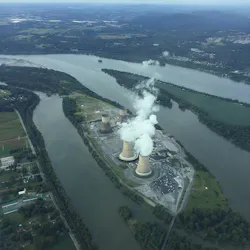
Companies like Microsoft have signed a 20-year Power Purchase Agreement (PPA) with Constellation Energy to directly fund the resurgence of the Three Mile Island Unit 1 reactor in central Pennsylvania, being renamed the Crane Clean Energy Center (CCEC). Unit 1 was shut down earlier this decade.
The Three Mile Island Unit 2 reactor had been shut down since the late 1970s amid an infamous partial meltdown—but could be commercially operational later this decade despite being retired.
Plant owner Constellation Energy Generation received $1 billion from the U.S. Department of Energy to aid redevelopment of Three Mile Island Unit 1, which likely will not be able to connect to the grid until 2031, four years later than planned, the company told Reuters at an energy conference in Houston.
Microsoft looks to match its current and future data center growth with carbon-free energy.
The U.S. Nuclear Regulatory Commission (NRC) approved a 20-year license renewal application for both the Clinton Power Station in Illinois and the Diablo Canyon Power Plant in California.
Diablo Canyon’s two units were planned for retirement in 2024 and 2025. But California legislators directed the plant to run at least through 2030 after a 2020 heat wave that created statewide rotating power outages. The NRC’s extension supports the plant’s renewed favor for its baseload and carbon-free generation capacity in this new era.
Tech giant and Facebook parent company Meta Platforms announced it will pay for output from the Illinois Clinton nuclear power plant, now named Clinton Clean Energy Center, under its PPA with owner Constellation. Meta is contracting for the 1.12 GW plant’s carbon-free output into the 2040s.
Only one utility-scale nuclear energy project, the Vogtle (Unit 3 in 2023 and Unit 4 in April 2024), has been built and commissioned in the U.S. over the past decade.
From Reactive to Predictive:
Turning Energy into Profit with Digital Twins
New June 4 EnergyTech Webinar featuring GridBeyond
About the Author
 Eric Moody