Closing the Gap on SMR Future: How Government and Hyperscalers Must Fuse Efforts to Drive Next-Gen Nuclear in the U.S.
Key Highlights
- No commercial microreactors or SMRs are yet operational in the U.S., but multiple demonstration projects are underway for deployment in the 2020s and early 2030s.
- The U.S. Department of Energy has allocated over $94 million to support eight companies in deploying advanced light-water SMRs, aiming to reduce costs and address deployment barriers.
- Challenges include regulatory hurdles, supply chain issues, and high capital costs, which require coordinated federal and state support to facilitate market entry and growth.
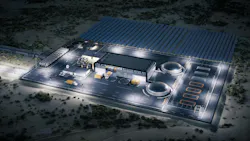
Not a single commercial plant for microreactors and small modular reactors (SMRs) has become operational or even built yet in the U.S. to usher in the next generation of nuclear energy. Despite that, public and private investment continues to flow toward making next-gen nuclear power a reality.
The non-profit Nuclear Innovation Alliance (NIA) highlighted last year that developers have announced multiple advanced reactor domestic demonstration projects in the 2020s through the early 2030s while working to secure regulatory approval. Those project demonstrations include test microreactors, university research microreactors and light water and non-light water SMRs, which are cooled differently than conventional reactors through materials such as liquid metal, molten salt, or gas.
The U.S. Department of Energy (DOE) recently announced more than $94 million in grant funding, geared towards supporting eight U.S. companies in their near-term deployment phases of advanced light-water SMRs. The department states these reactors offer improvements to traditional nuclear power generation, with potential cost reductions by using pressurized or boiling water reactor systems.
This effort aims to address financial gaps that have hindered U.S. next-gen nuclear deployment, which includes issues with site preparation, concerns involving the supply chain, and licensing by the Nuclear Regulatory Commission (NRC).
Industry advisors like Joel Fetter, managing director at lobbying firm Clark Street Associates, consider that $94 million amount “a drop in the bucket” in federal funding efforts towards actual SMR deployment in the 2030s.
Private sector’s contribution to next-gen nuclear
“We operate in an energy economy where private industry takes the lead,” Fetter told EnergyTech in an exclusive interview. “Private industry mobilizes the capital, private industry mobilizes the personnel, and private industry has the skill sets and the capabilities to go out and build factories to develop commercial relationships.”
Fetter, who has spent much of his career as a managing consultant in the energy space connecting companies with federal funding, said that it’s not really the role of the government to fully fund this next-generation push towards next-gen and small nuclear deployment in the U.S. But he does acknowledge that the government helps shape the market amid uncertainty.
“There's a transition in terms of who their customers are. There's some shakeout in terms of making sure that their products operate the way they're supposed to operate and that they have the capabilities to meet deliveries at the time and price point that they’re expecting,” Fetter added. “If you’re an investor, you need to kind of have a little bit of an inducement to get you to look over that next horizon and to start planning. And that's what this money does.”
This is what government does best, in his opinion: Shine light on an area that the private sector needs to address by providing some financial incentives. He adds that demand signals from hyperscalers act as “rocket fuel” for other nuclear developers seeking funding and validation.
In August 2025, Amazon announced its partnership with SMR designer X-energy, utility operator Korea Hydro & Nuclear Power and construction firm Doosan Enerbility to try and mobilize up to $50 billion in public and private investments through tech capital, bilateral trade framework, government subsidies, and supply chain scaling to accelerate the deployment of new Xe-100 advanced SMRs in the U.S. The companies hope to deploy more than 5 GW of new nuclear energy across the U.S. by 2039 to meet growing power demands of advanced manufacturing, AI electrification, and data centers to secure power for Amazon Web Services (AWS).
Google also announced plans in Oct. 2024 of a corporate power purchase agreement (PPA) with the U.S.-based nuclear company Kairos Power to purchase 500 MW from multiple SMRs to accelerate the U.S.’s clean energy transition nationwide in the 2030s.
These hyperscalers coming to the table financially provide a necessary element to the puzzle, Fetter said.
Financial hurdles advanced nuclear pose on public sector
A new report by global management consulting firm McKinsey highlights the challenges of the Trump administration's goal to add 300 GW of new nuclear capacity by 2050 to keep pace with electricity demand from major hyperscalers and their related infrastructure needs. The U.S. currently has a conventional nuclear capacity of roughly 97 GW, which generates 18% of the nation’s utility-scale electric power, according to the World Nuclear Association.
Powering these cloud-based data facilities could reportedly trigger one of the most expansive nuclear buildouts in decades. McKinsey adds that the U.S. would need to invest between $105 billion and $170 billion to modernize its nuclear fuel supply chain to support these efforts.
Some state legislators and utilities have adopted policies to streamline DER integration, including solar, EV charging, and microgrids, aimed at enhancing grid resilience amid increasing energy needs and climate risks. However, Fetter said there’s still a fair discussion on whether it is necessary for the federal government to be financially focused on renewables that already exist in the marketplace.
“Whether it's necessary to continue, you know, public support for those, or just allow them to compete in the private market space,” he added.
Regarding the advancement of SMRs, the capital investment question Fetter raised was: “How many areas can the government shine a light on until the shift in the private sector commercializes at scale and triggers true market dependence?”
CEO and nuclear physicist James Walker of NANO Nuclear Energy Inc. also agrees that the long-term future of advanced nuclear power, outside of government support in the early stages, will be bolstered and encouraged by industry demand in the private sector.
NANO, based in New York, focuses on commercializing advanced nuclear technology through the development of portable microreactors and other clean energy solutions for data centers and remote applications.
State participation could help reduce nuclear investment uncertainty
Walker explained that the state level will continue to play an important role in permitting timelines, regulatory clarity, and infrastructure planning to ensure market stability for developers. But adds that advanced nuclear projects differ from DERs due to their greater complexity in the regulatory process and much longer operational lifespans.
“There are real commercial customers emerging with massive power demand in areas never seen before, especially around AI infrastructure, industrial users, and data centers. At NANO, we see growing interest from private industry because companies are starting to view reliable power as mission-critical infrastructure, not just a utility bill,” Walker stated.
He explains that once the first advanced nuclear systems prove themselves operationally, private capital will become much more aggressive in this space.
The advanced nuclear company has progressed in deployment efforts of its KRONOS microreactors at the University of Illinois Urbana-Champaign (UIUC) after the NRC formally accepted UIUC’s construction permit application for review. Walker thinks that microreactors and SMRs can bring flexibility to the nuclear space that helps lower upfront capital costs toward U.S. deployment compared to traditional nuclear projects.
“Traditional nuclear projects were huge utility-scale builds that required enormous upfront capital commitments, decade-long construction timelines, and very complex financing structures,” he said. “With smaller modular systems, you open the door to very different models. You can structure projects more like infrastructure partnerships where a private company contracts directly for long-term power.”
Such financing structures can lower capital risk and reduce installation times by allowing phased installations over time instead of multi-gigawatt builds all at once. Ultimately, Walker suggests this approach fundamentally reduces the risk profile of nuclear energy deployment when evaluating public sector capital towards the next generation in nuclear development.
So far, the only two operational SMRs globally are Russia’s floating SMR barge, providing electricity to a remote arctic town, and China’s land-based SMR plant feeding power into their national grid.
About the Author
 Eric Moody