Almost $2B and Counting: Trump Administration Paying Offshore Wind to Go Away
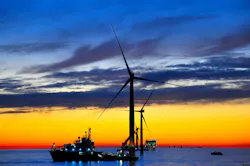
The Trump Administration’s future tab in paying domestic offshore wind projects to simply go away now totals close to $2 billion.
The U.S. Department of the Interior announced this week that the federal government was eventually paying owners of the Golden State and Bluepoint Wind development close to $900 million to voluntarily end their four-year-old federally sanctioned offshore leases and invest in conventional energy projects.
Neither Bluepoint or Golden State Wind had advanced its development toward completion, but if completed would have reportedly generated close to 2 GW each in carbon-free electricity.
This follows the Trump DOI forging a deal to pay $1 billion to France’s TotalEnergies for walking away from its Carolina Long Bay offshore wind lease in March. All three payouts reportedly include deals for the offshore wind owners to invest in fossil fuel projects such as liquified natural gas (LNG).
The administration took a shot at Biden-era policies in announcing the termination agreements. Both developers were awarded offshore leases by the previous administration four years ago.
“The companies that bid for these offshore wind leases were basically sold a product in 2022 that was only viable when propped up by massive taxpayer subsidies,” Secretary of the Interior Doug Burgum said in a statement. “Now that hardworking Americans are no longer footing the bill for expensive, unreliable, intermittent energy projects, companies are once again investing in affordable, reliable, secure energy infrastructure. We welcome each of the projects’ willingness to actually support baseload power and lower utility bills for American families.”
Bluepoint Wind was going to be sited about 50 miles off the New York/New Jersey coastline and is owned by BlackRock’s Global Infrastructure Partners and Ocean Winds, a joint venture between EDP Renewables and ENGIE.
Golden State Wind was also awarded a 2022 lease for 80,000 acres after a winning auction bid and would be in the Morro Bay region off the California coast. It was originally owned by Ocean Winds and the Canada Pension Plan Investment Board.
“We appreciate the very constructive engagement with Secretary Burgum and the Department of the Interior and are pleased to have reached a practical resolution based on our shared commitment to pragmatic outcomes,” Salim Samaha, chair of midstream and LNG at Global Infrastructure Partners (GIP), said in the DOI press release. “We look forward to continuing to deploy capital into conventional and other energy sources in furtherance of the twin goals of increasing U.S. energy independence and affordable energy.”
As part of the agreement to end the Bluepoint wind development, GIP would invest up to $765 million—its original bid amount for the offshore lease—into a U.S. LNG facility. Once done, the Interior Department will cancel the lease and reimburse the company for their LNG investment.
The U.S. government also promises to pay Golden State wind owners close to $120 million covering lease fees if they also invest in oil and gas assets.
The rerouted investment deals echo what TotalEnergies agreed to in walking away from the Carolina Bay offshore project earlier this year.
“Considering that the development of offshore wind projects is not in the country’s interest, we have decided to renounce offshore wind development in the United States, in exchange for the reimbursement of the lease fees,” Patrick Pouyanne, chairman and CEO of TotalEnergies, said at the time. “Furthermore, these agreements, under which we will reinvest the refunded lease fees to finance the construction of the 29 MT (metric ton) Rio Grande LNG plant and the development of our oil and gas activities, allows us to support the development of U.S. gas production and export. These investments will contribute to supplying Europe with much-needed LNG from the U.S. and provide gas for U.S. data center development.”
The U.S. is the world’s largest exporter of LNG and is shipping to customers particularly in Asia and Europe.
The Trump Administration has been active in trying to end offshore wind developments, including shutting down five East Coast projects which were already under construction and some nearing completion.
Federal judges reversed the administration and issued injunctions which allowed those projects to go forward. The 2.6-GW Coastal Virginia project, developed by utility Dominion Energy, is now operational, while the Revolution, Sunrise, Vineyard and Empire developments are nearing completion or commissioned in part.
U.S. Department of Interior missed its deadline to challenge the federal judges’ injunctions, so the projects are all progressing, according to reports.
Growing Need for Battery Storage in the Midwest U.S.
MGK QuickChat with ELM Microgrid
About the Author

Rod Walton, EnergyTech Managing Editor
Managing Editor
For EnergyTech editorial inquiries, please contact Managing Editor Rod Walton at [email protected].
Rod Walton has spent 17 years covering the energy industry as a newspaper and trade journalist. He formerly was energy writer and business editor at the Tulsa World. Later, he spent six years covering the electricity power sector for Pennwell and Clarion Events. He joined Endeavor and EnergyTech in November 2021.
Walton earned his Bachelors degree in journalism from the University of Oklahoma. His career stops include the Moore American, Bartlesville Examiner-Enterprise, Wagoner Tribune and Tulsa World.
EnergyTech is focused on the mission critical and large-scale energy users and their sustainability and resiliency goals. These include the commercial and industrial sectors, as well as the military, universities, data centers and microgrids. The C&I sectors together account for close to 30 percent of greenhouse gas emissions in the U.S.
He was named Managing Editor for Microgrid Knowledge and EnergyTech starting July 1, 2023
Many large-scale energy users such as Fortune 500 companies, and mission-critical users such as military bases, universities, healthcare facilities, public safety and data centers, shifting their energy priorities to reach net-zero carbon goals within the coming decades. These include plans for renewable energy power purchase agreements, but also on-site resiliency projects such as microgrids, combined heat and power, rooftop solar, energy storage, digitalization and building efficiency upgrades.