HydroPower Comeback? H2O Hopes $430M Investment Opens the Tap to Higher Elevation
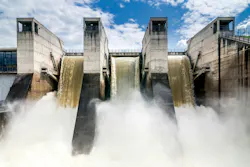
How low is the water, mama? Five percent and falling.
This inversion of a Johnny Cash country classic is a description of what’s happening to the U.S. hydroelectric sector as part of a decades-long decline. Climate impacts cutting water reservoir levels and the rise of natural gas, wind and solar generation have cut into power output, revenues, visibility and overall stake in the nation’s electricity portfolio.
Hydroelectricity is flourishing globally, but the losses are stacking up for hydropower domestically, such as an estimated $28 billion drop in financial value. Even the long-running and highly regarded HydroVision International Conference was terminated as a standalone event and folded into Clarion’s POWERGEN International Conference in recent years.
Good news is as rare as rain in a desert, but the U.S. Department of Energy is considering seeding hydropower producers with more than $400 million in new payments and hope that liquifies the sector fiscally.
The DOE’s Hydropower and HydroKinetic Office (H2O) announced this week it would soon resume negotiations to issue nearly $430 million in payments. The funding could support 293 projects at 212 hydropower facilities selected in the department’s Maintaining and Enhanced Hydroelectricity Incentives program.
“American hydropower is a key component of this administration’s vision for an affordable, reliable energy system,” said Assistant Secretary of Energy Audrey Robertson in a statement. “These actions will modernize our hydropower fleet, bolster our domestic workforce, and bring us closer to realizing that vision.”
Hydropower is still vitally important to the U.S. utility-scale generation mix, but that portion has evaporated in recent decades to slightly less than 6%, and only makes up about one-fourth of total renewables capacity. The reasons behind this decline include drought, the rise of other resources and, critically, the difficulty in building new hydropower facilities.
The sector is working to expand hydro energy storage capacity, but for reasons mentioned above the DOE H20 approach to revitalizing the industry is to focus on improving the existing fleet. The Hydroelectric Incentive program, managed by H2O, funds projects that improve grid resiliency, dam safety, and will ensure that facilities meet current state and federal regulatory requirements.
These incentives will be invested in upgrading and repowering turbines, generators, spillways and other equipment. Combined with private investment, including perhaps from utilities, DOE hopes to attract nearly $3 billion of new private and public funding into the nation’s hydropower fleet.
Earlier this year, DOE’s Office of Critical Minerals and Energy Innovation announced that H2O would partner with the National Laboratory of the Rockies (formerly National Renewable Energy Laboratory) to seek entries into the new Hydropower and Marine Energy Collegiate Competitions, thus creating a potential next generation of talent and expertise in water power.
In January, the Federal Energy Regulatory Commission granted a 40-year license to the planned 1.2-GW Goldendale Energy Storage project north of the Columbia River in southern Washington state. The scope of Goldendale is the largest pumped hydro storage project in about four decades since the Bath County site in Virginia.
Goldendale Energy Storage is being planned by Rye Development, a joint venture of EDF and Climate Adaptive Infrastructure. Rye also is working on the 287-MW Lewis Ridge Pumped Storage project in Kentucky.
Next-Gen Digital Infrastructure Needs Diverse Energy Playbook
New and Free E-Book from EnergyTech
Follow ET on LinkedIn
About the Author

Rod Walton, EnergyTech Managing Editor
Managing Editor
For EnergyTech editorial inquiries, please contact Managing Editor Rod Walton at [email protected].
Rod Walton has spent 17 years covering the energy industry as a newspaper and trade journalist. He formerly was energy writer and business editor at the Tulsa World. Later, he spent six years covering the electricity power sector for Pennwell and Clarion Events. He joined Endeavor and EnergyTech in November 2021.
Walton earned his Bachelors degree in journalism from the University of Oklahoma. His career stops include the Moore American, Bartlesville Examiner-Enterprise, Wagoner Tribune and Tulsa World.
EnergyTech is focused on the mission critical and large-scale energy users and their sustainability and resiliency goals. These include the commercial and industrial sectors, as well as the military, universities, data centers and microgrids. The C&I sectors together account for close to 30 percent of greenhouse gas emissions in the U.S.
He was named Managing Editor for Microgrid Knowledge and EnergyTech starting July 1, 2023
Many large-scale energy users such as Fortune 500 companies, and mission-critical users such as military bases, universities, healthcare facilities, public safety and data centers, shifting their energy priorities to reach net-zero carbon goals within the coming decades. These include plans for renewable energy power purchase agreements, but also on-site resiliency projects such as microgrids, combined heat and power, rooftop solar, energy storage, digitalization and building efficiency upgrades.