California’s Coyote Valley Casino Deploys 2.23-MW Solar Carport to Decarbonize Tribal Operations, Cut Energy Costs
The hotel industry is entering into renewable energy projects to cut energy costs and protect against future price volatility.
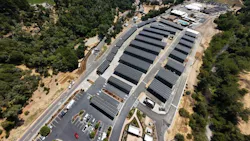
At the Coyote Valley Reservation in Redwood Valley, a 2.23-MW solar carport system will help the tribe’s casino and hotel save roughly 45% of its site’s future energy consumption.
Following the completion of the newly installed system on Thursday, which features 1,500 JA modules and 10 Chint Power inverters, the hotel estimates first-year energy cost savings of more than $450,000 for the Coyote Valley Band of Pomo Indians, the owner of the complex, according to a release.
The project is expected to generate 3.4 GWh of electricity annually, coming from a 1,411-kW solar carport installation on the casino and 817.5 kW array on the hotel to power Tribal Council offices, a convenience store and a wastewater treatment facility. This project was jointly undertaken in collaboration between solar developer Watthub Renewables and SunRenu Solar as the engineering, procurement and construction contractor.
Sunrock Distributed Generation (SDG) will manage and operate the carport system for the next 30 years in partnership with the Coyote Valley Band of Pomo Indians.
Through a Power Purchase Agreement (PPA), SDG will sell the energy generated onsite back to the tribe at a discounted price compared to previous grid-supplied electricity from utility Pacific Gas and Electric Co. The tribe will pay zero upfront costs, which can prevent funds being diverted from vital government programs or community services.
“This project demonstrates how Sunrock can help turn energy costs into long-term economic value for local communities,” said Wilson Chang, CEO of SDG, in a statement. “Sunrock is proud to partner on a project that supports tribal self-determination and results in lower energy costs, greater cost certainty and a renewable energy asset that will deliver value for decades.”
As a third-party asset owner and PPA financier, SDG can monetize renewable energy tax credits (under updated OBBBA guidelines) that Coyote Valley is unable to directly claim, as a sovereign tribal nation without traditional federal tax liabilities.
“This solar project represents an important step toward a more sustainable future for our Tribe and our community,” said Rachel Whetstone, CFO of the Coyote Valley Tribal Council.
Settled in the early 1850s, the Coyote Valley purchased the land centered around “Old Rancheria” in 1878. Federal recognition was regained in 1976, leading the tribe to ratify its constitution in 1980 to formalize its laws, customs and traditions.
In 2024, the California Energy Commission (CEC) expanded state assistance programs geared to offering low- and zero-interest clean energy loans to include applications from California-based Native American Tribes.
About the Author
 Eric Moody