Spain's ACCIONA's Expanding U.S. Solar Reach to Kentucky
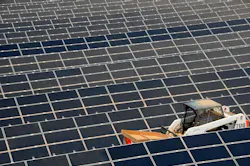
Spanish-based developer ACCIONA Energía is starting site work on a Kentucky solar farm which will eventually generate carbon-free electricity under a long-term power commitment by industrial customers such as Amazon.
Construction on the 235-MW Fleming Solar farm will begin as early as this summer with completion and commercial operations expected by May 2028, according to the company. It will be ACCIONA's fifth utility-scale solar project in the U.S. and bring the company’s nationwide capacity to about 3 GW in 18 renewable and energy storage holdings.
Located in Fleming County, the solar construction phase could employ close to 300 workers. Site mobilization work begins first. ACCIONA Energia says it will use local contractors as much as possible.
ACCIONA Energia is part of a larger infrastructure entity based in Madrid. The firm handles engineering, road construction and other structural undertakings around the world.
As part of its energy development wing, three years ago ACCIONA expanded its long-term power purchase agreement (PPA) with Amazon in the U.S. Under the collaboration, ACCIONA also is utilizing cloud-based Amazon Web Services (AWS) technology to accelerate its digital transformation within operations.
“By expanding our collaboration with ACCIONA, we are advancing the adoption of clean energy and accelerating the energy transition,” said Miguel Alava, managing director of AWS Iberia in the 2023 statement. “ACCIONA is leveraging the reliability, scalability, and cost-efficient IT infrastructure provided by AWS to enhance operational efficiencies, unlock data-driven insights, and accelerate pace of innovation, while helping Amazon stay on a path to powering its operations with 100% renewable energy by 2025 and reach net-zero carbon emissions by 2040.”
Although many data center hyperscalers are moving toward behind-the-meter and on-site or even off-grid energy projects to avoid long utility interconnection delays, AWS has expressed a desire to stay united with utilities and keep its electricity interconnections in front of the meter.
In a recent exclusive interview with EnergyTech.com, Joseph Santamaria, AWS’ new leader in its energy & utilities unit, acknowledged that his company is shifting from energy consumer to proactive co-developer, but wants to build on those relationships with utility-scale renewable project developers and utilities such as Dominion Energy, Entergy and Ameren.
“We’ve moved from power consumers to power partners,” Santamaria pointed out. “How do we do that? We bring generation to the grid (through PPAs and utility load financial commitments). We’ve invested in 300 utility-scale wind, solar, battery and nuclear projects across 28 countries.”
Having signed more than 500 renewable PPAs worldwide, Amazon and AWS have created long-term agreements with independent developers such as ACCIONA, RWE, Iberdrola, Brookfield and AES.
Mastering Requirements, Standards and Risk
in a Digitally Transformer Energy Sector
Join us for July 21 EnergyTech Webinar with Siemens
About the Author
EnergyTech Staff
Rod Walton is head of content for EnergyTech.com. He has spent 17 years covering the energy industry as a newspaper and trade journalist.
Walton formerly was energy writer and business editor at the Tulsa World. Later, he spent six years covering the electricity power sector for Pennwell and Clarion Events. He joined Endeavor and EnergyTech in November 2021.
He can be reached at [email protected].
EnergyTech is focused on the mission critical and large-scale energy users and their sustainability and resiliency goals. These include the commercial and industrial sectors, as well as the military, universities, data centers and microgrids.
Many large-scale energy users such as Fortune 500 companies, and mission-critical users such as military bases, universities, healthcare facilities, public safety and data centers, shifting their energy priorities to reach net-zero carbon goals within the coming decades. These include plans for renewable energy power purchase agreements, but also on-site resiliency projects such as microgrids, combined heat and power, rooftop solar, energy storage, digitalization and building efficiency upgrades.