DOE Selects Fervo, Zanskar and Quaise as Part of $99M Funding to Advance Next-Gen Geothermal
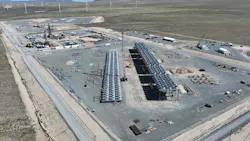
The U.S. Department of Energy (DOE) is awarding up to $99 million across 21 selected projects to advance geothermal energy development for around-the-clock and carbon-free power from underground.
Under the DOE initiative announced this week, selected developers will help accelerate American geothermal innovation amid surging power demand across the country while also strengthening U.S. energy security through renewable clean sources.
According to a release, five companies or research groups will conduct field-scale enhanced geothermal systems (EGS) tests to validate technologies under real-world conditions. They are Fervo Energy, Zanskar Geothermal, AlterG Resources, Quaise Energy and the University of Utah.
Developer Quaise Energy was awarded up to $25 million in funding from DOE to advance its superhot geothermal power plant, 50-MW Project Obsidian, in Central Oregon. The company stated that the funding will support analysis of drilling, stimulation and flow results of the first two wells to optimize a third well at the site.
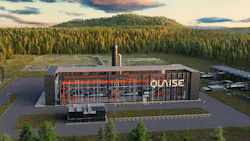
Project Obsidian, which expects to deliver power to the Pacific Northwest grid by 2030, is targeting an average reservoir temperature of over 572°F. Quaise added in a company release that the project is designed to demonstrate more than 25 MW of gross electric power capacity, with the potential for expansion to up to 1 GW of electricity.
As DOE explained, EGS creates human-made geothermal reservoirs by injecting fluid deep underground to control conditions and engineer new fractures. Those fractures re-open pre-existing pathways, allowing fluid to pass through hot subsurface rock more efficiently to generate electricity at the surface.
Increasing this flow, also known as permeability, allows fluid to circulate through the hot subsurface rock, absorbing its heat in the process.
In traditional geothermal systems, DOE notes there isn’t enough natural permeability in many areas, which is why human-made solutions are needed to tap this global heat supply.
Fervo Energy, among those five selected, was awarded $20 million to drill, complete and stimulate EGS wells in Elmore County, Idaho. DOE highlighted that the geothermal developer is working to deploy a high-temperature (at or above 392°F) three-component geophone array, a device used for seismic monitoring that records ground motion in perpendicular directions.
The partnership will also conduct research with national labs centered on advanced seismic and geochemical analysis.
Separately, on Thursday, Fervo Energy announced it has successfully generated its first electricity to the grid at its flagship 500-MW multi-phase Cape Station project in Beaver County, Utah. The achievement marks a major step for the company in its utility-scale enhanced geothermal development.
"We believe it shows that the commercial and technical maturity of EGS is ready to meet the urgent need for reliable, clean power,” said Tim Latimer, CEO and co-founder of Fervo Energy, in a statement.
This American geothermal innovation will also focus on conducting exploration drilling to identify and characterize useful next-gen geothermal resources.
DOE noted that 16 projects will concentrate on this focus, including Fervo Energy’s structured evaluation of an EGS prospect site in Humboldt County, Nevada. Fervo will be drilling to confirm reservoir temperatures of 392-428°F.
“These projects will empower American innovators to unlock the tremendous geothermal resources beneath our feet,” said DOE Under Secretary of Energy Kyle Haustveit in a statement.
Together, these collaborative efforts will help reduce technical and development risk to gather data geared toward future commercial projects and investment in the U.S. As developers adapt oil-and-gas drilling techniques to tap underground heat for electricity generation, geothermal energy is emerging as a growing area within the U.S. power sector.
“We’re advancing next-generation geothermal technologies that can lower costs, strengthen American energy dominance and turn more of our vast domestic geothermal resources into reliable and affordable power,” Haustveit added.
About the Author
 Eric Moody